These amphibian horror drawing tutorials focus on transforming ordinary frogs and salamanders into unsettling nightmare fuel using eerie textures and exaggerated anatomy.
Amphibian sketching is the art of transforming ordinary frogs and salamanders into nightmare fuel with eerie details, exaggerated features, and haunting textures. Let’s be honest – these guys are already a little unsettling. Add glowing eyes, extra limbs, or a sinister grin, and suddenly they go from “cute pond dweller” to “horror movie material.”
Why amphibians make great horror creatures
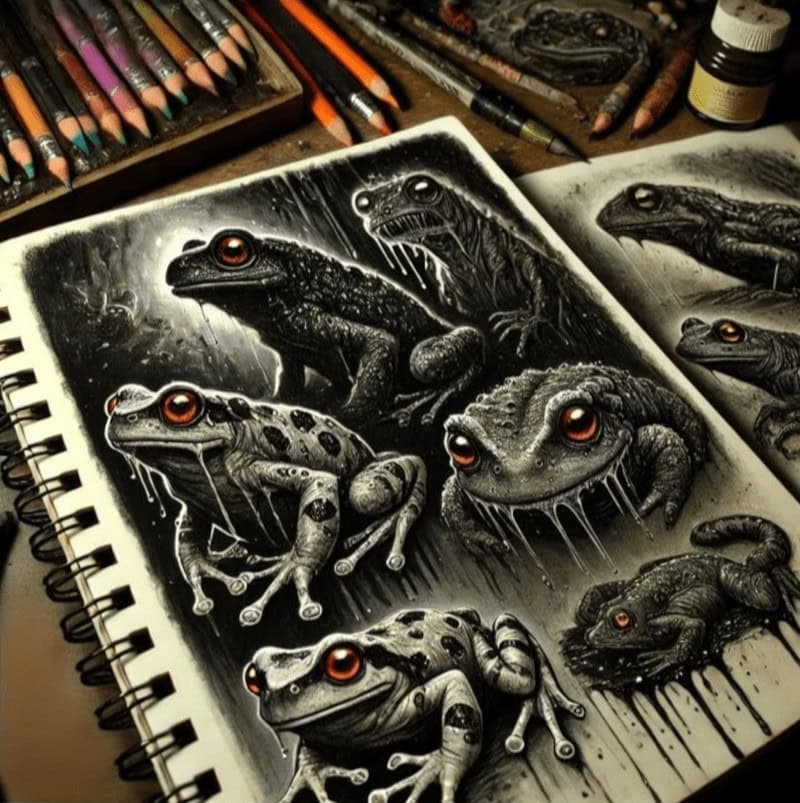
Amphibians are perfect for horror art because they already have that “I might be watching you while you sleep” vibe. Here’s why:
- Their glistening, slimy skin enhances their uncanny realism, making them feel unsettlingly lifelike – or disturbingly undead.
- Large, reflective eyes create an eerie, soulless stare. (Ever seen a frog look at you like it knows all your secrets?)
- Unusual limb structures allow for exaggerated horror designs – think extra-long fingers, twisted joints, or misplaced bones.
- Their ability to look both fragile and monstrous makes them incredibly versatile in horror art.
1. Tools & materials for amphibian sketching
To capture the perfect mix of slimy terror and haunting realism, you’ll want the right tools:
- Graphite & Charcoal – For soft shading and eerie textures.
- White Gel Pens – To highlight glossy, wet surfaces (and make your frog look extra drippy).
- Blending Stumps – Because nothing says “slimy horror” like smooth, seamless shading.
- Fine Liners – To define delicate wrinkles, folds and that cursed smile.
2. Step-by-step guide to drawing amphibians
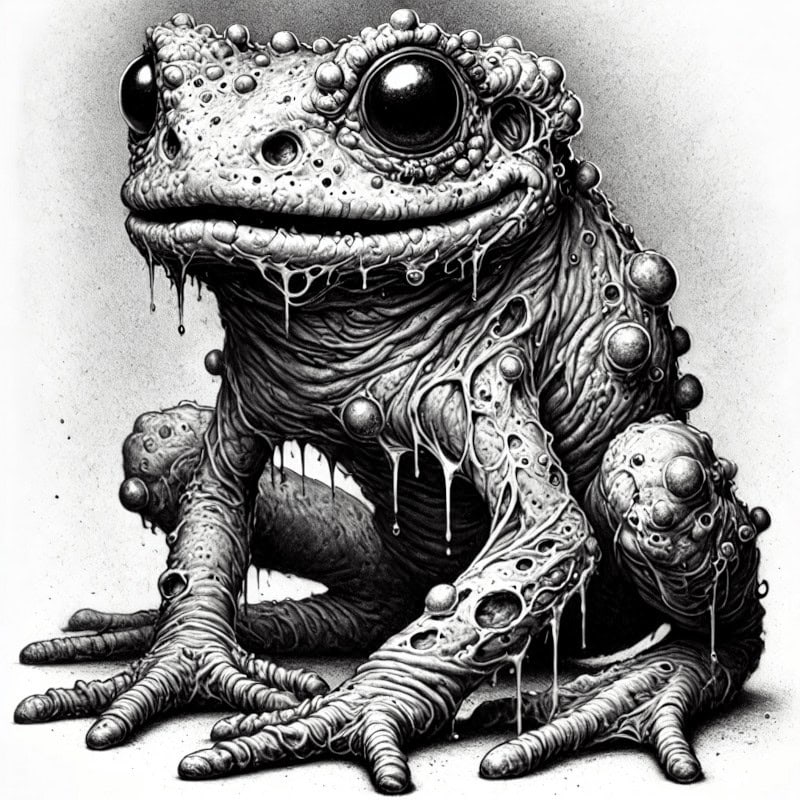
- Basic Shapes & Structure of Amphibians – Before making your amphibians horrifying, you need to understand their basic anatomy. Get the shapes right before you add extra eyeballs or tentacles that probably shouldn’t exist.
- How to Draw Wet & Slimy Skin Effects – Shiny, moist skin is crucial for realism. Learn to create believable wet textures – because a horror frog without that unsettling, damp sheen is just a regular frog, and we can’t have that.
- Horror Enhancements for Amphibians – Here’s where things get truly terrifying. Elongated limbs? Hollow, pupil-less eyes? A mouth that stretches just a little too wide? Now we’re talking horror.
3. Avoiding Common Mistakes
If your amphibian looks more adorable than horrifying, you might need to tweak a few things:
- Flat Shading? Add highlights and depth to enhance the eerie wetness.
- Too Cartoony? Exaggerate wrinkles, sagging skin, and unnatural proportions.
- Awkward Limb Placement? Good. That’s exactly what makes them creepy. Just make sure it still looks intentional.
Conclusion
Drawing amphibians for horror art blends realism with eerie exaggeration. Their slimy skin, wet textures, and weird anatomy make them ideal for creepy creature designs.
To push your horror frogs, toads, and salamanders to full nightmare status:
- Study real amphibians before creatively distorting their anatomy.
- Experiment with light and shadow to enhance their appearance.
- Try adding eerie extras like torn skin, exposed bones, or glowing, soulless eyes – because nothing says “unsettling” like an amphibian that looks a little too self-aware.
Keep experimenting, keep pushing your style, and most importantly – stay weird. Let your amphibians hop into the realm of nightmares and become the stuff of horror legend territory.
Happy sketching… just don’t let your creations leap off the page when you’re not looking.