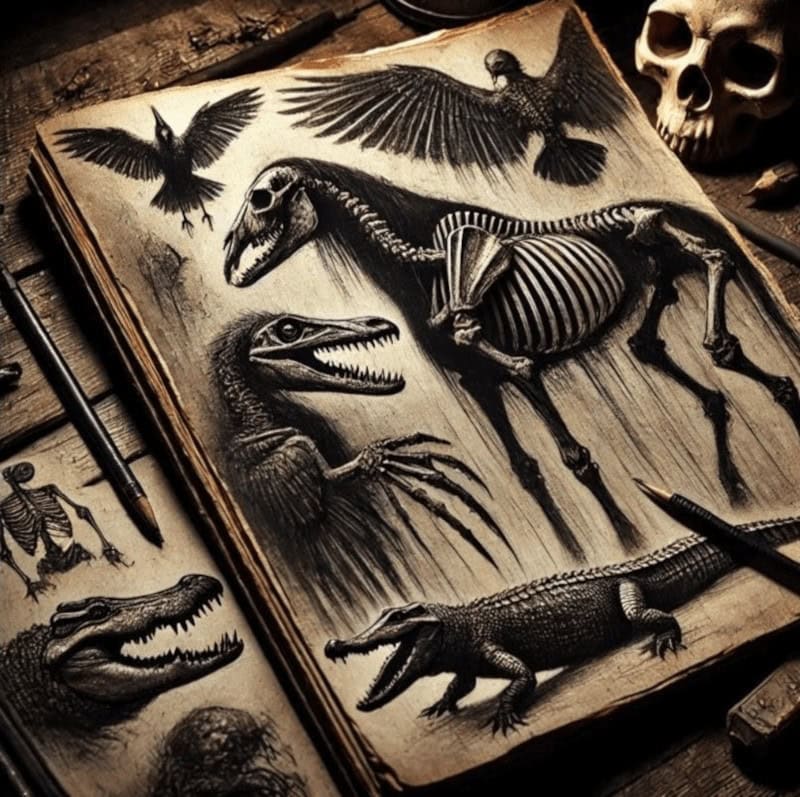
Animal anatomy in horror art is the key to creating creatures that feel believable, unsettling, and deeply wrong in all the right ways. Whether you’re sketching majestic beasts or unholy abominations that skitter in the dark, mastering skeletal structures, muscle movement, and proportions will take your designs from cool monster to “that thing looks like it has thoughts, and I don’t like that.”
This guide will teach you how to strategically break the rules of nature. Want to stretch a wolf’s limbs to twice their normal length? Give a horse a skull that looks like it’s seen too much. Go for it! With the right knowledge, you can create creatures that are just believable enough to make people deeply uncomfortable.
Because at the end of the day, the best horror isn’t just scary – it makes people question whether they ever really looked at a frog the right way.
Why animal anatomy matters in creature art
If you want to design a creature that feels alive (even if it’s undead), you need a strong grasp of animal anatomy. Even the weirdest monsters are scarier when they follow just enough real-world biology to trick the brain into thinking, “Wait… could that actually exist?”
- A solid anatomical foundation helps create creatures that feel realistic and believable, even in horror or fantasy settings.
- Understanding movement and posing makes your creatures look more dynamic and lifelike, because a terrifying beast that moves wrong is twice as creepy.
- Mixing real anatomy with creative distortions lets you design terrifying hybrids that blur the line between “That’s just a weird animal” and “Oh no, that thing is watching me.”
Key sections of animal anatomy in drawing:
1. Skeletal structures for creature art
Bones are the blueprints of terror. They determine how a creature moves, stands, and lurks menacingly in the dark corner of your nightmares.
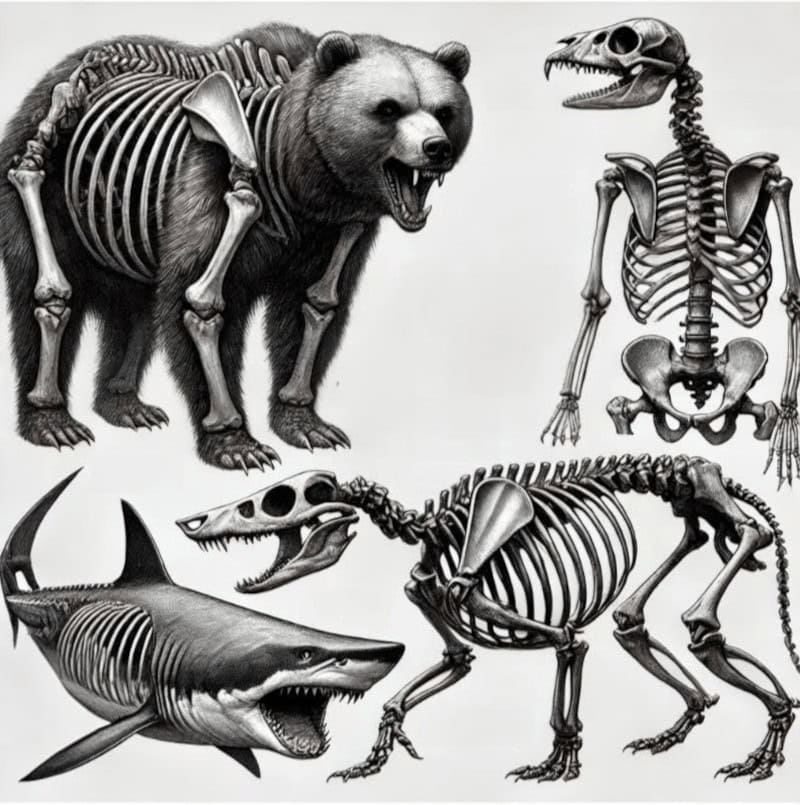
- Learn the foundation of animal skeletons to understand movement.
- Compare different skeletons: mammals, reptiles, birds, amphibians, and aquatic creatures.
- Discover how to exaggerate skeletal features for horror effects – elongated limbs, distorted spines, or extra joints that just shouldn’t be there.
Pro Tip: If your creature looks like it shouldn’t be able to stand, but somehow it does, you’re on the right track.
2. Muscle anatomy in animal drawing
Muscles add form, movement, and terrifying levels of tension to a creature. They also determine whether your beast lurks, lumbers, or sprints directly at you in a panic-inducing blur.
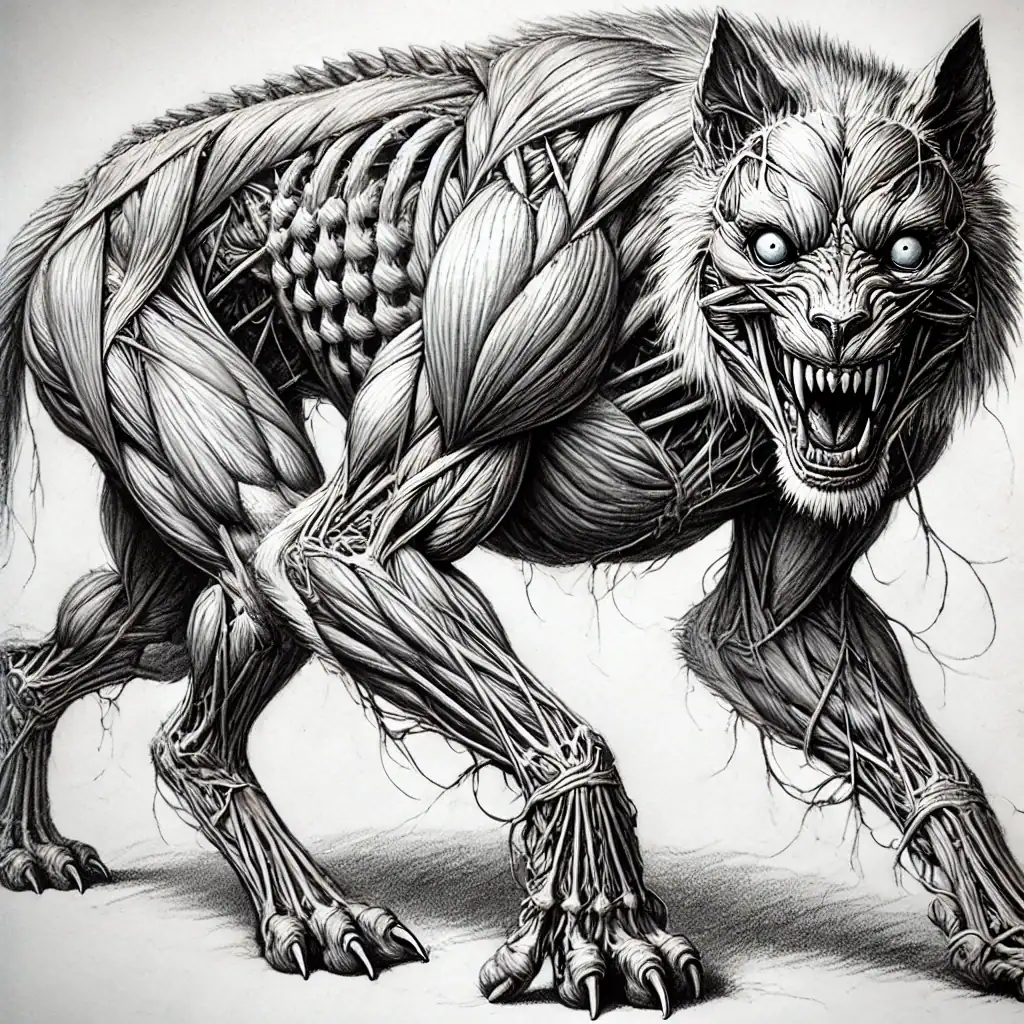
- Understanding how muscles influence form and movement is essential for making creatures appear solid and believable.
- Muscle tension can convey power, eeriness, or unnatural stiffness – think of a predator crouching to strike versus a rigid, corpse-like creature barely holding itself together.
- Layering muscle structures can push your design further – whether you want gaunt, skeletal creatures or grotesquely overdeveloped monstrosities with muscles where they shouldn’t be.
3. Proportions & pose design for Horror creatures
Want to make your creature look just wrong enough to be disturbing? Play with proportions and posing. The more unnatural the stance, the more it makes people instinctively uncomfortable.
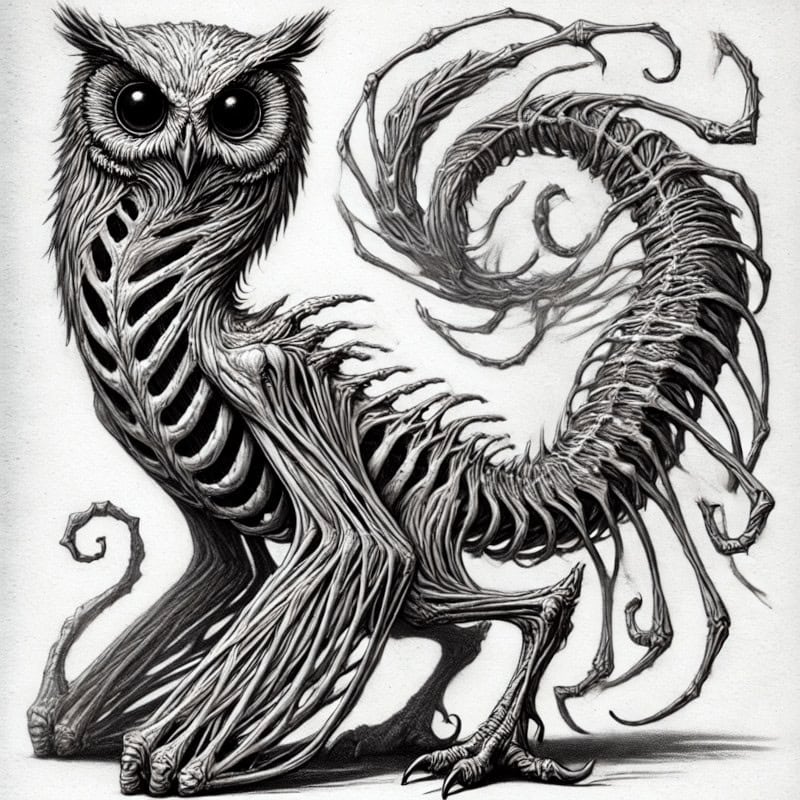
- Break down the proportions of different animal types – because a slightly too large head or a just barely elongated limb can take a creature from “cool” to “cursed.”
- Stretching, twisting, and warping proportions can make a creature look off-putting in a way you can’t quite explain. (Have you ever seen a deer with humanlike legs? Exactly.)
- Balance your unnatural poses – a creature that’s too still is just as terrifying as one that’s too flexible.
Final Thoughts: Practising and Experimenting with Animal Anatomy
Mastering animal anatomy is a continuous journey. The more you practice, the better you’ll spot the subtle details that make creatures feel alive, or horribly, unnervingly dead.
- If you’re sketching skeletal structures or exaggerated muscle forms, always remember the underlying anatomy – it keeps your monsters from looking like amorphous blobs of terror.
- Layering different anatomical elements enhances movement and expression, making horror creatures feel more alive, even in their unnatural forms.
- Studying real animals allows you to distort their natural anatomy in believable ways, making your horrors feel more grounded and eerie.
Want to bring eerie creatures to life? Try sketching an animal skeleton – then twist it into something nature never intended.