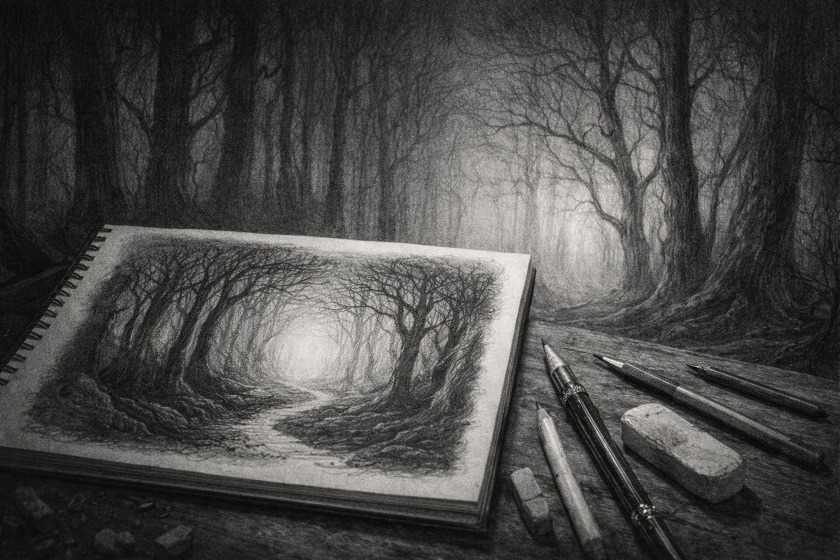
Creating Depth With Shading
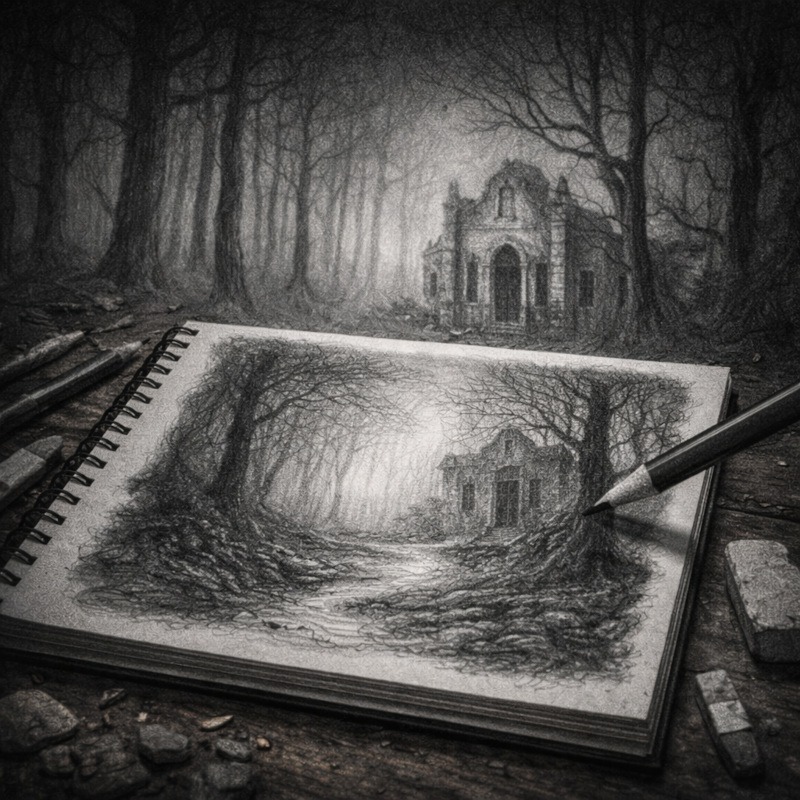
Depth is what stops your drawing from looking like it’s been pressed flat by a haunted ironing board. It gives your drawing space, mood, and that slightly unsettling feeling that something might be lurking just out of sight.
You don’t need advanced perspective knowledge to start creating depth. Simple shading choices alone can make a huge difference, especially when you understand how light and shadow guide the viewer’s eye.
Depth is what makes a drawing feel dimensional rather than stuck on the page. By playing with contrast, layering, and perspective, you can create the illusion of space even in simple pencil drawings.
In horror art, especially, depth helps build atmosphere. It can create tension, drama, or that quiet unease where the background feels just as important as the subject.
Why Depth Matters
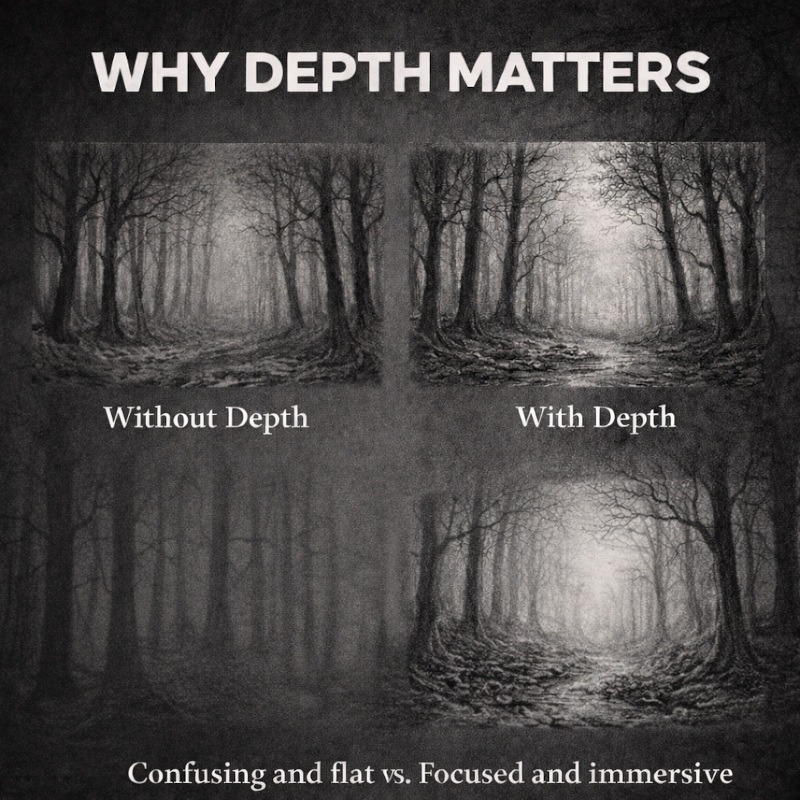
Without depth, drawings can feel flat or confusing. Everything sits on the same visual level, making it difficult for the viewer to understand what is close, what is far away, and where to focus.
Depth helps you:
- Guide the viewer’s eye
- Separate foreground, midground, and background
- Create mood and atmosphere
- Make scenes feel immersive
Even subtle depth can completely change how a drawing feels.
How Shading Creates Depth
Shading creates depth by controlling contrast and value.
Lighter areas appear closer to the viewer.
Darker areas appear further away or recede into space.
This isn’t because objects are actually darker or lighter. It’s just how our brains interpret contrast.
By carefully choosing where your darkest shadows and lightest highlights sit, you can suggest distance without drawing every detail. The eye fills in the rest.
Depth is not about adding more lines. It is about placing the right tones in the right places.
Simple Ways to Create Depth With Shading
Contrast Is Key
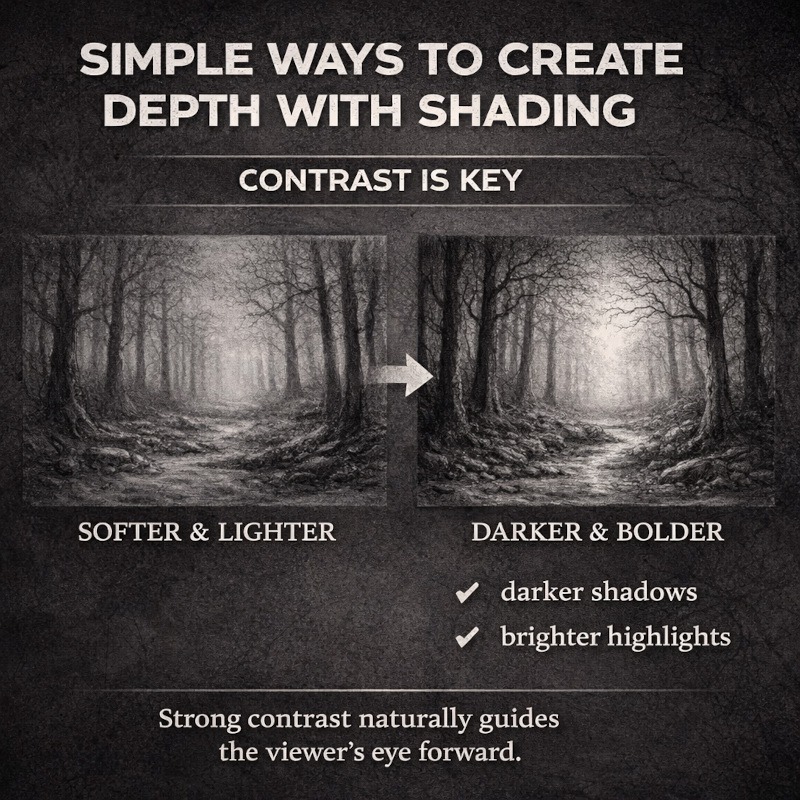
Strong contrast draws attention forward.
Areas you want the viewer to notice most should usually have:
- darker shadows
- clearer highlights
Less important areas can remain softer and lighter. This contrast naturally tells the viewer where to look first.
This contrast naturally tells the viewer where to look first, without you having to draw a giant arrow screaming “LOOK HERE”.
Layering Technique
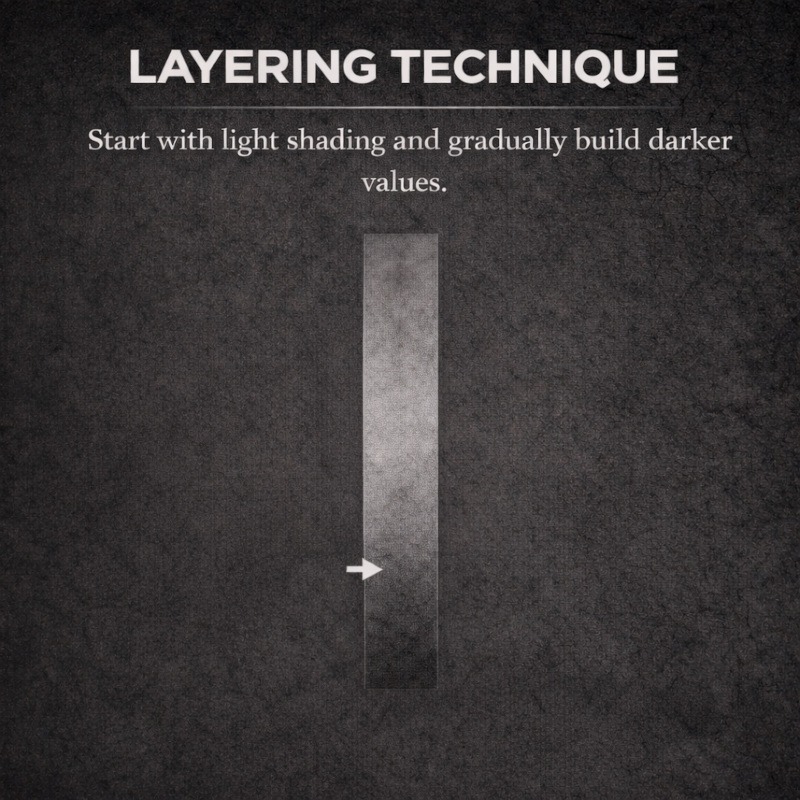
Start with light shading and gradually build darker values.
Layering allows you to:
- control transitions
- avoid harsh jumps in tone
- create smoother depth
Think of it like fog slowly thickening, even if there’s no actual fog in your drawing, rather than a sudden blackout.
If you go too dark too fast, you’re basically locking yourself into a spooky corner with no exit.
Atmospheric Perspective
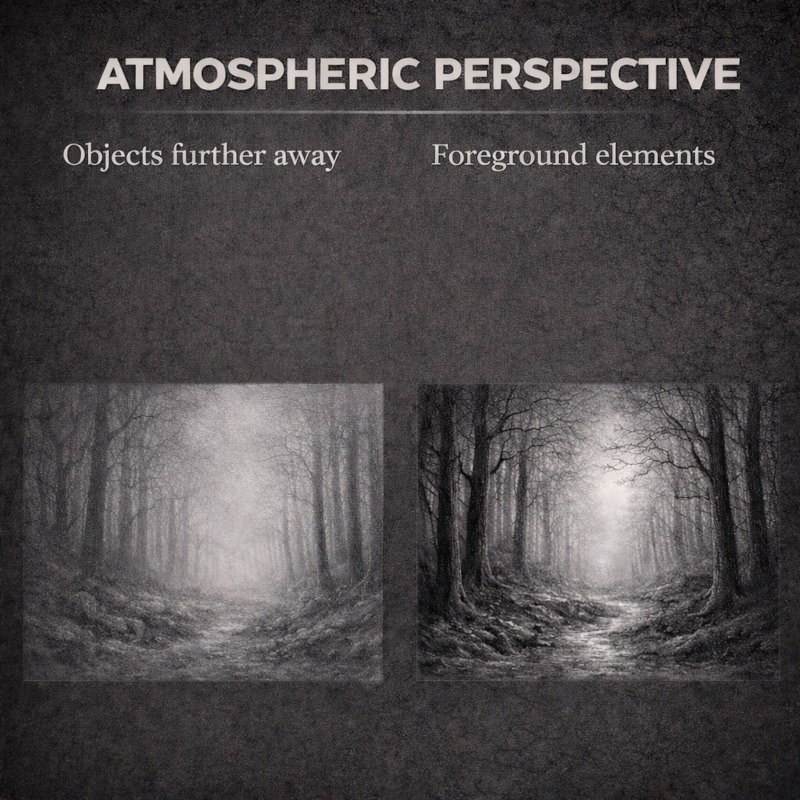
Objects further away usually appear:
- lighter
- softer
- less detailed
Foreground elements tend to have:
- stronger contrast
- darker shadows
- sharper edges
This technique works beautifully in horror scenes, especially with fog, corridors, forests, or graveyard settings.
This helps scenes feel deeper without adding more detail.
A Helpful Way to Think About Depth
Before shading, ask yourself one simple question:
What is closest to me, and what is furthest away?
That single decision will guide:
- How dark your shadows are
- How sharp your edges appear
- How much detail you need to include
You don’t need to overthink it. Recognising depth is more important than mastering it straight away. It comes with patience.
A Gentle Reminder
Depth does not require perfect realism.
You don’t need to shade every brick, crack, or leaf. A few thoughtful value changes can communicate far more than heavy detail ever could.
Your pencil does not need to suffer for realism. A handful of intentional marks often tells the story better.
Conclusion
Creating depth with shading helps your drawings feel more intentional and immersive. By understanding how contrast, layering, and distance work together, you can turn even simple sketches into scenes with atmosphere and presence.
As you practise, you will start to notice depth forming naturally through your shading choices, even without thinking too hard about it. At some point, you’ll stare at your drawing and think, “Wait… when did I get good?”
That moment is illegal to skip.
You are not aiming for perfection. You are learning how to observe and respond. And that already puts you further ahead than where you were before.
What You Learned
- Shading helps create the illusion of space
- Strong contrast brings areas forward
- Softer, lighter shading pushes areas back
- Layering builds depth gradually
- Atmospheric perspective adds mood and distance
- Depth relies more on value than detail
Up Next: Techniques to Add Texture and Depth
Next, we will look at practical shading techniques you can use to add texture and depth to your drawings, helping surfaces feel more believable without overworking them in the Techniques to Add Texture and Depth post.