Dark Fantasy vs. Horror Art: Finding Inspiration in the Shadows
If you’ve ever drawn something with glowing eyes, dramatic lighting and a suspicious amount of fog, then sat back thinking, “Is this horror… or is this fantasy… or have I just created a very moody wizard?” you’re not alone.
Dark fantasy and horror art both live comfortably in the shadows. They both involve tension, unsettling imagery and creatures that probably don’t pay taxes. But they’re not the same thing. The emotional intention behind each genre changes everything, from posture and lighting to whether your character looks powerful or like they absolutely regret entering that forest.
In this post, we’re breaking down what separates dark fantasy from horror art, where they overlap, and how to decide whether your next creation should inspire awe… or mild panic.
What Is Dark Fantasy?
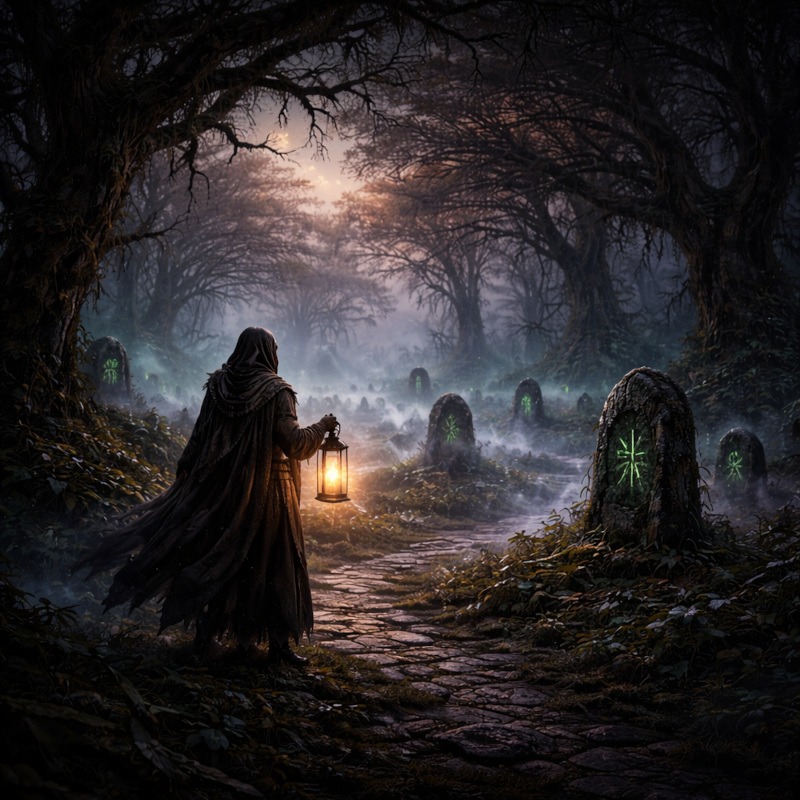
Dark fantasy blends traditional fantasy elements with darker, more unsettling themes. You still have magic, mythical creatures, dramatic landscapes and otherworldly settings. The difference is in tone.
Instead of heroic triumph and glowing optimism, dark fantasy leans toward moral grey areas, tragedy and looming danger. The world may be cursed, but it’s still immersive. There’s often beauty in the darkness.
Dark fantasy asks questions like:
What if magic has consequences?
What if the hero struggles instead of effortlessly winning?
What if the world is stunning but slowly falling apart?
The atmosphere may feel ominous, but it’s not always trying to scare you. It’s trying to draw you into a darker, richer version of fantasy.
Even when the world is cursed or tragic, it still feels structured and immersive rather than unstable. Dark fantasy assumes the world functions, even if it is cruel.
What Is Horror Art?
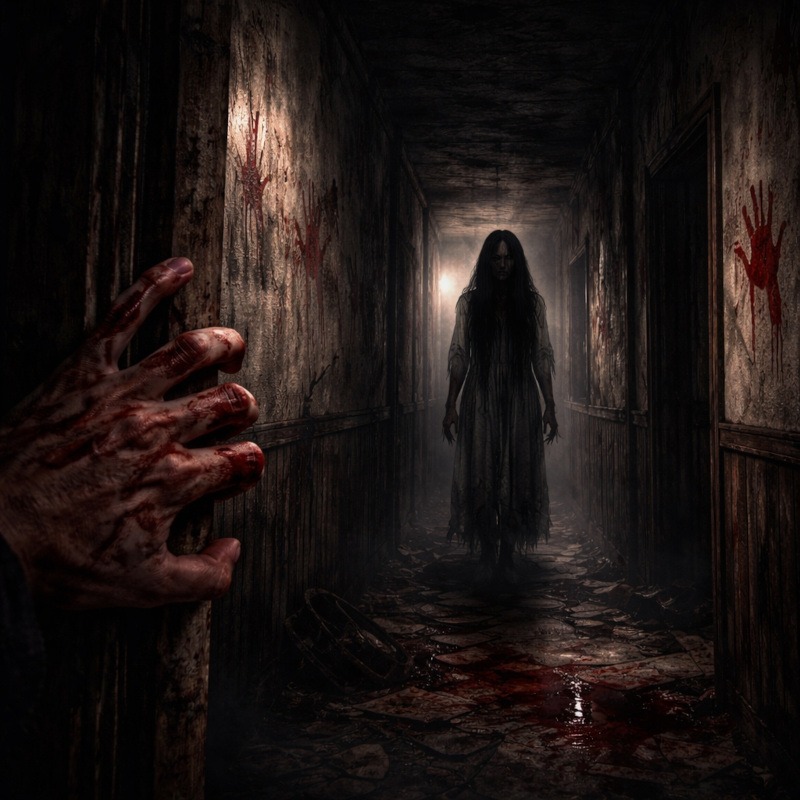
Horror art has a clearer emotional target. It aims to unsettle, disturb or frighten the viewer. The focus shifts from wonder to vulnerability.
Horror builds tension around threat, vulnerability or loss of control.
Horror often emphasises the unknown, psychological discomfort and loss of control. The character may not be powerful. They may not understand what is happening. The threat feels immediate rather than atmospheric.
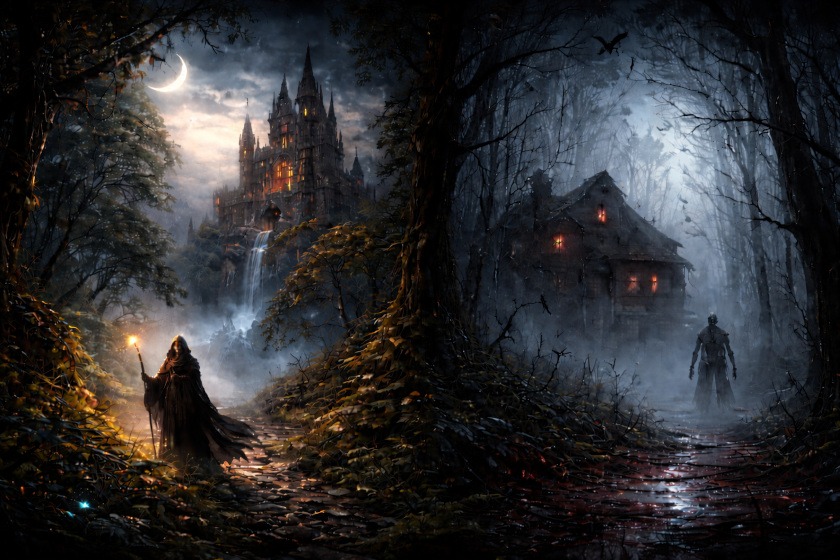
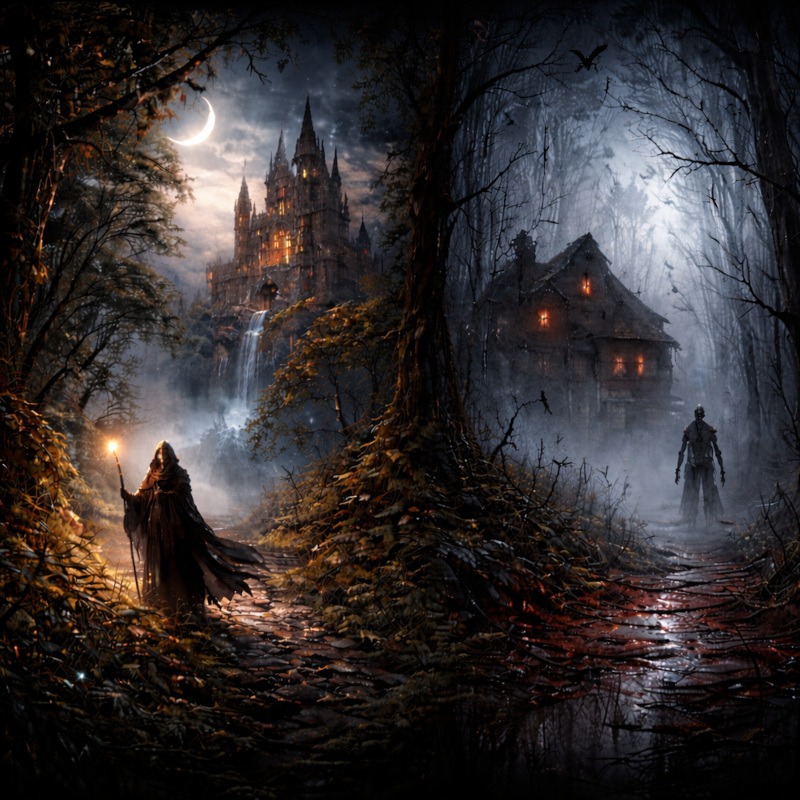
Dark fantasy might show a sorcerer standing confidently in a cursed forest. Horror might show what is standing behind them.
Key Differences Between Dark Fantasy and Horror
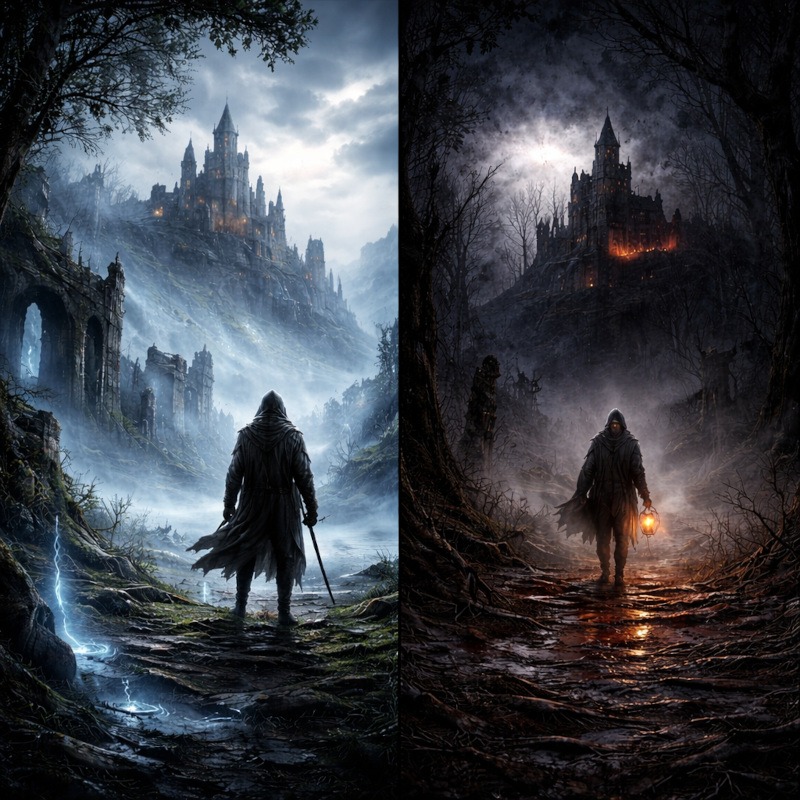
One of the clearest differences is emotional intent. Dark fantasy often evokes awe, melancholy or tragic beauty. Horror aims for dread, fear and unease. If your viewer feels impressed but slightly uneasy, you may be in dark fantasy territory. If they feel like something is about to go very wrong, you’re leaning toward horror. For example, a lone knight standing confidently in a cursed kingdom leans toward dark fantasy. The same knight lost in a forest where something unseen is watching shifts into horror.
Power dynamics also play a role. In dark fantasy, characters usually have some agency. They may struggle, but they possess skill, magic or authority. In horror, power is uncertain or removed entirely. The character may be vulnerable, isolated or overwhelmed.
Visually, dark fantasy often features dramatic lighting, ornate details, symbolic imagery and mythic scale. Horror leans into distortion, decay, threatening environments and subtle or overt danger. Both can be dark. The difference lies in what that darkness is trying to make the viewer feel.
Where They Overlap
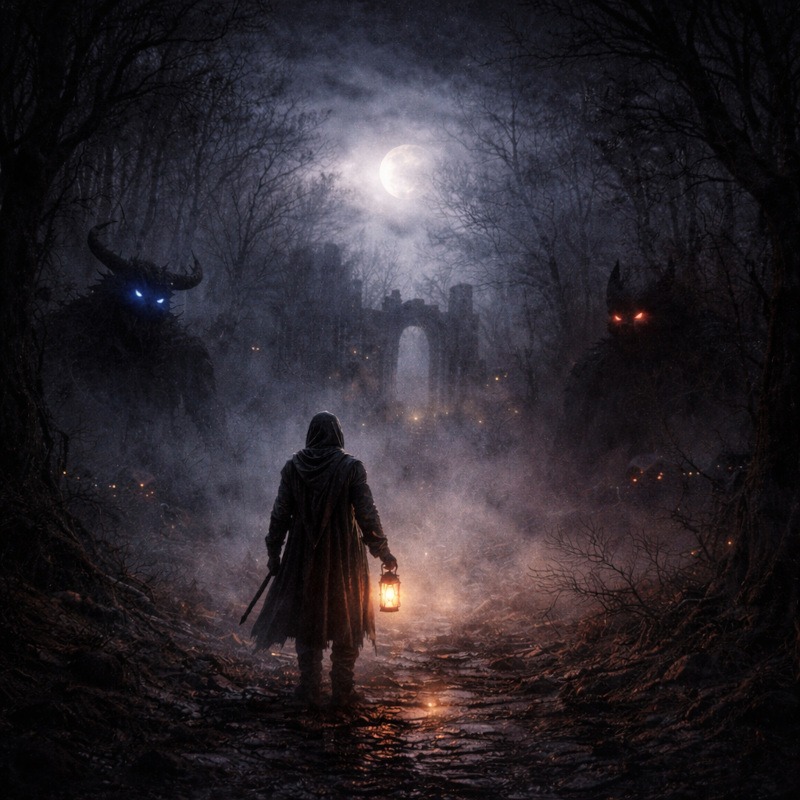
This is where confusion happens. Dark fantasy can become horror if the focus shifts from atmosphere to survival. A cursed kingdom might feel epic at first, but if the narrative emphasises fear and vulnerability, it crosses into horror territory.
Likewise, horror can borrow elements of fantasy. A monster may have mythological origins. A setting may include magical systems. The key difference is still intent.
Are you inviting the viewer to explore a dangerous world, or asking them to endure one?
That shift in purpose changes everything from composition to lighting.
How to Decide Which Direction to Take
When designing a piece, start by deciding what you want the viewer to feel. Do you want them to admire the world, or fear it? Is the main character powerful, or in danger? Is the threat immediate, or distant and atmospheric?
If you’re aiming for dark fantasy, emphasise scale and world-building. Use dramatic lighting that highlights the environment. Show characters with presence, posture and confidence.
If you’re aiming for horror, reduce safety cues. Increase contrast. Add subtle distortions or hidden threats. Focus on vulnerability rather than dominance.
Choosing the emotional core first makes every other artistic decision clearer.
Common Mistakes Artists Make
A common trap artists fall into is blending the genres without clear intention. Adding glowing eyes, blood, or spikes doesn’t automatically make something horror. Likewise, adding a cloak and sword does not instantly create dark fantasy.
Another mistake is pushing intensity too early. If everything is extreme from the start, there is no emotional progression. Both dark fantasy and horror benefit from contrast. Build tension gradually rather than starting at maximum volume.
Clarity of purpose is what separates a strong piece from something that feels confused.
Sketch Exercise: Shift One Concept Between Genres
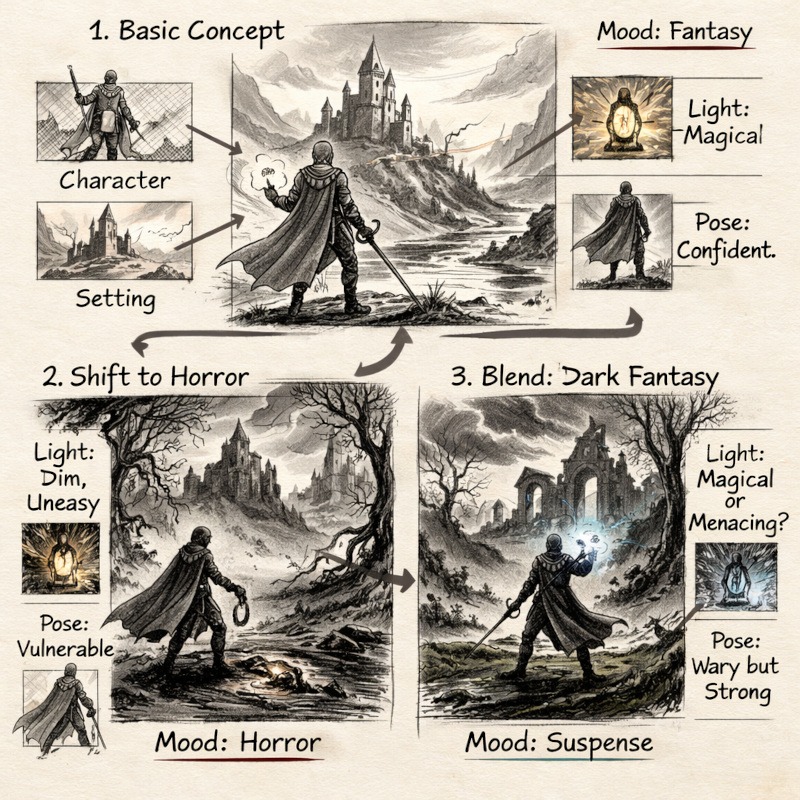
Try this simple exercise to see the difference in action:
Step 1:
Draw a character standing in a dark forest. Keep the pose neutral and the environment simple.
Step 2:
Turn the scene into dark fantasy. Consider adding armour, a magical weapon or subtle glowing symbols. Adjust posture to feel confident and grounded. Use lighting to highlight the character’s presence rather than hide it.
Step 3:
Redraw the same scene as horror. Remove visible signs of power or protection. Darken the environment. Add subtle danger in the background. Change posture to tension or uncertainty.
Step 4:
Compare the emotional impact. Notice how lighting, posture and context shift the entire tone of the image.
If one version feels immersive and epic while the other feels like something terrible is about to happen, you have successfully separated the genres.
The goal is not to redraw everything, but to shift emotional intent using subtle changes.
Conclusion
Dark fantasy and horror art may share similar aesthetics, but they serve very different emotional purposes. Dark fantasy invites the viewer into a shadowed world filled with mystery and power. Horror strips away comfort and replaces it with uncertainty.
The difference often comes down to one question: Is your character in control, or are they about to discover something they really wish they hadn’t?
When you decide whether you want to create awe or unease, admiration or dread, your artistic choices become clearer and more intentional. And once you understand that shift, you stop accidentally creating heroic sorcerers when you meant to design impending doom.
Which, let’s be honest, happens more often than anyone wants to admit.
What You Learned:
- Dark fantasy focuses on atmosphere, world-building and mystery rather than immediate fear.
- Horror art aims to create unease, vulnerability and emotional discomfort.
- Characters in dark fantasy often have power or agency, while horror characters are usually in danger or lacking control.
- Emotional intent determines whether a scene feels immersive or threatening.
- Small changes in lighting, posture and environment can shift a piece from dark fantasy into horror.
- Choosing the feeling you want first makes your artistic decisions clearer and more effective.
Continue Exploring Dark and Macabre Art
Now that you understand the difference between dark fantasy and horror, explore how those styles developed:
Or examine specific creators who shaped modern horror aesthetics:
- H.R. Giger – The Architect of Beautiful Nightmares
- Zdzisław Beksiński – Painting the Beauty of Desolation
- Junji Ito – The Master of Psychological and Body Horror
If you want to dive even deeper into psychological discomfort, explore: