Designing Cryptids: How to Create Your Own Creature of Nightmares
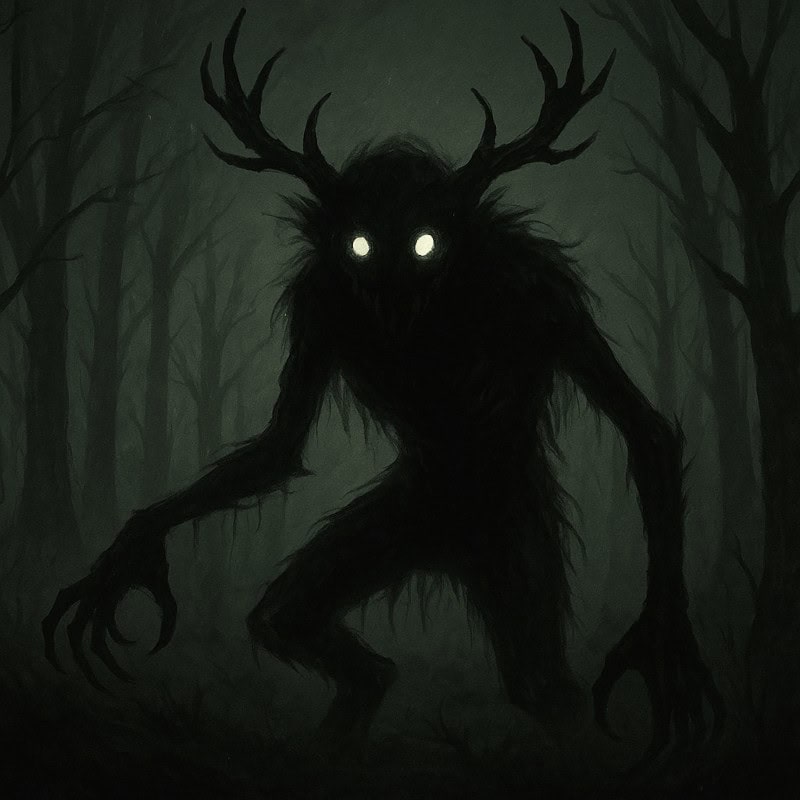
Ever wanted to invent a monster that feels so real, people swear they’ve seen it? That’s where cryptid design comes in.
Cryptids are the mystery guests of the monster world. Unlike vampires or zombies (the rockstars of horror – overplayed, overhyped, and trying way too hard to stay trendy), cryptids are rare, slippery, and usually caught only in blurry photos or shaky videos. Some, like Mothman or the Jersey Devil, have been around for centuries. Others just show up in local gossip and hang around forever.
The fun part? You don’t have to stick with old legends. You can create your very own cryptid – a creature that feels so real, people might whisper about it on late-night forums.
Because honestly, why settle for Bigfoot when you could invent Moody-Toe, the cryptid that stalks wheelie bins and steals odd socks?
1. Start With the Shape
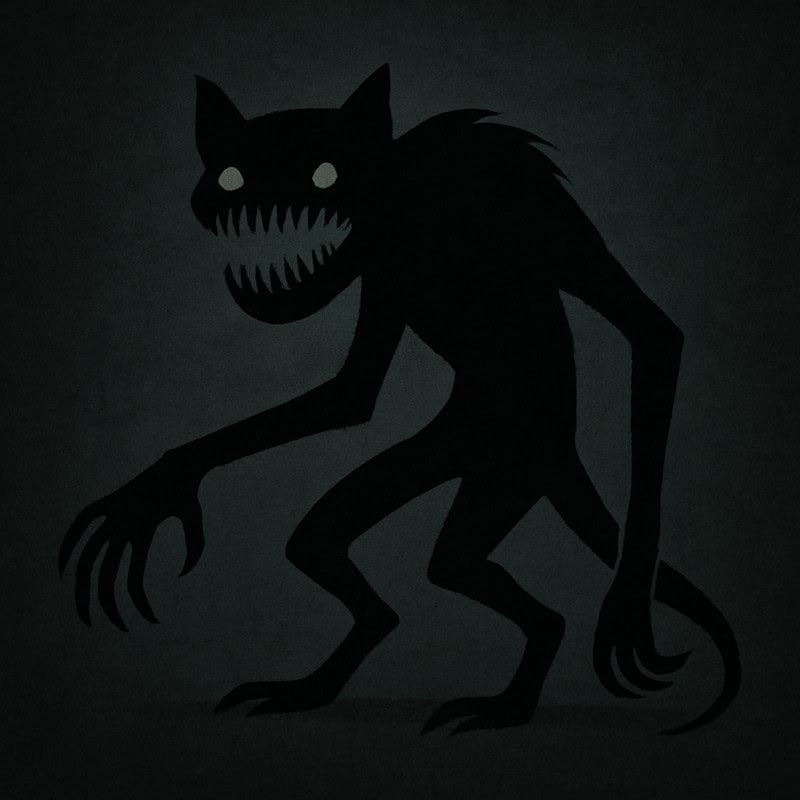
Before you think about details like teeth, scales, or “does it eat people or just hiss a lot,” start with the basic shape. Horror often works best in shadows, especially when you understand how light and shadow behave in horror art.
Tips for Shapes:
- Stretch it out: Long arms or necks instantly feel wrong.
- Add imbalance: A hunched back, one arm longer than the other, or horns pointing in different directions.
- Keep it bold: Think about how Mothman’s wings or Nessie’s long neck are easy to spot, even in the dark.
Test It:
Fill your design in as a solid black shape. If it still looks spooky, you’re on the right track. If it doesn’t, adjust the proportions or silhouette until it feels unsettling. Once it works, give your creature a name and a backstory.
2. Mix Real Anatomy with Weird Twists
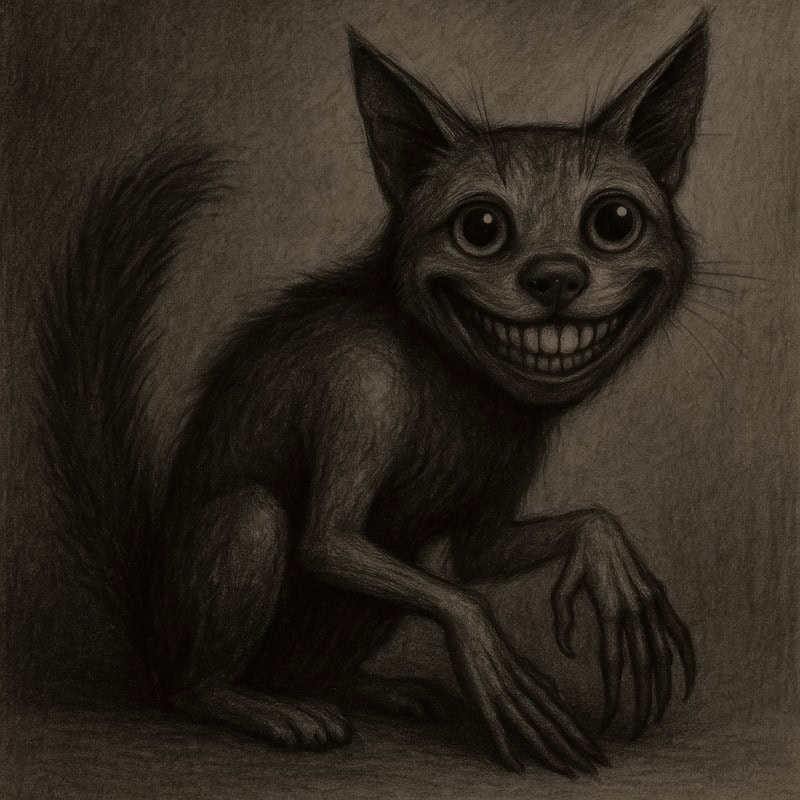
For a creature to feel believable, it needs some real-life grounding. Start with something familiar – a wolf, deer, bird, or even a person – and then twist it.
Ideas to Try:
- Swap joints: A wolf with human knees = nope.
- Mix animals: A fox with spider eyes, a deer with fish gills.
- Push proportions: Too-long fingers, a smile that’s too wide, eyes that are too human.
Quick Sketch Idea:
Draw a normal animal three times, but change one thing each time:
- Bend its legs the wrong way.
- Give it an unnatural mouth.
- Mess with the eyes.
You’ll see how fast “cute” turns into “oh no”.
3. Use Folklore for Inspiration
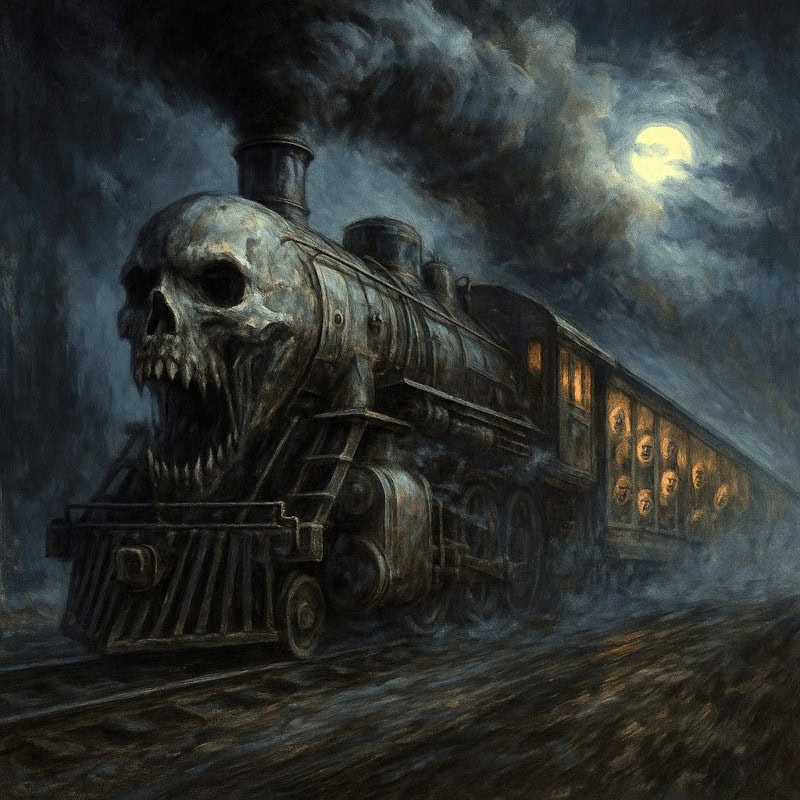
Cryptids feel scarier when they’re tied to real places and stories. Folklore is your goldmine here, especially when exploring regional legends and urban myths.
How to Use It:
- Look up creepy local tales: the haunted woods, the ghost dog, the lake you don’t swim in after dark.
- Twist it a little: A ghost train could run on screaming passengers instead of steam.
- Anchor it to a location: “The beast that lurks in Black Hollow” sounds much scarier than just “random monster in a forest.”
4. Give It Personality
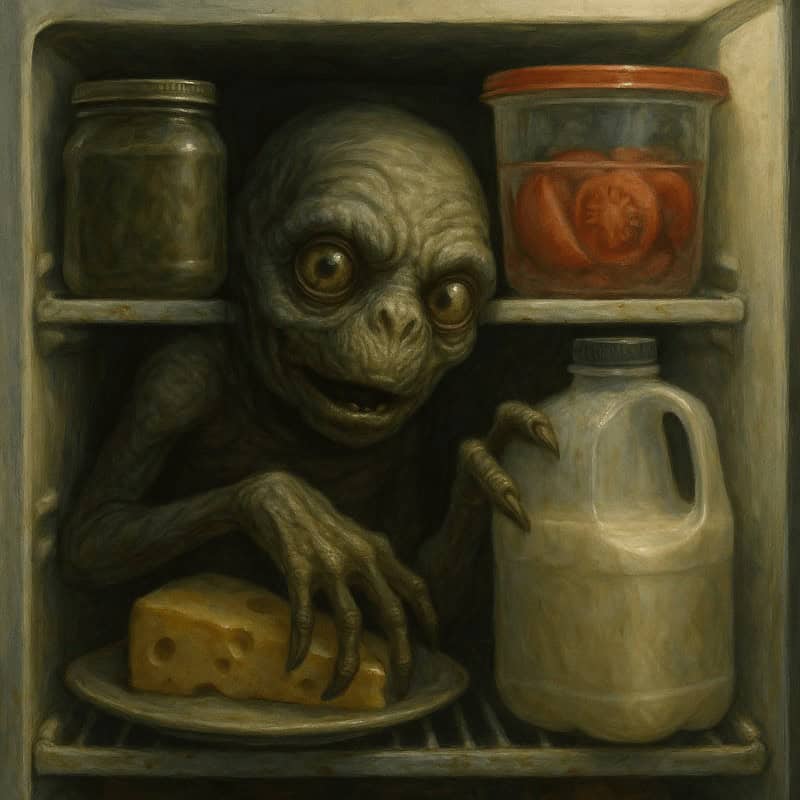
Appearance is important, but a cryptid truly comes to life when it has traits and habits.
Ask Yourself:
- Where does it live? (Forests, lakes, old buildings, or even your fridge?)
- How does it show itself? (Footprints, scratching noises, strange smells?)
- What happens if you meet it? (Vanishing, going mad, losing all your spoons?)
Fun Extra: Write a fake newspaper headline about your cryptid.
Examples:
- “Local Man Claims He Was Chased by Antlered Figure on Two Legs”
- “Screams Heard at Lake Again – Officials Say It’s the Wind, Residents Say Otherwise”
5. Think About Sounds and Smells
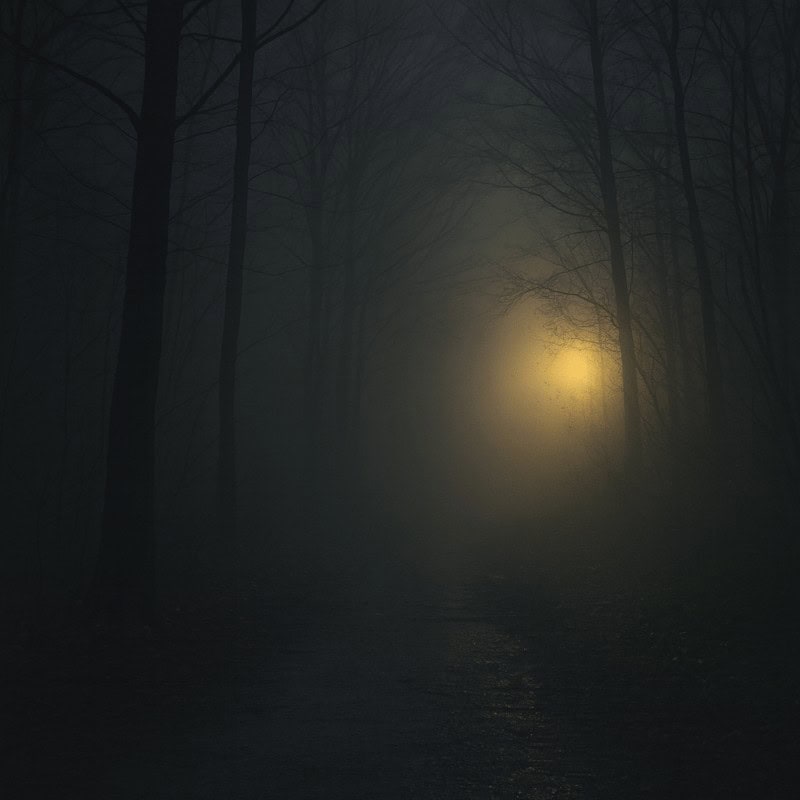
Sight isn’t the only sense that sells a scare. Some of the creepiest legends describe what you hear or smell before the monster shows up.
- Sounds: clicks, whispers, or your name being called.
- Smells: decay, sulfur, or something weirdly ordinary like burnt popcorn.
- Atmosphere: animals going quiet, sudden fog, or a sharp chill in the air.
These details add depth and atmosphere to your art, helping create eerie background scenes and environments that make a creature feel real.
6. Try a Creature Challenge
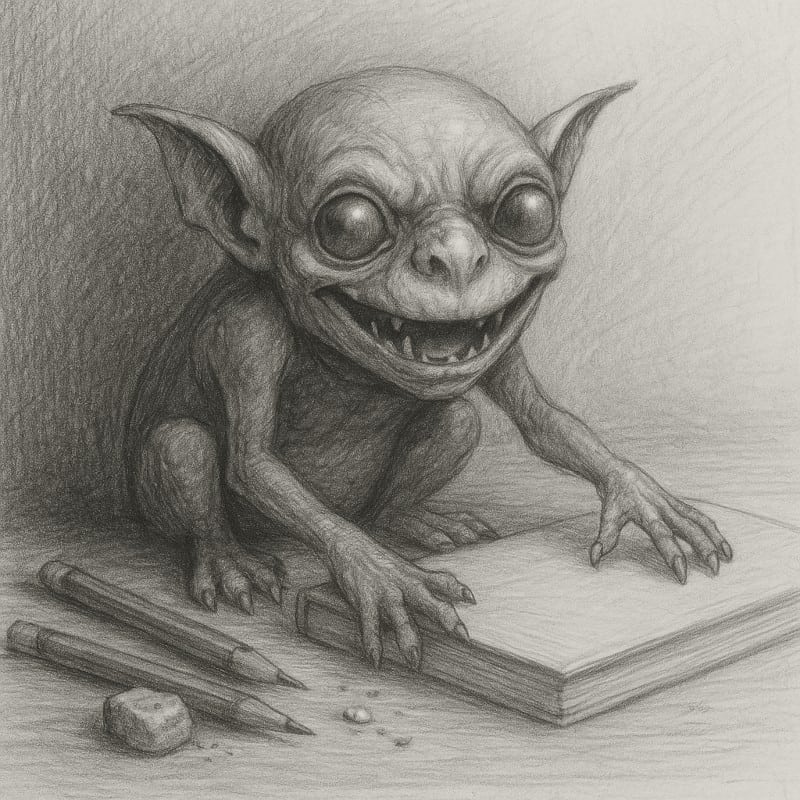
Let’s have some fun.
Challenge Idea:
Design a cryptid that steals sketchbooks and snacks on eraser crumbs.
- Does it leave smudges behind?
- Does it breathe graphite dust?
- Does it hoard pencils in a creepy little den?
Or try this: design a cryptid that sabotages your art. Maybe it whispers bad advice while you draw – “Yeah, put the eyes right next to each other. Perfect.”
7. Make It a Legend
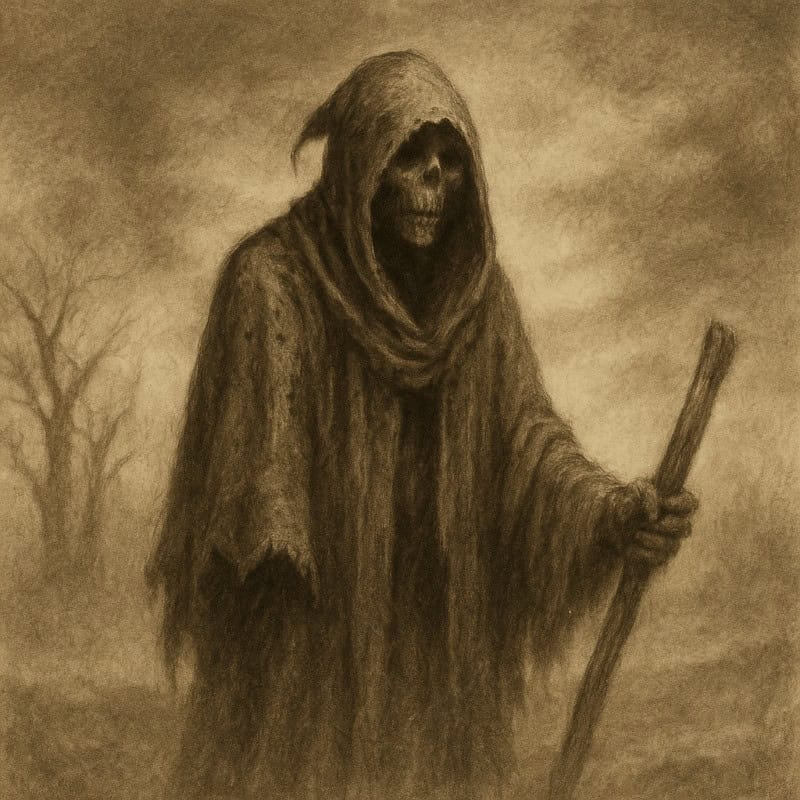
To conclude, give your cryptid a name and a brief history. That’s how monsters become legends.
- Use names linked to places or slang (The Crooked Hollow Beast, The Drain Witch, Old Crookedback).
- Write a short “sighting story” to go with it.
- Connect it to a real location so people can imagine where it hides.
9. Real-Life Animals That Already Look Like CRyptids
Sometimes you don’t even need imagination – nature has already done the creepy work for you. Real animals can look so bizarre that they blur the line between biology and creature design inspiration. Studying them is a great way to spark ideas for your own cryptids.
Examples That Feel Like Cryptids:
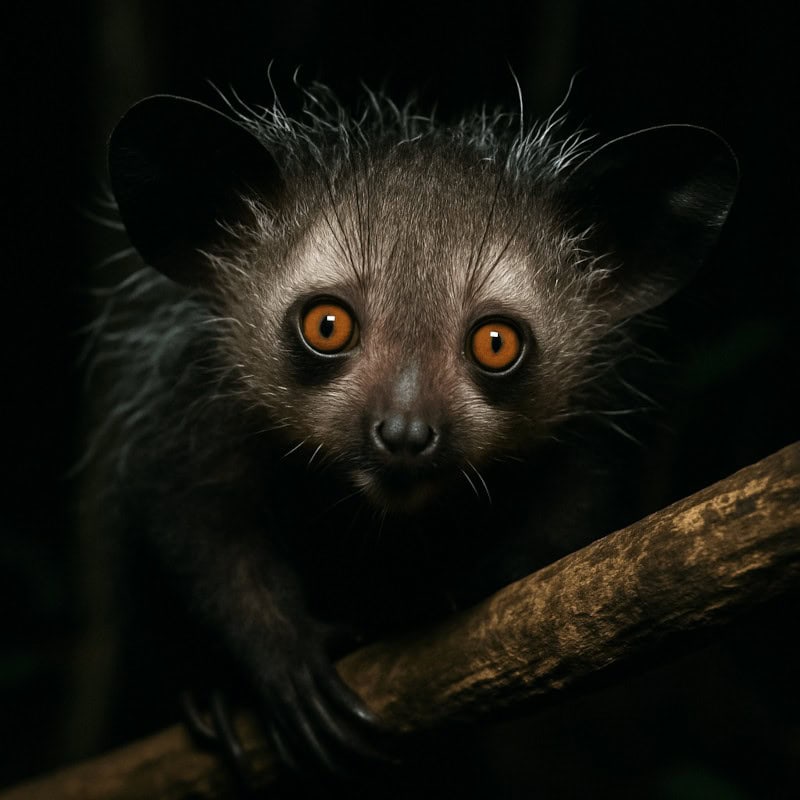
Aye Aye
This nocturnal lemur from Madagascar is the stuff of legends. With its wide eyes, scruffy fur, and freakishly long middle fingers, it’s no wonder local folklore once branded it as a bad omen. In some villages, people even believed it could curse you by pointing. In reality, it just taps on trees with that finger to find insects – but tell me that doesn’t sound like the perfect basis for a creepy, spindly-fingered cryptid.
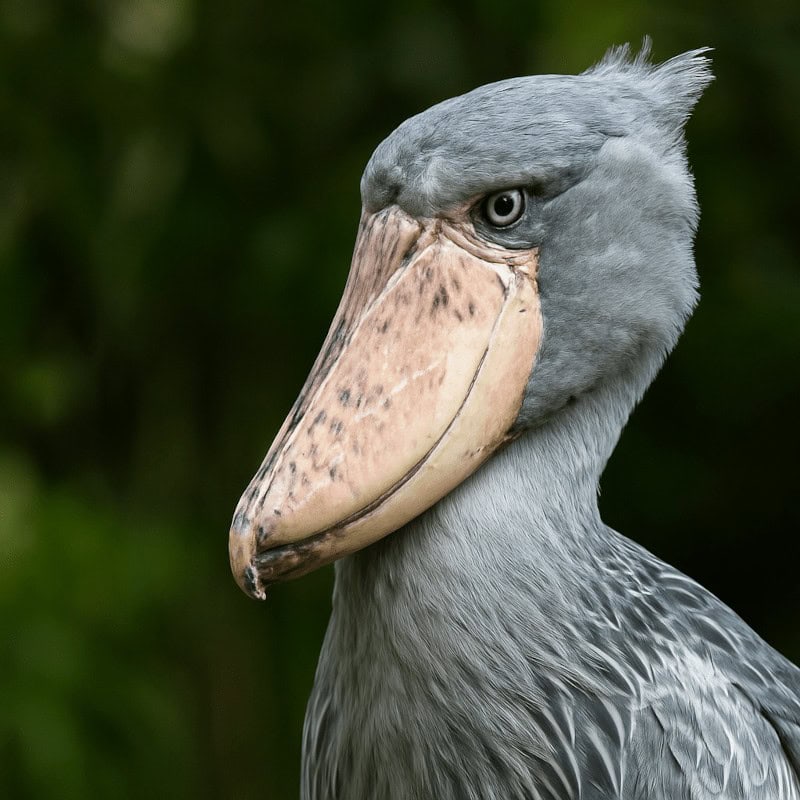
Shoebill Stork
Standing up to five feet tall, with a massive shoe-shaped beak and a gaze that could curdle milk, the shoebill is basically the final boss of the bird world. It can stand completely motionless for hours before striking with lightning speed – all while looking like it’s silently judging your life choices. And when it claps its bill, the sound is so loud and mechanical that it’s been compared to a machine gun. If you didn’t know better, you’d think this bird escaped straight out of a horror game.
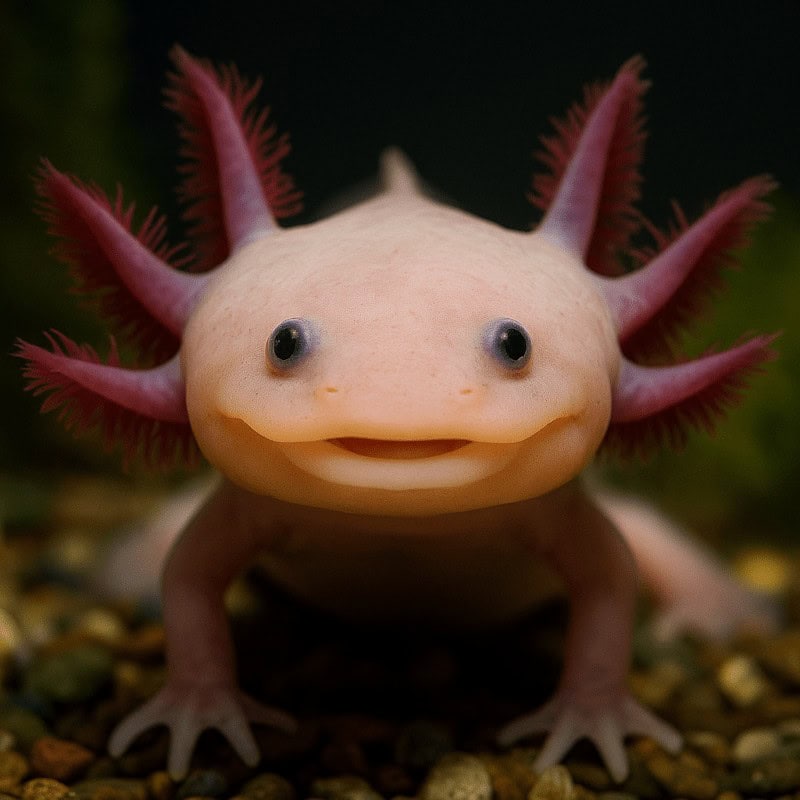
Axolotl
The axolotl, often referred to as the “walking fish,” is actually a type of salamander that retains its juvenile features throughout its life. With its feathery gills and odd little smile, it’s cute in an aquarium… but now imagine it scaled up to human size, staring at you from the surface of the lake. Suddenly less “aww” and a lot more “ahhh!” It’s a great reminder that even adorable features can become nightmare fuel if pushed far enough.
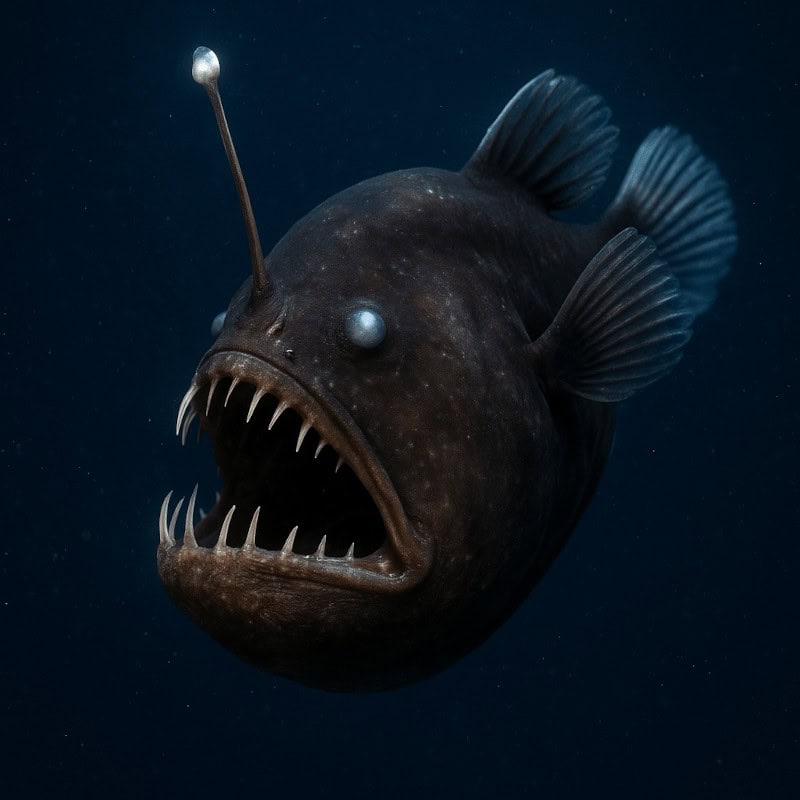
Anglerfish
If cryptids had a training school, this would be the head teacher. Living in the black depths of the ocean, the anglerfish dangles a glowing lure to attract prey – only to snap them up with its oversized jaws and needle teeth. It’s basically a living jump scare. If you ever need inspiration for designing a cryptid mouth, the anglerfish is your monster muse.
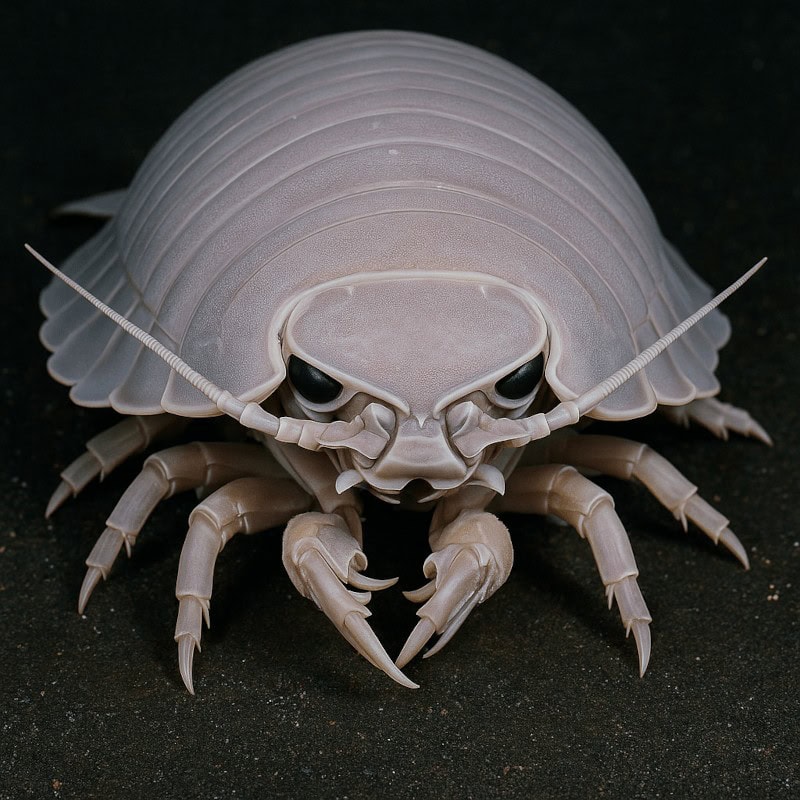
Giant Isopod
Take a woodlouse, scale it up to the size of a dinner plate, and drop it in the ocean – that’s the giant isopod. With its armour-plated shell and way too many legs, it looks like a cockroach dressed for medieval battle. They scuttle along the seabed eating whatever they can find, but if one wandered into your kitchen, you’d be ringing the priest before pest control.
Takeaway: If you ever feel stuck designing cryptids, just Google “weird animals” and you’ll discover nature has been doodling nightmare fuel since forever.
10. Sketch Practice Prompts
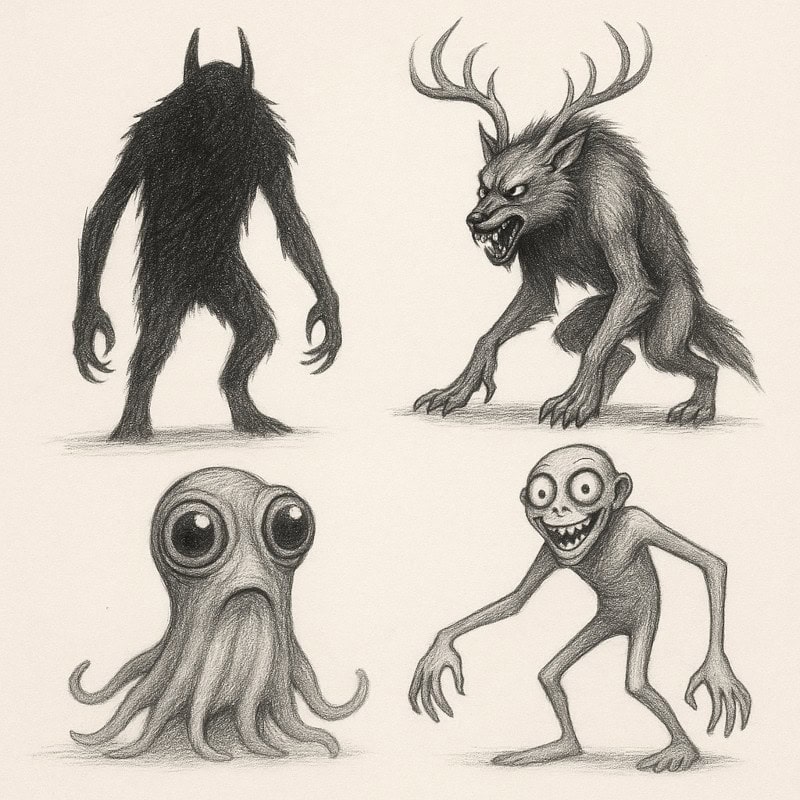
Want to practice your cryptid skills? Here are a few drawing challenges to get your imagination crawling out of the shadows:
- Silhouette Game:
Draw three solid black shapes: one tall and looming, one hunched and heavy, one crawling low to the ground. Which one creeps you out the most? - Hybrid Challenge:
Pick a local animal (fox, deer, crow, badger) and mash it with one folklore trait (glowing eyes, human hands, antlers). Bonus points if your creature looks like something that could eat your bin. - Sound-Inspired Creature:
Imagine a sound in the dark – scratching, clicking, a whisper of your name. Now sketch a creature that could make that noise. Don’t overthink, just let the sound guide the design. (If it ends up looking like your neighbour Derek, you may need to move.) - One Feature Focus:
Create three quick sketches where you exaggerate just one feature: eyes too big, arms too long, or mouth too wide. Notice how a single change can shift the whole mood.
These exercises aren’t about polished drawings – they’re about letting your imagination off the leash and seeing what crawls out.
11. Bonus Exercise: Local Legends Design
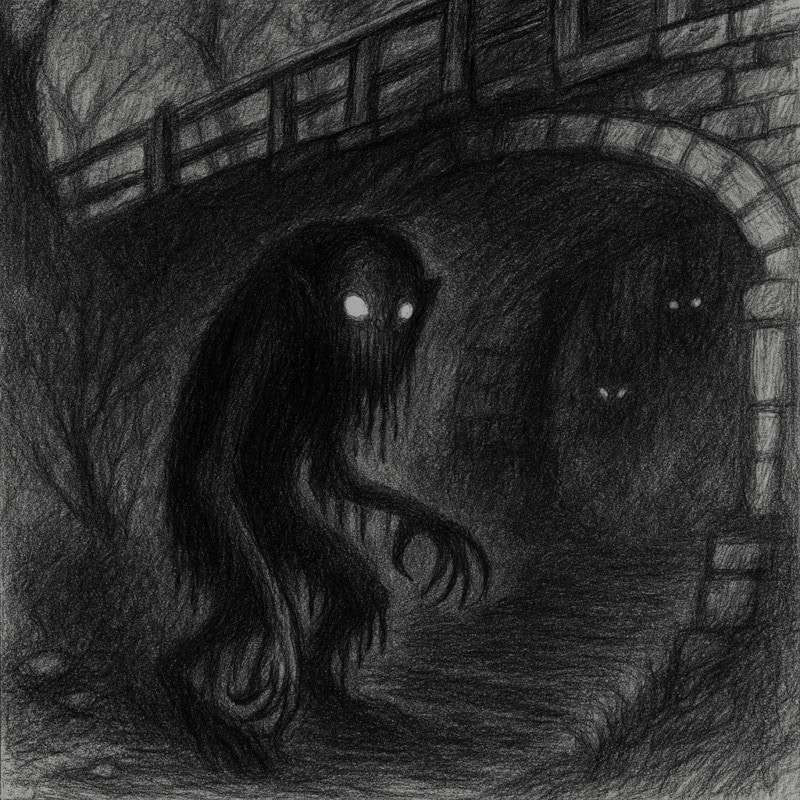
One of the easiest ways to make a cryptid feel believable is to tie it to a real place. Legends thrive when people can point to a spot on the map and say, “That’s where it lives.”
How to Try It:
- Pick a familiar location. It could be the woods outside town, an abandoned building, a lonely bridge, or even your local corner shop.
- Ask: What would haunt this place?
- A bridge – a dripping figure that waits beneath.
- A field – a beast with glowing eyes that paces the hedgerows.
- A shop – a faceless cashier who never leaves (and still asks if you’ve got a loyalty card).
- Design your cryptid so it belongs to that environment. Think about how it hides, moves, or hunts there.
- Write a one-line legend. Example: “Don’t cross Miller’s Bridge after midnight – that’s when the Hollow Walker rises.”
This is a brilliant exercise because it blends design with storytelling. Plus, it gives you an excuse to side-eye creepy places in your own town and mutter, “Yeah, something definitely lives there.“
Final Thoughts
Designing cryptids is about blending the real with the unreal. Ground your monster in familiar shapes, folklore, or behaviour, then twist it until it feels wrong. It’s not just about drawing something creepy – it’s about creating a story that feels like it could be true.
Whether you pull inspiration from nature, sketch exercises, or your own hometown, every strange idea can become a legend if you lean into it. So grab your sketchbook, add a little weirdness, and unleash your very own cryptid. Just don’t be too surprised if you hear a knock at your window later tonight…
Got a cryptid idea of your own? Share it in the comments – you never know, it might become the next urban legend.
Related Posts You Might Like
If you love blending myth with imagination, these related posts will take you further into the dark corners where stories and sketches come alive:
- Cryptid Horrors: When Legends Go Rogue
Learn about the classics before inventing your own. - Local Legends: Haunted Tales From Home
Use ghost trains, haunted lakes, and alley cats as inspiration for your own creations.