Learn the fluff, the form, and the forocity – one whisker at a time.
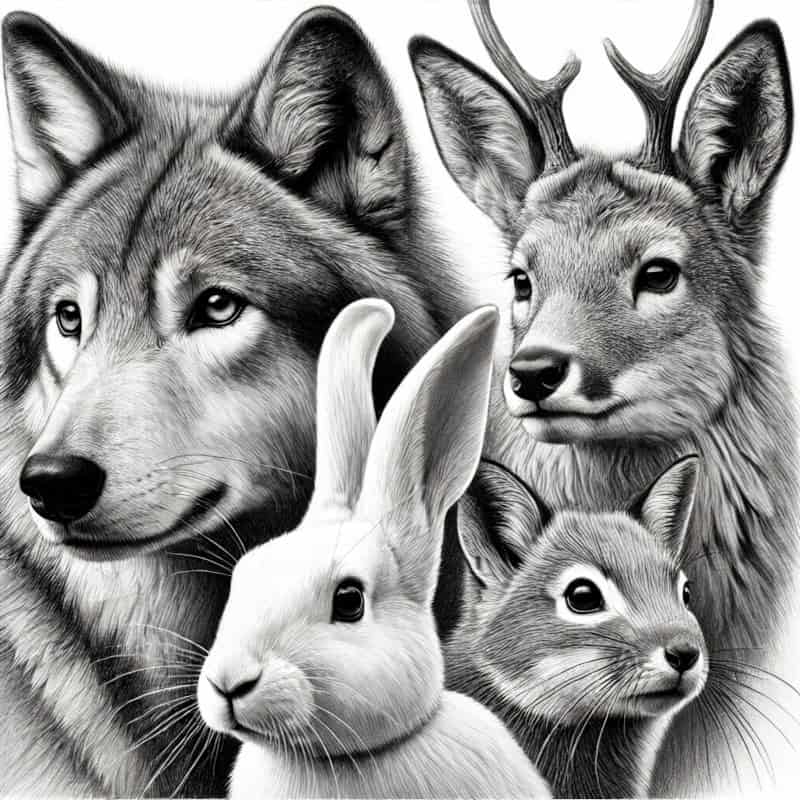
Mammals are among the most diverse and expressive creatures in the animal kingdom, and they are covered in fur. That means you’re entering the glorious world of shading, fluff, and the occasional frustration of getting whiskers right…
This guide will walk you through the essentials – from skeletal structures and muscle movement to fur textures and those ridiculously cute noses. By mastering these techniques, you’ll gain the skills to draw mammals accurately, capturing their energy, grace, and that undeniable “I’m judging you” stare that cats have perfected. Whether you’re aiming for realism or want to stylise your designs, this guide will be your trusty companion before you venture into the wild world of horror-inspired creature design.
Now, grab your pencils, summon your inner zoologist, and let’s bring these furry (or sometimes terrifying) creatures to life!
1. Understanding anatomy in mammals
Basic proportions of mammals
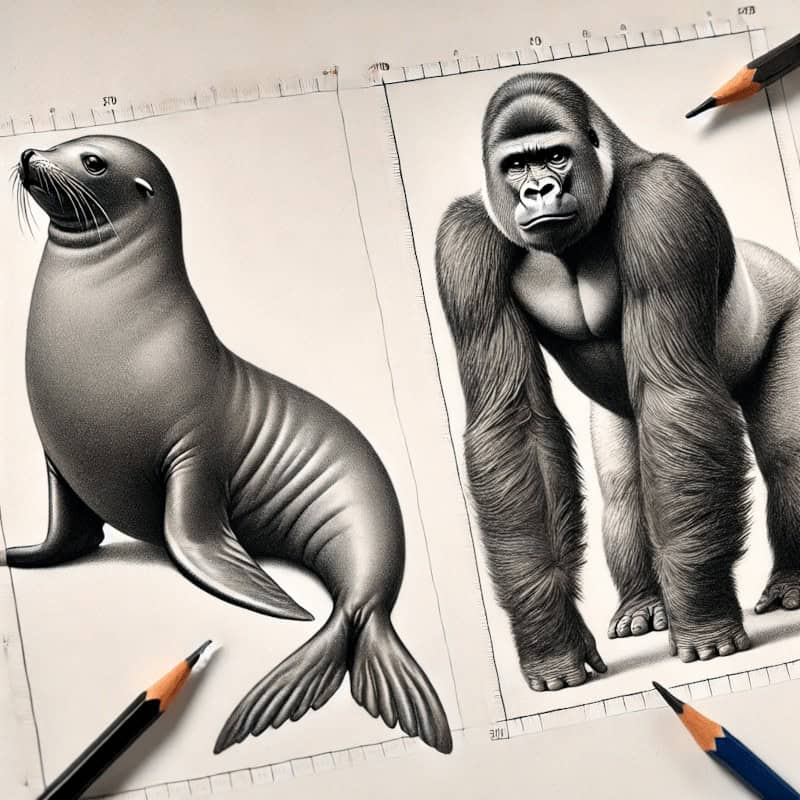
Before you dive into drawing, understanding proportions is critical unless you want your lion to look like a weirdly confident potato. Different mammals have unique body structures, but they follow similar foundational rules. By mastering proportions, you’ll ensure your creatures look balanced rather than the result of a bad taxidermy job.
- How different mammals have unique body structures
- Common skeletal similarities (e.g., quadrupeds vs. bipeds like primates)
- How proportions change between different species
Skeletal framework for mammals
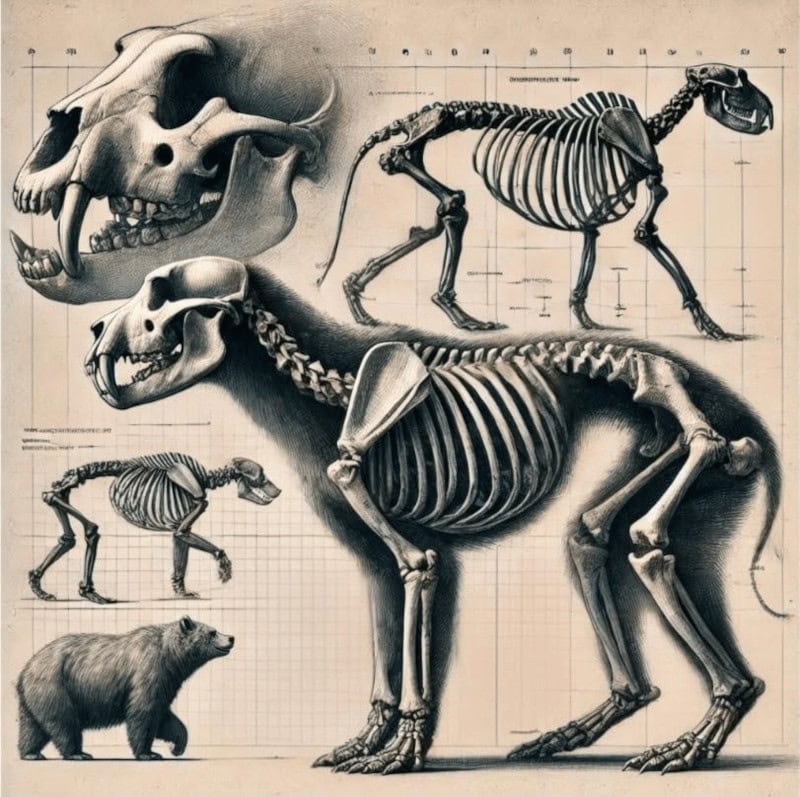
Think of the skeleton as the unsung hero of your drawing – it’s what gives mammals their structure and movement. Without it, your mammal would just be a very confused blob. Studying different skeletal structures (predators vs. prey, quadrupeds vs. bipeds) helps create realistic movement and posture. Plus, understanding bones means you’ll finally know why your cat sits in such cursed positions.
- Overview of mammalian skeletons (skull, ribcage, limbs, and spine)
- Comparing bone structure in predators vs. prey
- How skeletal movement affects posture and realism
Muscle structure & movement in mammals
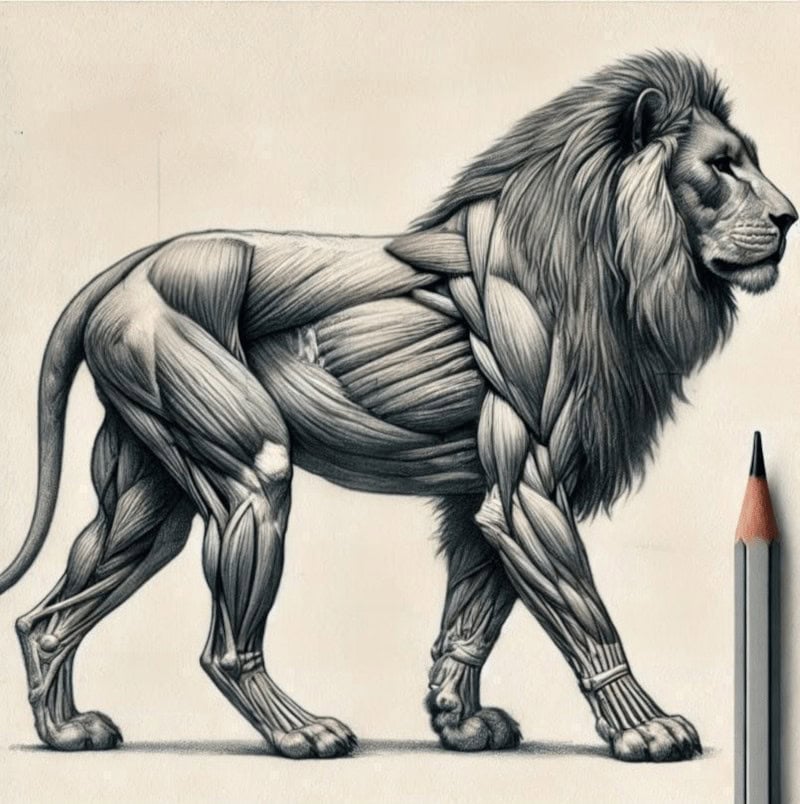
Muscles are what turn a static sketch into something that feels alive. They define motion, strength, and flexibility, whether it’s a cheetah sprinting at full speed or a bear casually scratching its back against a tree. Learning about muscle groups will prevent your creatures from looking like they’ve skipped leg day – or worse, like they’ve been lifting too much.
- Key muscle groups and their role in movement
- Differences between running, climbing, and swimming mammals
- How muscle tension creates powerful or relaxed poses
2. Drawing different mammal types
Mammals come in all shapes, sizes, and personalities – from a lion’s powerful stance to a squirrel’s chaotic energy. Carnivores are built for strength and speed, herbivores for agility and grace, while small mammals seem to run on pure instinct (and possibly caffeine). Primates add even more variety with their expressive faces and flexible movement.
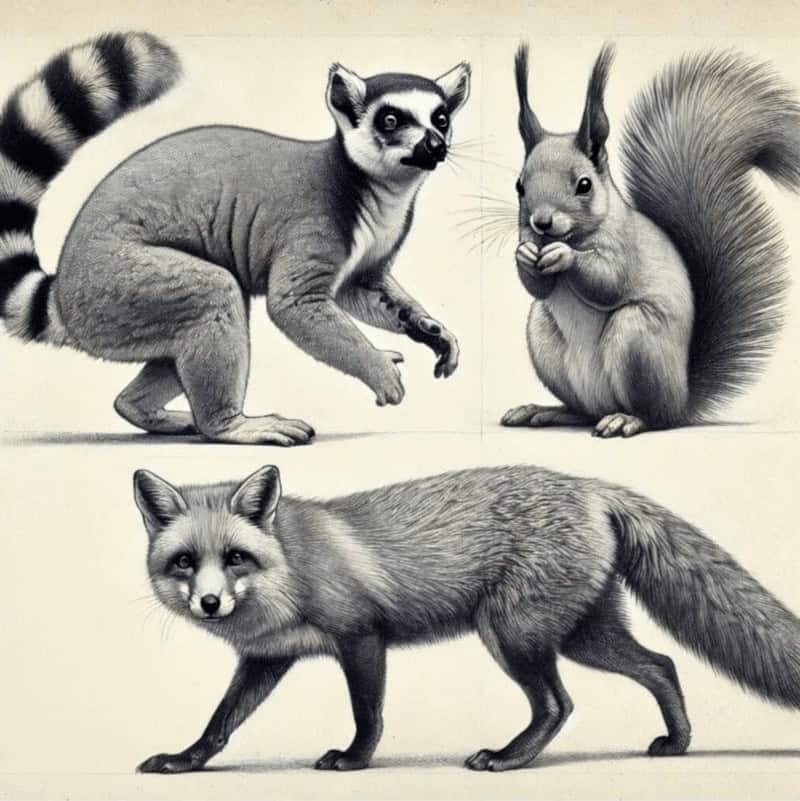
Step-by-step tutorials for different categories of mammals.
- Carnivorous Mammals (Wolves, big cats, bears) – Focus on strong jaws, powerful limbs, and hunting stances
- Herbivorous Mammals (Deer, horses, rodents) – Focus on body posture, delicate limbs, and grazing poses
- Small Mammals (Rabbits, squirrels, foxes) – Capturing lightweight body structure and quick movements
- Primates & Monkeys (Gorillas, lemurs, chimpanzees) – More expressive features and flexible movement
3. Texturing mammal fur & features
Fur is one of those details that can make or break your drawing – it’s the difference between a majestic wolf and a scribble puffball. Whether short and sleek or long and wild, fur follows specific patterns that define a mammal’s shape and movement. Understanding these textures will bring your drawings to life (and possibly test your patience in the process).
Short fur vs. long fur
Fur length affects shading, texture, and overall fluff factor.
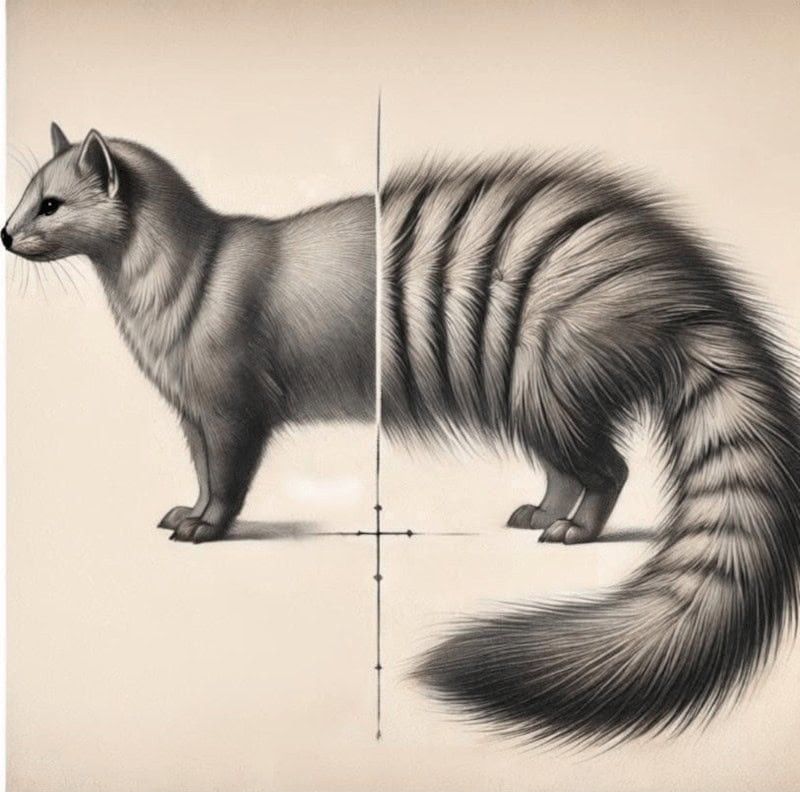
- Short fur- Smooth, sleek, and requires soft, blended strokes for a natural look.
- Long Fur – Requires layering strokes to create depth, movement, and that perfect “windswept in the wild” effect.
Capturing realistic fur direction
Fur isn’t random (even when it feels like it while drawing). It follows the body’s contours, enhancing movement and form.
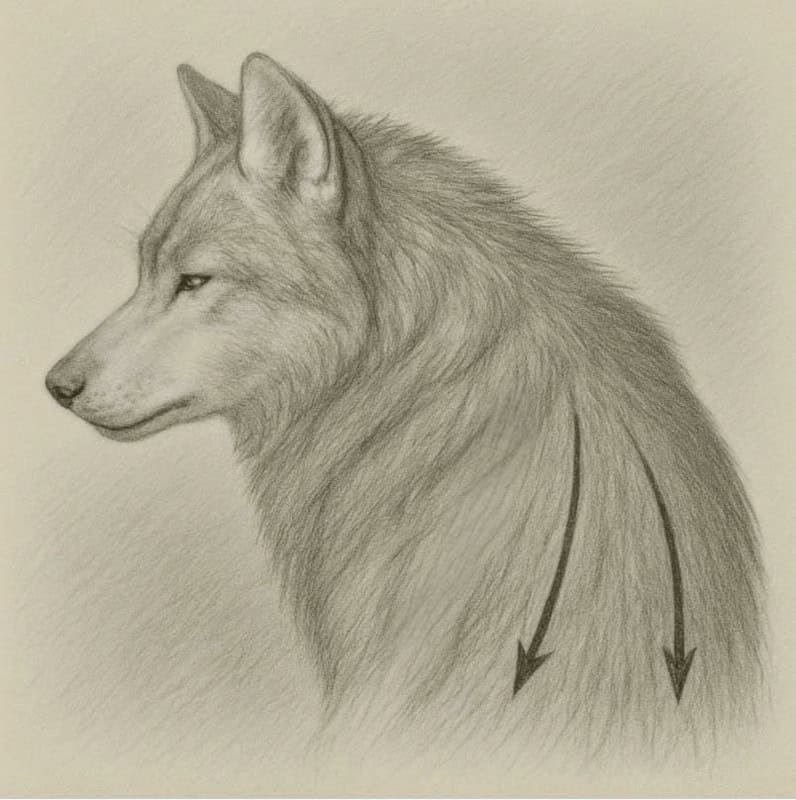
- Follow the Flow – Pay attention to how fur grows along the body; it often radiates outward from key points like the spine or joints.
- Shading Thick vs. Thin Fur – Thick fur requires heavier, layered strokes, while thin fur benefits from subtle, wispy lines.
Expressive features: eyes, noses & ears
A mammal’s face is full of personality, and small details make a huge impact.
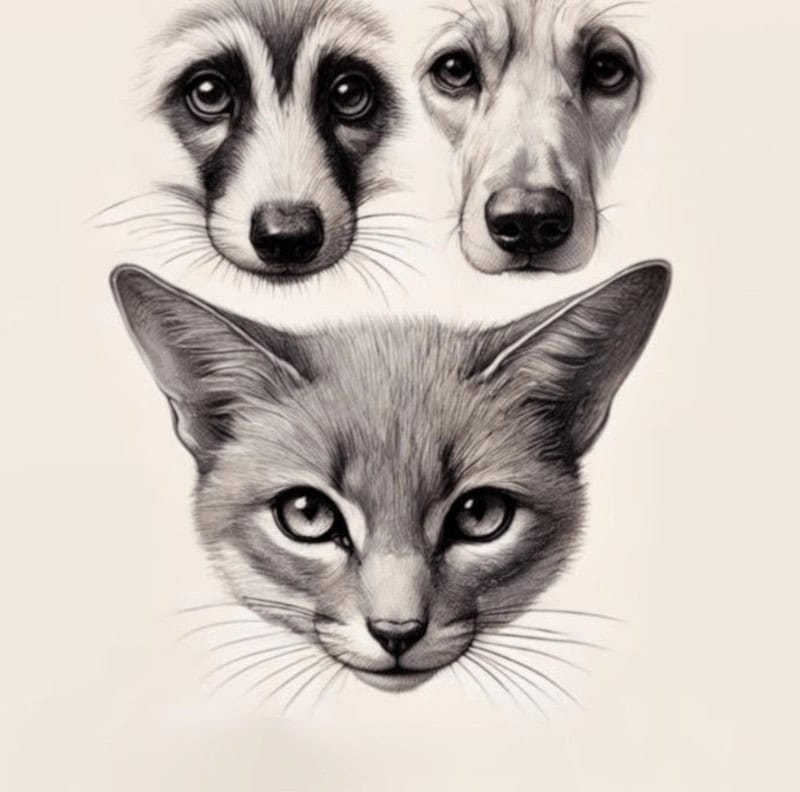
- Eyes – The difference between “gentle deer” and “haunted void creature” is all in the expression.
- Noses – Some are small and dainty, others are large and commanding – never underestimate the power of a well-drawn snout.
- Ears – Floppy, pointy, tiny, or oversized – ears add character and expression to your creature.
4. Mammal drawing Practice & experimentation
The best way to improve your mammal drawings? Draw a lot of them – bad sketches, quick doodles, and experimental studies all count. Mammals are full of movement, expression, and variation, so practising different techniques will help you master their forms while avoiding the dreaded “Why does my wolf look like a potato?” moment.
Gesture drawing: capturing movement
Mammals are rarely still, so learning to sketch them in motion is key.
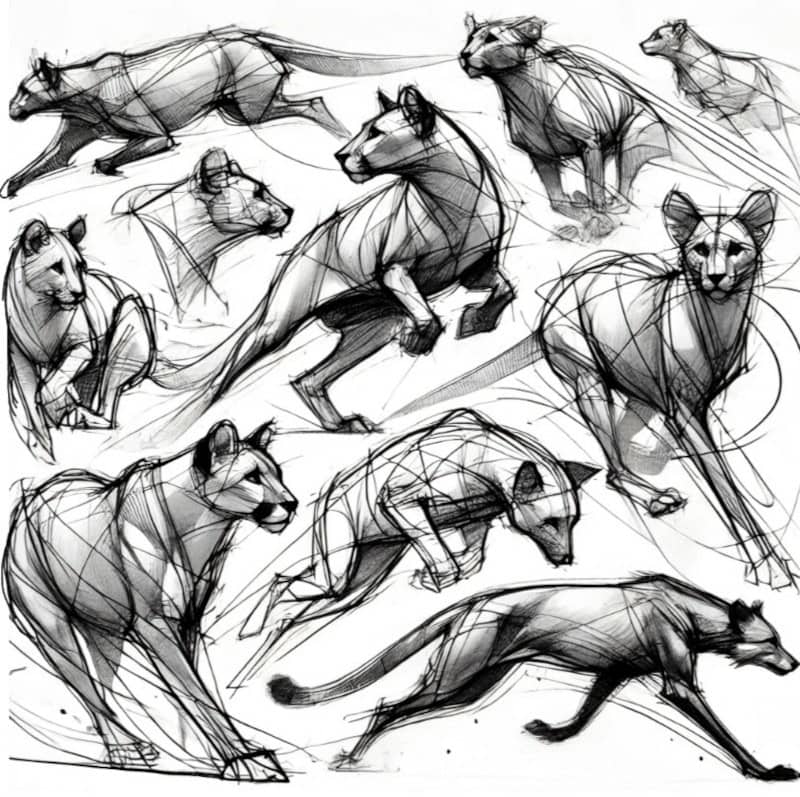
- Use quick, fluid strokes to capture the essence of movement.
- Focus on motion, not details – you can add fur and features later!
Breaking animals into simple shapes
Complicated forms start with basic shapes – this helps with proportion and structure.
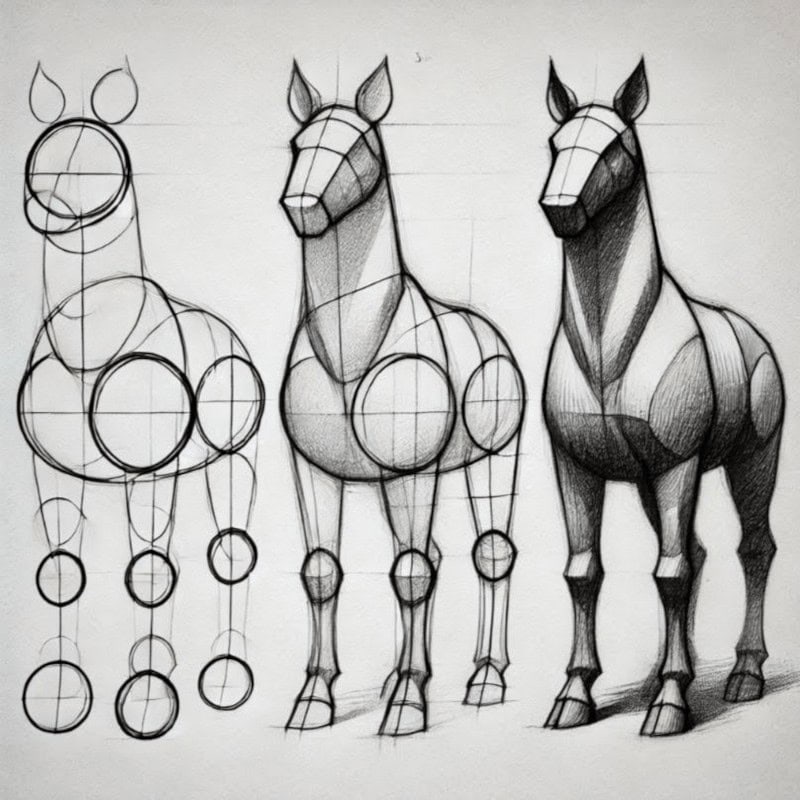
- Start with circles, ovals, and lines to block out the body.
- Refine the shape gradually instead of jumping straight to fur and details.
Experimenting with fur & pencil techniques
Fur texture can be intimidating, but practice makes perfect (or at least less frustrating).
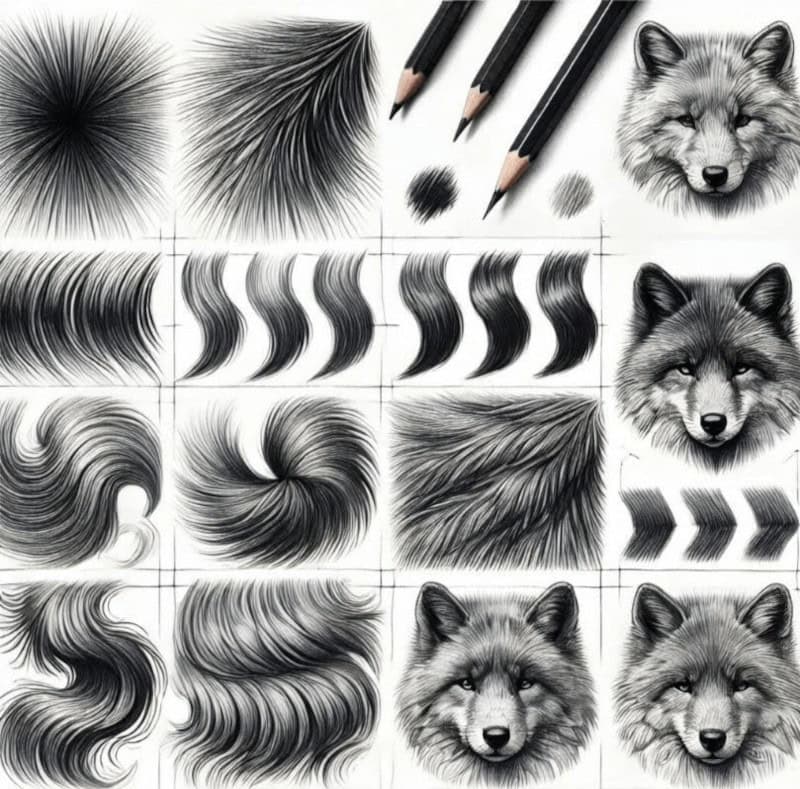
- Try different strokes – short, long, curved, or jagged- to see what works best.
- Play with shading techniques to create depth and volume in fur.
Final advice: keep experimenting
Not every sketch will be a masterpiece (and that’s okay). The more you experiment, the more you’ll refine your style and understand how to bring mammals to life. So, keep sketching, stay curious, and don’t be afraid to let your animals get a little weird – sometimes, happy accidents lead to the best designs!
Conclusion: bringing mammals to life
Drawing mammals is a rewarding journey that enhances both technical skill and creative expression. By studying their proportions, skeletal framework, and muscle structure, you’ll understand how these animals move, interact, and exist in their environments.
Refining fur textures, capturing distinctive features, and experimenting with different poses will help breathe life into your sketches. More importantly, consistent practice will help you develop your own style, whether you prefer realistic wildlife illustrations or eerie, otherworldly creatures.
Now that you’ve explored the fundamentals of drawing mammals, it’s time to put your skills to the test. Keep sketching, experimenting, and pushing your creativity to new heights – because every great artist starts with a single line.
Stay focused, stay curious, and most of all, keep drawing (even when fur refuses to cooperate).