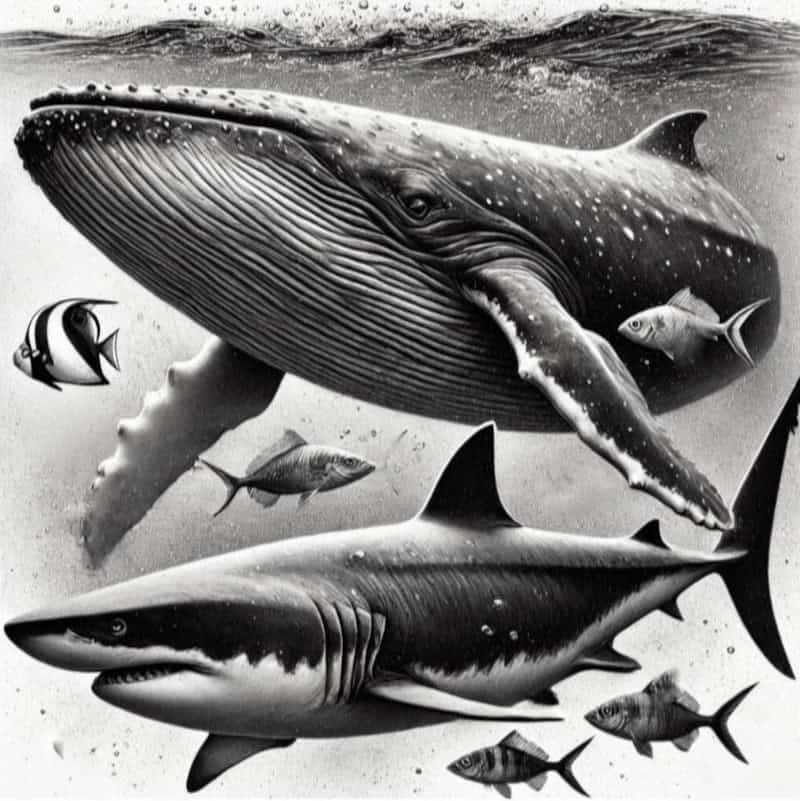
Master the Art of drawing aquatic animals. Water-dwelling creatures come in all shapes, sizes, and levels of intimidation – from the gentle elegance of a whale to the “I could bite you, but I won’t… yet” energy of a shark. In this guide, we’ll dive deep (pun intended) into essential techniques for drawing sharks, whales, and fish. Whether you’re aiming for realistic depictions or eerie horror adaptations, these tutorials will help you capture the beauty, movement, and occasional existential dread of underwater creatures.
Beneath the surface lies a world of diverse and fascinating beings. Sharks boast sleek, menacing forms, while whales carry an airbag of wisdom (and an impressive ability to sing). Meanwhile, fish come in endless artistic possibilities, ranging from stunningly beautiful to downright bizarre (looking at you, blobfish). By focusing on structure, texture, and movement, this guide will provide structured tutorials that will enhance your ability to bring aquatic animals to life, without accidentally making them look like inflatable pool toys.
1. Understanding aquatic anatomy for drawing
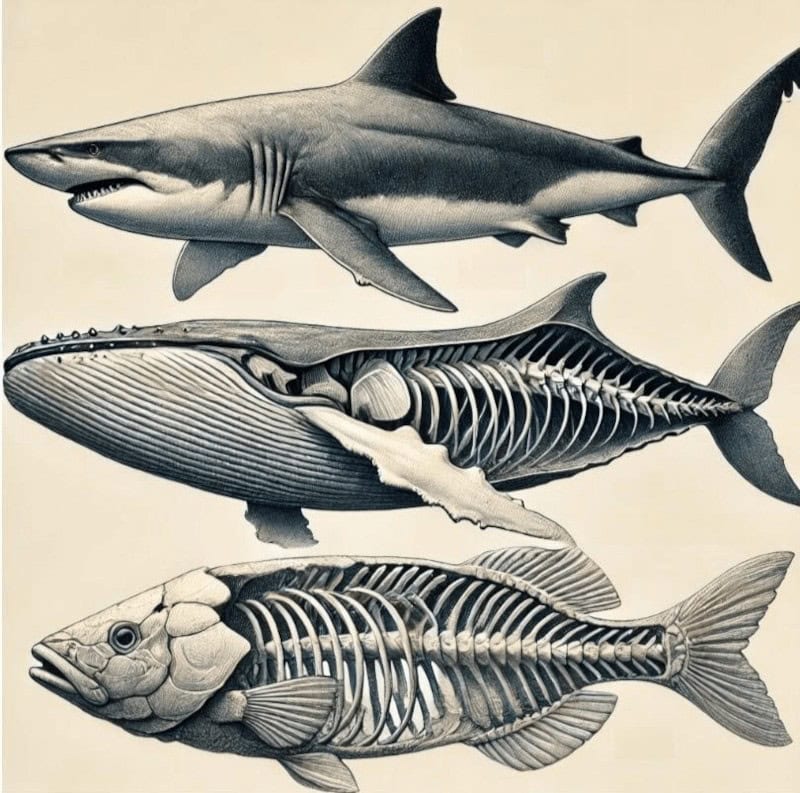
To draw these creatures properly, we need to first understand what makes them tick (or, in this case, swim). Unlike land mammals, aquatic creatures are designed to be streamlined, flexible, and sometimes terrifyingly efficient.
- Sharks are built for speed and stealth, making them nature’s original stealth bombers. Their skeletal structure is made of cartilage rather than bone, allowing them to be both agile and terrifyingly quiet.
- Whales are the gentle giants of the sea, exuding majesty and power with their sheer size and smooth movements. Their anatomy is built for endurance, deep diving, and making humans feel tiny.
- Fish come in endless variations, from the elegant, flowing fins of tropical species to the downright nightmare-fuel creatures lurking in the deep sea.
2. Drawing sharks with precision
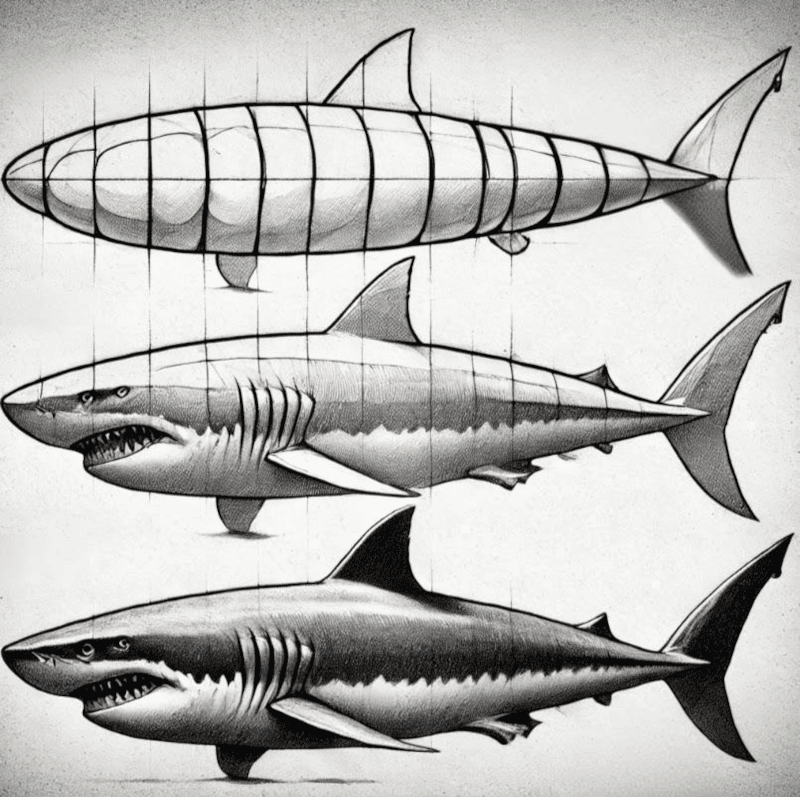
Sharks may look simple, but they have an unmistakable design that makes them one of the ocean’s most iconic creatures.
- Start with the basic shapes – think torpedo with teeth.
- Define their streamlined body to capture that effortless yet slightly menacing presence.
- Teeth and eyes are key – too friendly, and you’ve got a happy dolphin; too much, and it’s suddenly, it’s a horror movie poster.
Sharks have existed for over 400 million years, and with that level of evolutionary perfection, you really don’t want to mess up their proportions.
3. Illustrating the majesty of whales
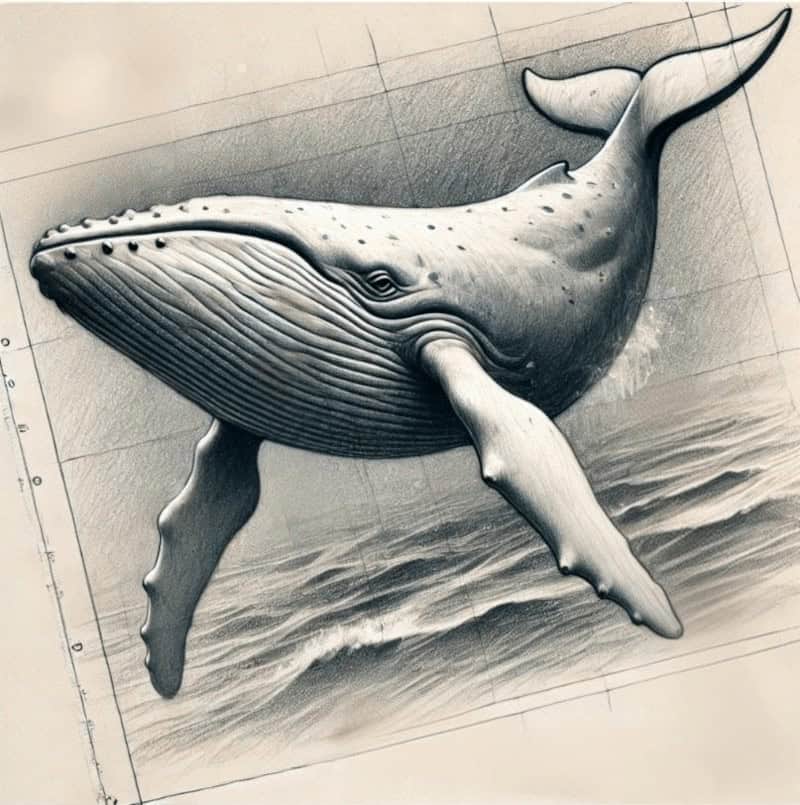
Whales are the wise old sages of the sea – massive, powerful, and oddly graceful despite their size.
- Scale and proportion matter – otherwise, your whale might end up looking like an overinflated balloon.
- Blubber textures require soft shading to emphasise their smooth, streamlined appearance.
- Whale expressions? Surprisingly important. Some look peaceful and wise, others look like they forgot what they were doing.
Capturing their grand presence in a drawing takes patience, but once you get the flow of their movement right, you’ll have a majestic ocean giant worthy of the deep.
4. Sketching fish: detail & elegance
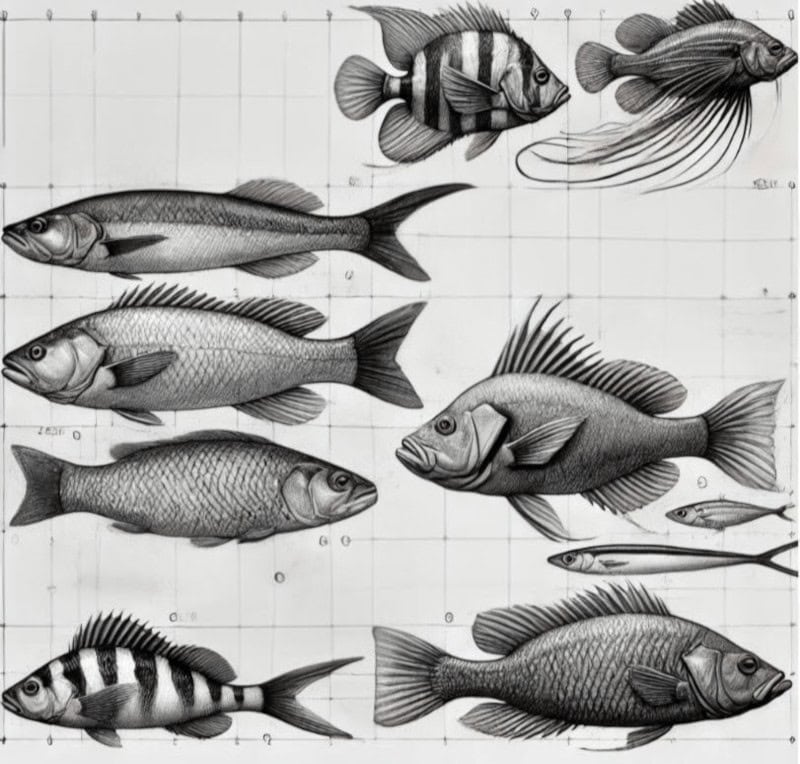
Fish come in an overwhelming variety, and drawing them means balancing their delicate features with bold, defining details.
- Body shape varies wildly, from long and slender to round and grumpy.
- Scales add texture and depth.
- Fluid movement is key – otherwise, your fish might look like it’s just floating there, contemplating life.
Some deep-sea fish have evolved to look utterly monstrous. So, if you accidentally make your fish a little too eerie – congratulations, you’ve just discovered a new horror species!
5. Textures & shading for aquatic creatures
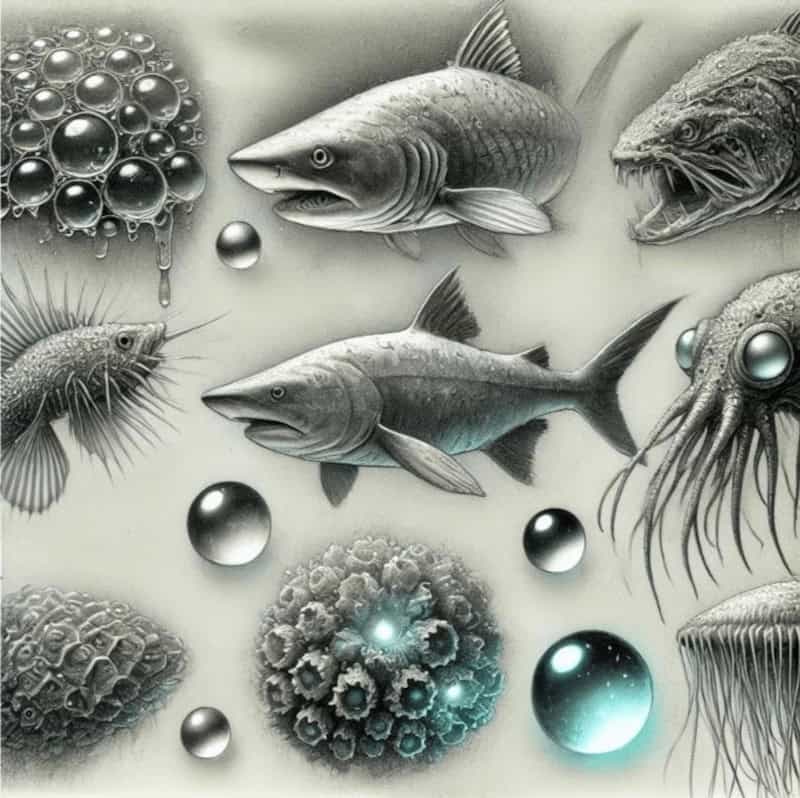
Water does weird things to how we perceive texture, which means shading aquatic animals requires a different approach.
- Wet, slimy, and shiny surfaces reflect light differently, so contrast and highlights are crucial.
- Bioluminescence adds drama- if you’re drawing a glowing deep-sea creature, make sure to exaggerate those eerie light spots.
- For horror creatures, go wild – rough shark-like skin, translucent alien fish textures, or barnacle-covered sea monsters are all fair game.
6. Horror adaptations of aquatic creatures
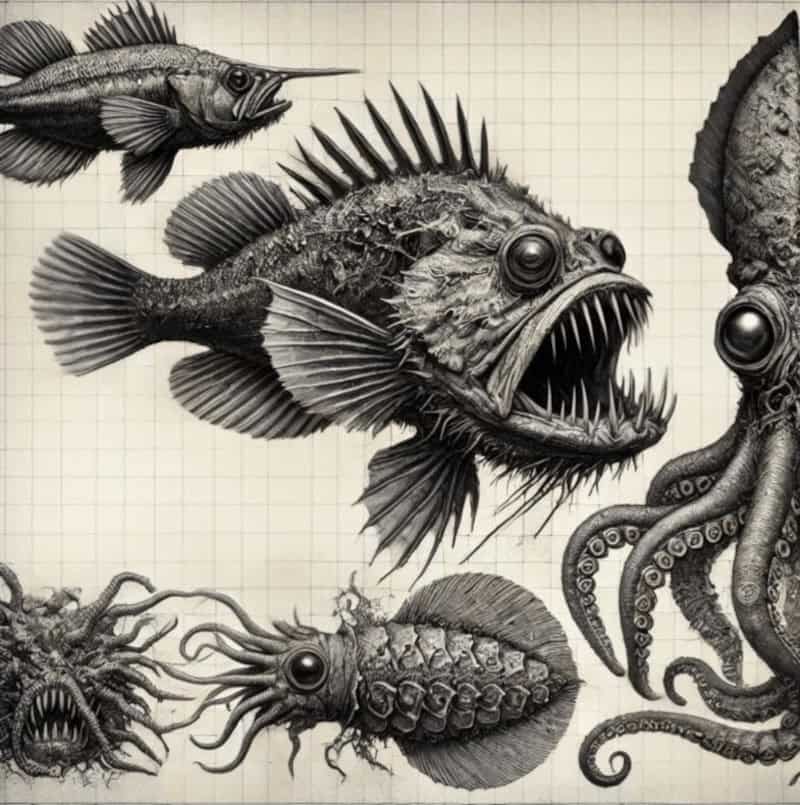
Let’s be honest – some deep-sea creatures already look like horror monsters. But if you want to push things further, here’s how:
- Exaggerate features – elongate those teeth, sharpen those eyes, and give them an unsettling number of fins.
- Play with unnatural textures – rotting scales, glowing scars, or translucent flesh can push the creep factor.
- Blend real-world inspiration with fantasy – anglerfish, giant squids, and deep-sea isopods are all horrifying as is, but imagine giving them legs… or worse, intelligence.
Conclusion: Dive into aquatic creature art
Drawing sharks, whales, and fish takes a careful balance of anatomy knowledge and capturing fluid movement. Furthermore, as you refine your skills, you’ll begin to see how structure, texture, and motion come together to create lifelike underwater creatures.
Moreover, by focusing on different artistic techniques – such as studying skeletal structures, enhancing surface details, and experimenting with exaggerated horror elements – you can bring both realistic and nightmarish aquatic creatures to life. And if all else fails, just give your fish a dramatic expression and call it a new species.
Ultimately, aquatic creature design is about embracing movement and exploring creative possibilities. Whether you aim for natural realism or eerie horror adaptations, each drawing allows you to push the boundaries of your artistic expression. So keep practising, continue experimenting, and most importantly – stay spooky!