Because even monsters need a place to mope.
This section examines eerie backgrounds and scenes that are ideal for creating a spooky atmosphere. A chilling character can be compelling on its own, but placing them in a fog-drenched alley or a gnarled forest instantly transforms the scene into a gripping horror story. This page serves as your guide to crafting backgrounds that evoke atmosphere, tension, and a sense of dread that might make viewers check behind their curtains.
Whether you’re into haunted ruins or shadowy graveyards, this guide will help you bring your eerie backgrounds and scenes to life with tutorials, drawing tips, and spooky sketch prompts.
1. Why backgrounds matter in horror art
Even the creepiest creature is going to feel a bit silly if it’s just floating in empty space like it’s waiting for a school photo. Horror backgrounds are where the magic happens – well, the cursed, haunted, probably-going-to-regret-this kind of magic.
A good background sets the mood before your monster even makes its dramatic entrance. It makes viewers feel like something’s off, even if they can’t put their finger on it. Is that shadow supposed to be there? Why is the wallpaper peeling in just that spot? That’s why eerie backgrounds and scenes are the unsung heroes of every horror masterpiece.
Basically, backgrounds are like horror wingmen – they hype up your creepy character, make the whole scene feel alive (or undead), and whisper, ” You really shouldn’t be here” in a very convincing tone. Plus, if you ever mess up a hand or a face. Just throw some fog over it. Instant atmosphere. Zero judgment.
2. Types of eerie backgrounds and scenes
These are the mood-makers, the ambience-creators, the things nightmares are built on.
Let’s take a peek into the void:
Haunted forests
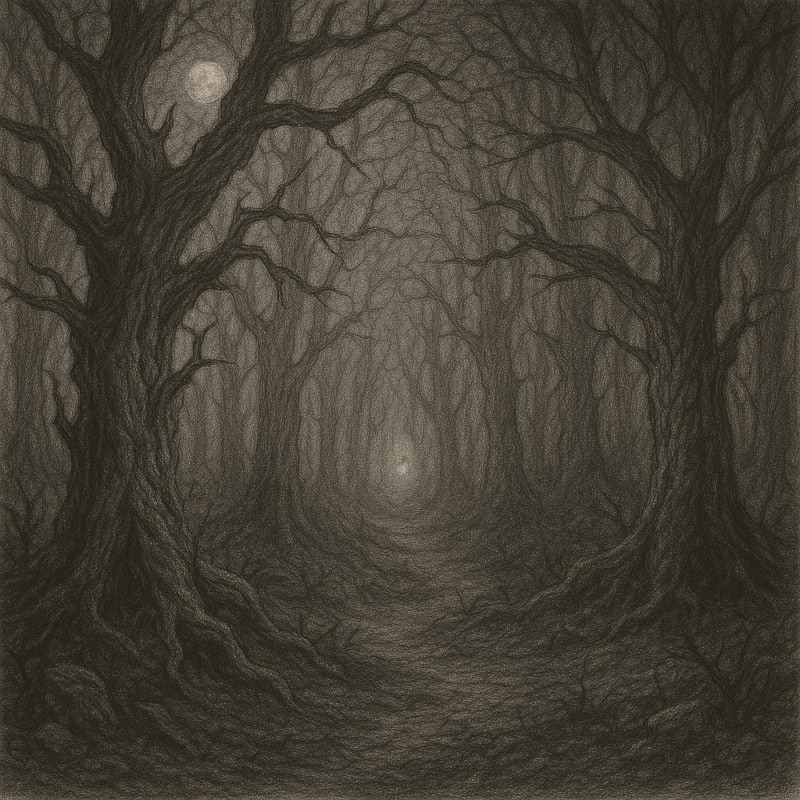
There’s something about a forest that just screams, “Don’t go in there.” Twisted trees, tangled roots, suspicious fog… and was that branch just a little too grabby? Haunted forests are great for practising organic shapes – no straight lines here, just gnarly limbs that look like they might snatch your pencil if you stop drawing.
Play with overlapping shadows, unnatural silhouettes, and hidden shapes in the trees. Toss in a glowing light source deep in the woods, just mysterious enough to make you wonder: is it a lantern… or a glowing eye? Either way, something in there is watching.
Crumbling buildings & abandoned places
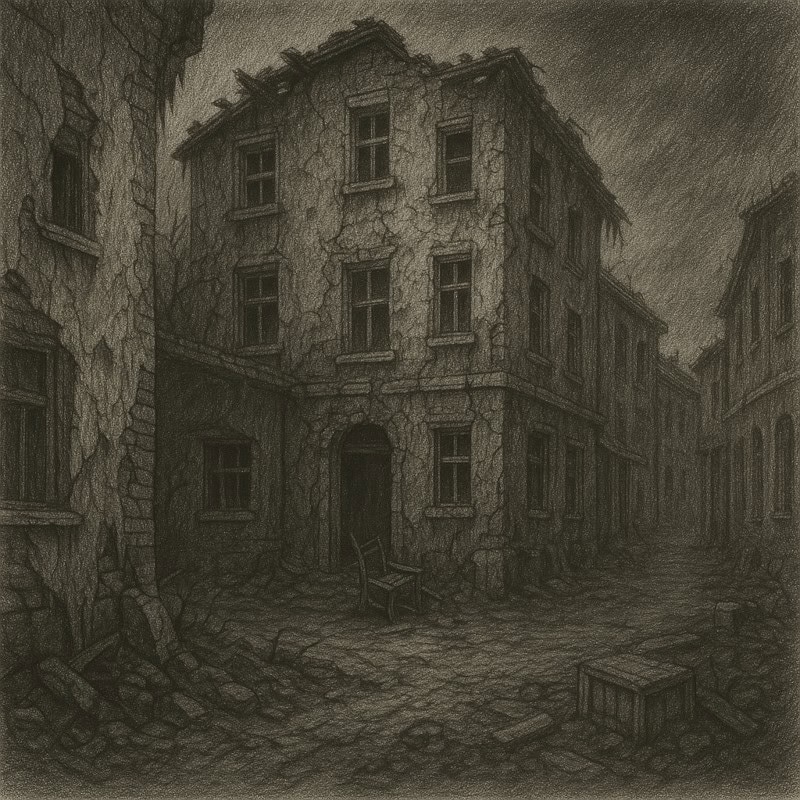
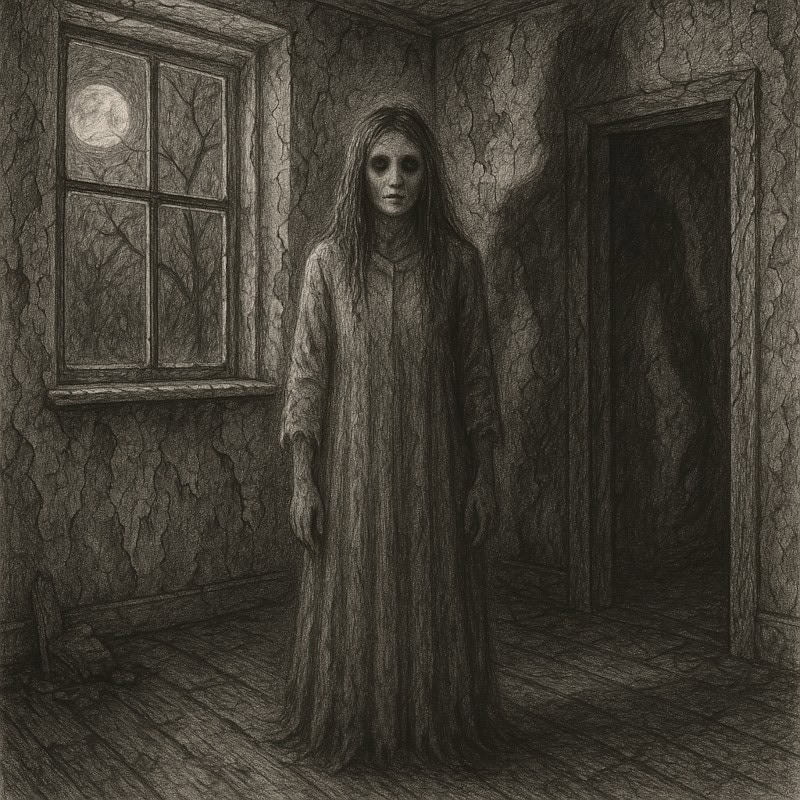
Few things say “bad things happened here” like a building that looks like it gave up. Broken windows, cracked tiles, and wallpaper that’s peeling like it’s trying to escape the wall. These environments are gold mines for textural practice and visual storytelling.
Add layers of grime, decay, and eerie remnants of former life – an overturned chair, an old toy, a door hanging just slightly open like it’s waiting for you to step inside. You can make it subtle and quiet or go full apocalyptic ruin. Either way, these spaces hum with history, mystery, and maybe a few ghosts who never paid rent.
Graveyards & mausoleums
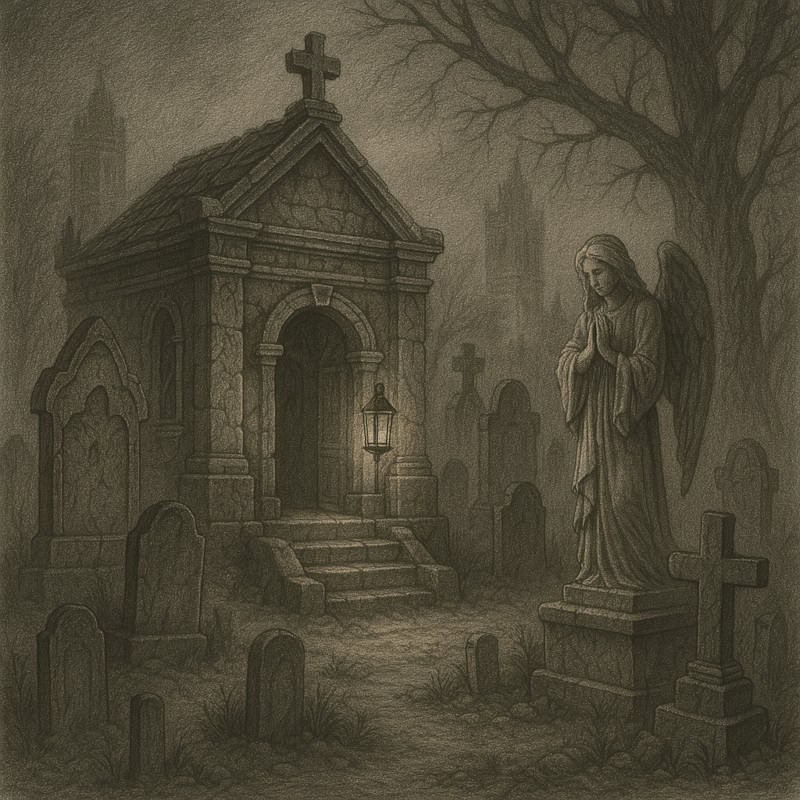
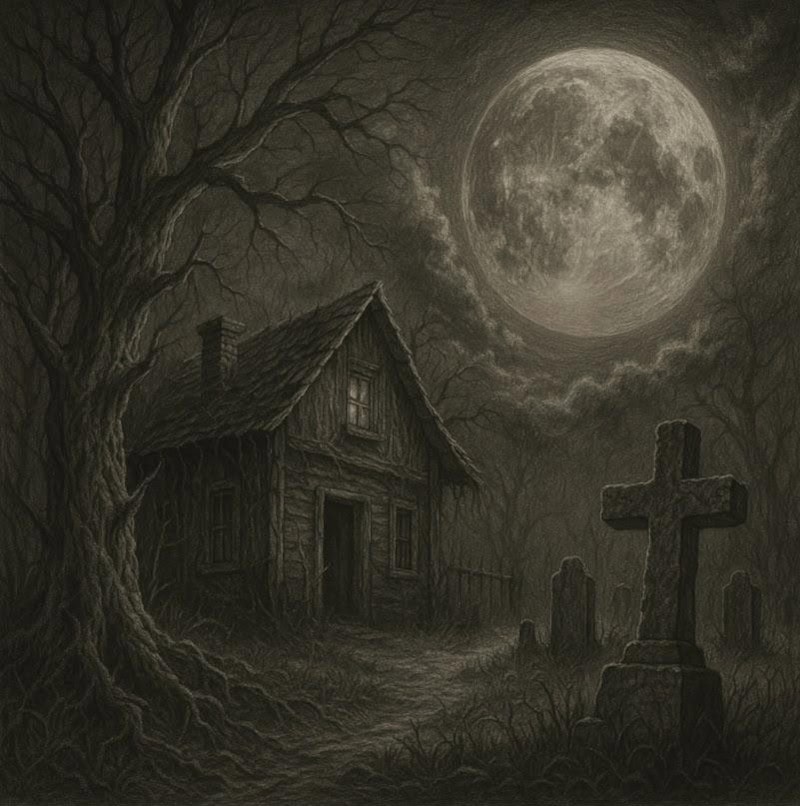
Old-school gothic and still terrifying. Graveyards have an elegance that makes them perfect for horror art: crooked headstones, ancient trees, iron fences that are not keeping anything out… or in.
Use them to explore atmosphere – fog drifting between the tombs, shadows cast by flickering lanterns, and ravens that definitely know too much. You can keep it peaceful and melancholic, or add claw marks on a cracked tomb and let the viewers fill in the rest. It’s a great excuse to draw spooky statues, creeping vines, and architecture that screams, “I’ve seen some stuff.”
Foggy streets & moonlit alleys
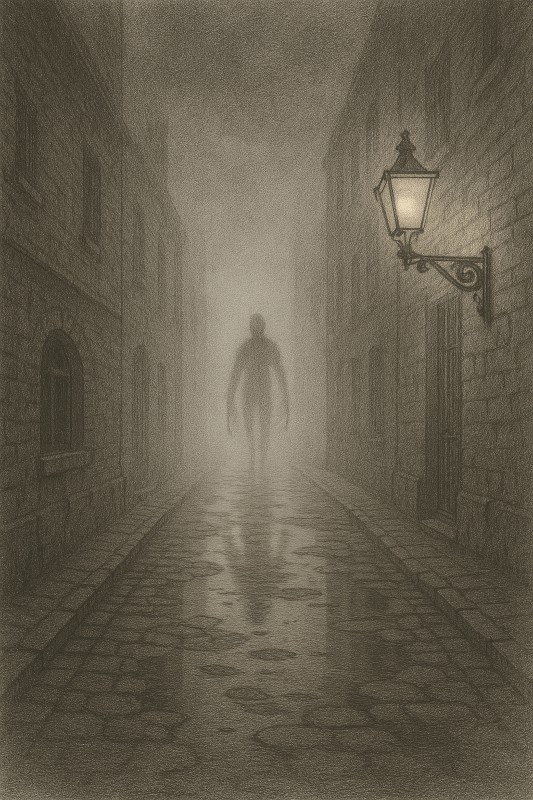
Ah, yes – the urban creepfest. These settings are fantastic for playing with light and perspective. Narrow alleyways, puddles reflecting distorted shadows, flickering streetlamps that buzz a little too loudly. A great place to practice vanishing points and suspicious silhouettes.
Maybe there’s a figure just barely visible through the fog, the street is empty except for one open door, or all the lights are off except the one right above you. These kinds of scenes thrive on tension, suggesting something is about to happen, or already did, and you’re just now noticing. Welcome to the paranoia zone.
3. Techniques for crafting dread
So you’ve got your creepy forest or haunted hallway – nice! But how do you make it truly uncomfortable? The kind of scene that makes someone stare at it a little too long and mutter, “Nope”? Easy. You mess with their brain.
Here’s how:
Light & shadow – your spooky sidekicks
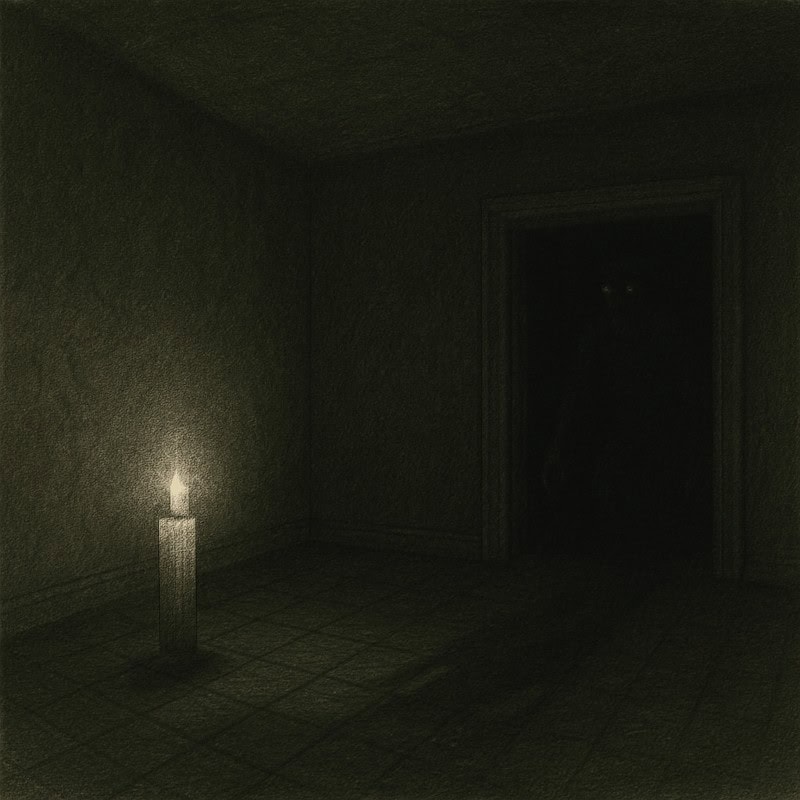
Want instant mood? Throw in some dramatic lighting. A single flickering candle in an otherwise pitch-black room? Terrifying. A full moon casting shadows that stretch just a little too far? Deliciously ominous. Use high contrast for bold scares or soft gradients for creeping unease. And remember: the human brain hates not knowing what’s hiding in the dark. Use that to your advantage.
Lighting isn’t just about what you see – it’s about what you think you see. Use harsh angles to warp your shadows or let them drip down walls like ink. Even something as simple as a crack in the floor can become unsettling when the light hits it just right.
Texture – The grit, grime & gross
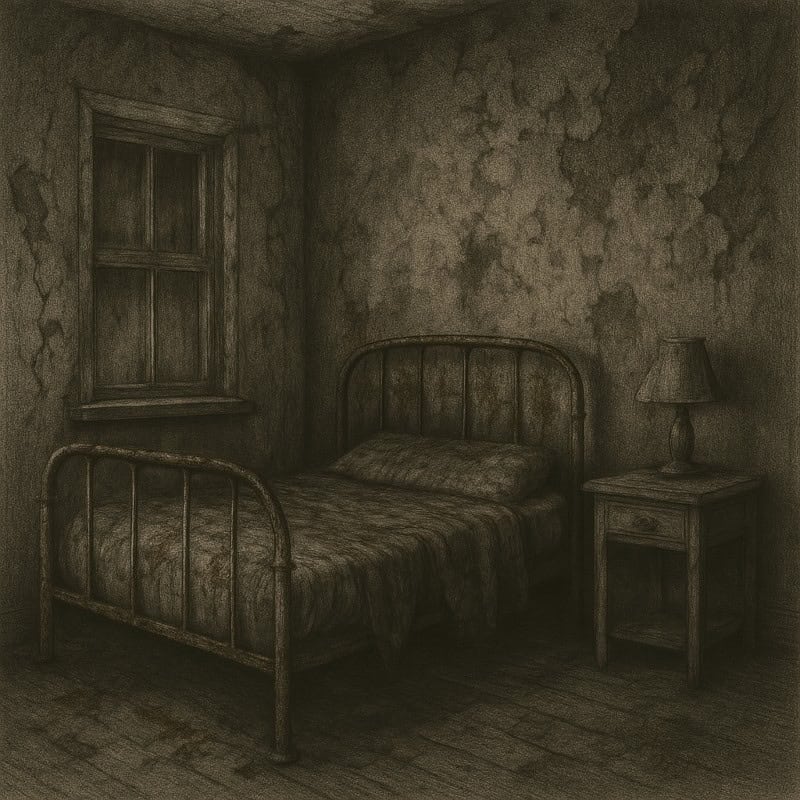
Smooth, clean surfaces are for hospitals and sci-fi. Horror wants cracks, mould, scratches, rust, and all the stuff that makes people wonder if they need a tetanus shot just from looking at your drawing. Textures tell stories – old ones, bad ones. Cover your scene with evidence that something happened here, and it wasn’t a pleasant tea party.
Add elements like water damage or grime buildup in corners. The more you layer, the more history your environment gains. It doesn’t have to be loud – sometimes the eeriest rooms are the ones where the damage whispers instead of screams.
Negative space – what you don’t draw matters
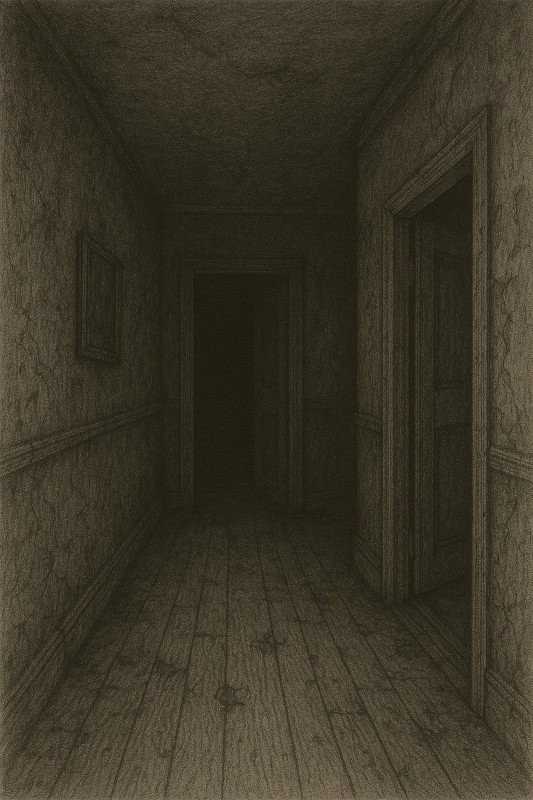
Want to make someone’s imagination do the heavy lifting? Leave space. Lots of it. A long, empty hallway. A wide open doorway. A corner that’s too dark to see into. Negative space creates suspense by letting the viewer’s mind fill in the horror, which is always worse than anything you can draw. (Except maybe that one time you tried to draw hands. We don’t talk about that.)
Use shadows and emptiness to make people lean in and squint, unsure of whether they see a shape or just their own paranoia. Let the silence in the image hum louder than the details.
Perspective – tilt it like it’s haunted
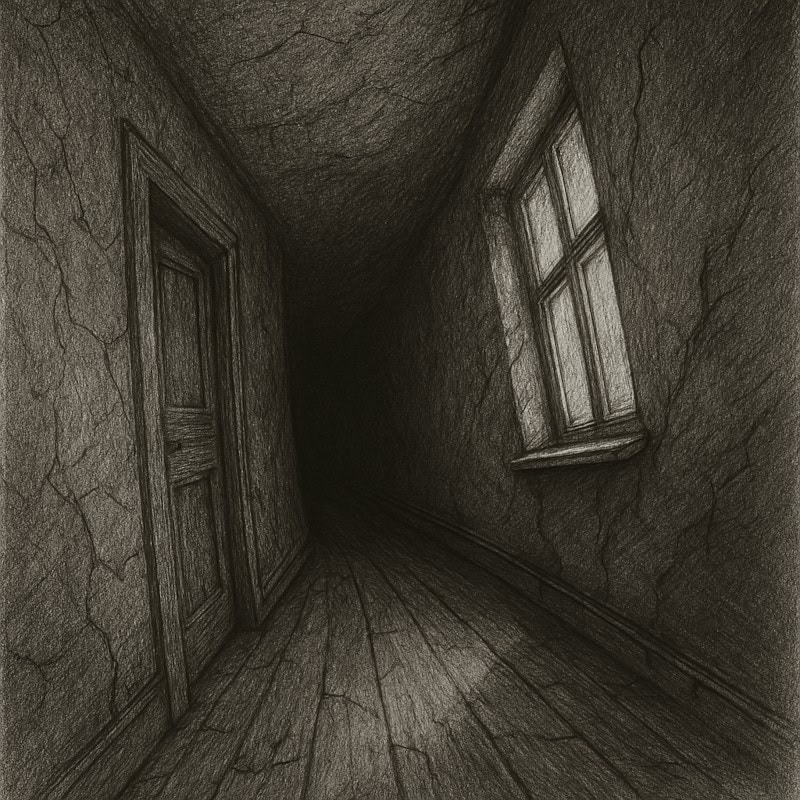
Want to make your viewer feel like reality’s gone sideways? Tilt it. Bend your perspective just enough to make things feel… wrong. A hallway that narrows too fast. Slightly off-centre windows. Floors that slope ever so slightly downhill, like they’re leading somewhere you don’t want to go. Mess with symmetry, stretch angles, and let your environment feel untrustworthy. Because it is.
Perspective doesn’t just help create dimension – it can mess with perception. Use forced angles or unnatural viewpoints to make your scenes feel unsettling even before the monster shows up. A tilted wall or crooked floor might not seem scary at first, but the unease it plants? That sticks.
4. Practice prompts
Ready to summon some shadows and give your pencils something to scream about? These eerie prompts are here to stretch your imagination, creep out your sketchbook, and maybe even make you question your own sanity (in the best way).
Nothing Happened Here
Draw a normal-looking room – living room, kitchen, whatever feels safe. At first glance, everything seems perfectly fine. But the longer you look, the stranger it gets.
The furniture is just a little too symmetrical, like someone tried to recreate a home from memory but didn’t quite get it right. There’s a crack in the ceiling that looks oddly different – maybe like a face. Clocks are scattered around the room, each frozen at a different time.
Look for ways to make the scene feel subtly wrong. Maybe the light source doesn’t match the shadows. Maybe one picture on the wall is hung upside down, and no one seems to notice. The goal? Make it look like nothing’s wrong… while clearly everything is.
Welcome to the Neighbourhood
Draw a quiet, fog-drenched street where something’s just not quite right. Every house is dark and still – except one. Its upstairs window glows with a warm, yellow light that stands out a little too much in all that grey. The curtains are drawn, but maybe not all the way. There’s just enough space to make you wonder if someone, or something, is standing behind them. Watching.
Add in crooked lampposts, cracked pavements, and a mailbox that’s seen better days. Maybe the welcome mat is upside down. Maybe the front door is slightly ajar, like the house is waiting for someone brave – or foolish – enough to knock.
Corrupt the Cosy
Start with a sleek, modern home in a quiet neighbourhood. Picture-perfect hedges, a spotless driveway, matching flower pots by the door – it’s giving magazine-cover energy.
Now, introduce the unease. One of the flower pots is shattered, but the flowers inside are still perfectly upright. The house number is missing, or maybe it’s been replaced with strange symbols. The blinds in one window are bent, just enough to suggest someone’s been peeking out. There’s a stain on the sidewalk that looks suspiciously like a footprint, but it leads away from the house, not toward it.
Everything still looks “nice” at first glance, but the longer you stare, the more the scene starts to unravel. That’s your goal: take a modern, cosy scene and quietly corrupt it until it hums with discomfort.
Corrupted Cafe
Imagine a trendy little cafe on the corner – string lights, chalkboard menus, cute plants in the window. It’s the kind of place that should smell like fresh coffee and overpriced pastries. But something’s off.
The “welcome” sign is upside down. All the chairs are stacked… except one, facing the wall. The menu board still has specials written on it, but the words don’t quite make sense – “Blood Orange Moan?” “Scream Cheese Bagel?” Hmm. Odd.
One coffee cup sits on a table with a lipstick mark, but there’s no one around. The plants in the window are dead, but someone clearly watered them recently. The lights are on inside, but the cafe is closed. Or is it?
Play with details like warped reflections in the window, a napkin with writing on it that looks like a warning, or a “Help Wanted” sign that looks more like a plea than a job offer.
Supermarket of Unease
Picture your standard supermarket: fluorescent lights, shiny floors, overly enthusiastic sales signs. It’s all very ordinary… until it isn’t.
The aisles are perfectly neat – too neat. Every can is turned label-out, every box identical, like they’ve never been touched. But one shopping cart sits alone in the middle of the aisle, filled only with melted candles and a single, unlabeled jar.
Some shelves are fully stocked… with the same item, repeated over and over. The produce section looks fresh, but one apple has a bite taken from it, and it’s still dripping. The checkout screens read “RUN”, and none of the security mirrors show your reflection.
Add eerie shadows between the aisles, a shopping list left behind with increasingly strange items (“Milk, Eggs, Salt, Bones”), or a trail of muddy footprints that stop at the freezer section – and don’t come back out.
Let the dread begin
This is your playground for all things eerie. Don’t be afraid to experiment – fog is forgiving, and shadows are great for hiding mistakes. So grab your pencils, unleash your spookiest ideas, and start building eerie little worlds where fog hides secrets, the shadows have opinions, and every sketch feels like a bad idea in the best possible way. Get ready to turn your pencil into a portal and create eerie backgrounds and scenes that will creep out even your own sketchbook.