Famous Horror Artists and Their Influence on Modern Horror Art
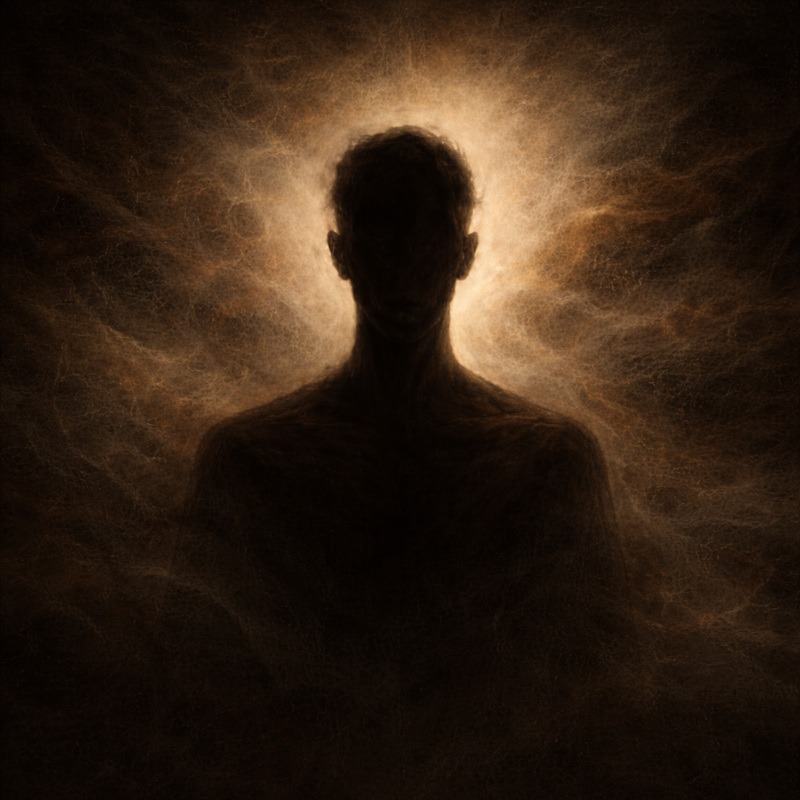
Modern horror didn’t simply appear one day fully formed, dripping in atmosphere and dramatic lighting. The creatures in films, the decaying kingdoms in games, and the distorted figures haunting dark illustrations all trace back to artists who dared to bend reality long before digital tools existed.
Some painted nightmares long before cinema existed.
Some exposed the darker corners of human nature.
Some made dreams feel unstable and slightly unsafe.
And whether we realise it or not, their influence still shapes the horror aesthetics we love today.
Because horror isn’t just about monsters; It’s about mood. Distortion. Symbolism. Emotional pressure. And those visual languages were built slowly across centuries.
Henry Fuseli – Romantic Nightmares
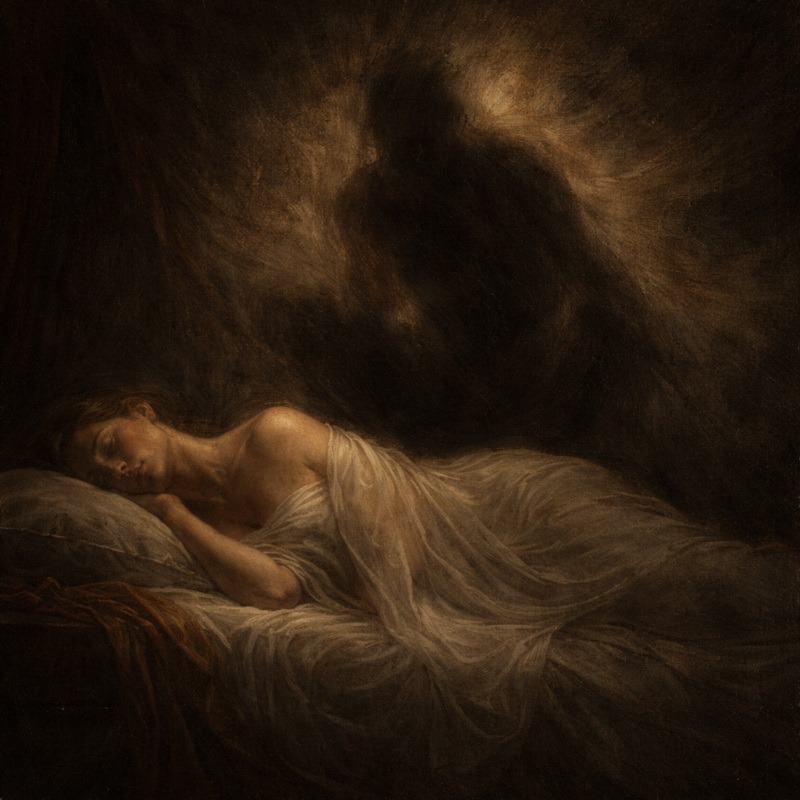
Henry Fuseli helped visualise psychological horror long before cinema existed.
His painting, The Nightmare, showed a sleeping woman oppressed by a shadowy incubus. The power of the piece didn’t come from violence, but from atmosphere, composition, lighting and vulnerability.
Modern horror films still borrow from this formula:
- Dramatic shadows overpowering figures
- Vulnerable sleeping or passive characters
- Suggestion over explicit action
Fuseli demonstrated that fear could be internal. That the mind itself could become the stage for horror.
And frankly, once someone painted sleep paralysis in the 1700s, the rest of us were doomed to feel uneasy at bedtime.
Francisco Goya – Horror as Human Corruption
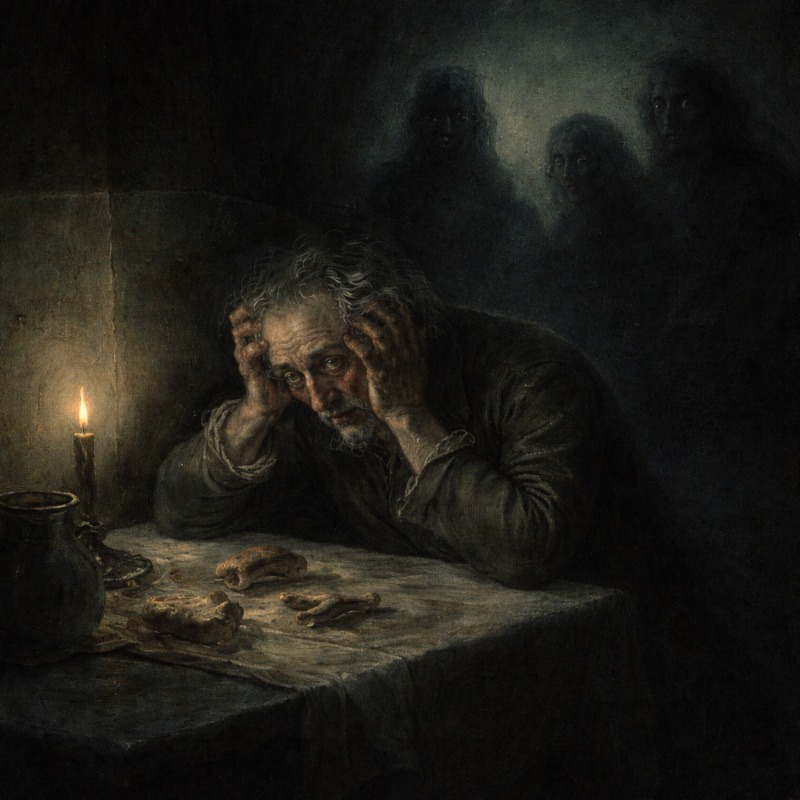
Francisco Goya shifted horror away from mythology and toward humanity.
His “Black Paintings” explored paranoia, madness and decay. Instead of demons from folklore, he painted psychological collapse and moral darkness.
Modern horror still echoes this approach:
- Films focused on mental instability
- Games portraying societal breakdown
- Visual storytelling centred on despair rather than spectacle
Goya’s work reminds us that horror doesn’t need fantasy elements to feel disturbing.
Sometimes it just needs to hold up a mirror.
Which is significantly less comforting.
Hieronymus Bosch – Chaos and Grotesque Imagination
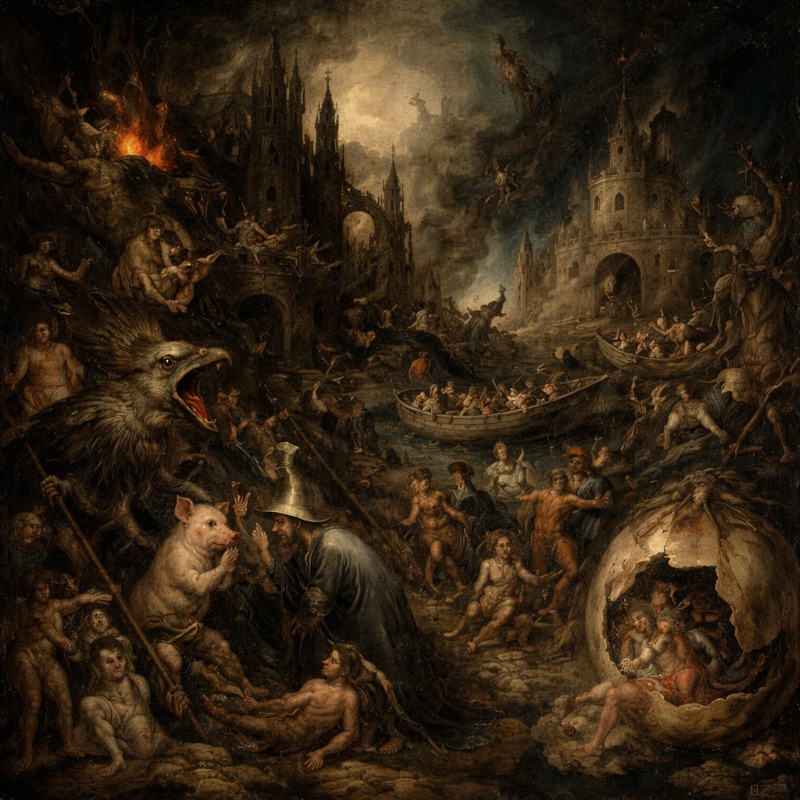
Hieronymus Bosch filled his paintings with surreal, grotesque creatures centuries before horror became a formal genre.
His crowded hellscapes influenced:
- Fantasy-horror hybrids
- Creature-heavy worldbuilding
- Complex, layered compositions
Modern dark fantasy games owe a visual debt to this chaotic imagination. Overloaded scenes packed with grotesque details often trace back to Bosch’s influence.
He proved that horror can be immersive rather than isolated. Instead of one monster, he gave you a hundred.
Take your time looking at his paintings. You’ll regret it slightly.
Odilon Redon – Symbolism and Dream Distortion
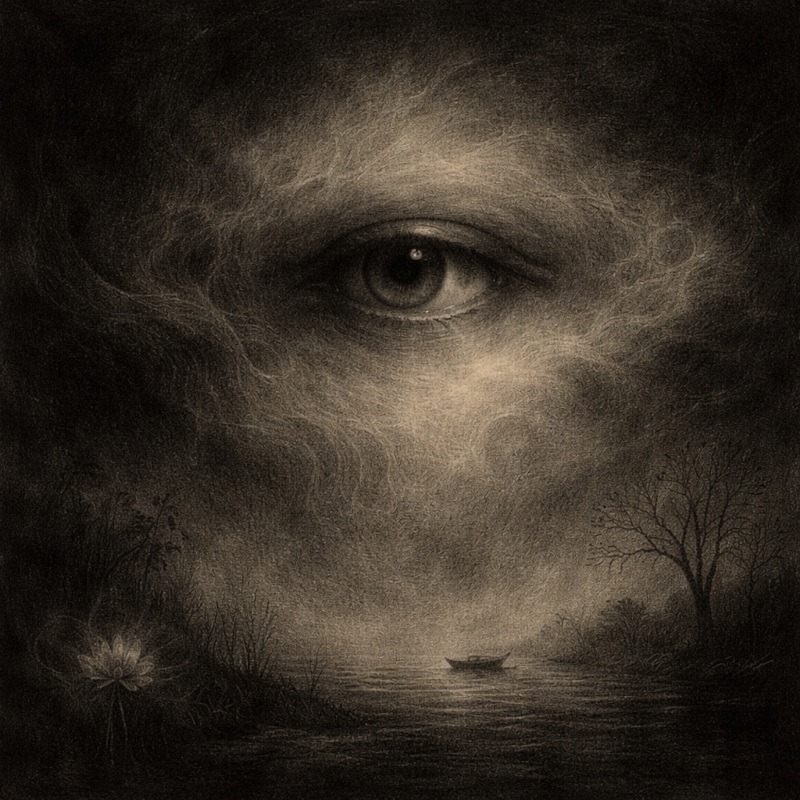
Odilon Redon introduced subtle surreal unease into visual art.
Floating heads. Disembodied eyes. Hybrid creatures.
He didn’t scream horror at the viewer. He suggested it.
This approach influences:
- Surreal horror cinema
- Symbol-heavy indie games
- Modern illustration that relies on dream logic
Redon showed that when imagery feels symbolic rather than literal, the viewer fills in the gaps.
And the viewer’s imagination is always more unsettling than explicit explanation.
Francis Bacon – Distorting the Human Form
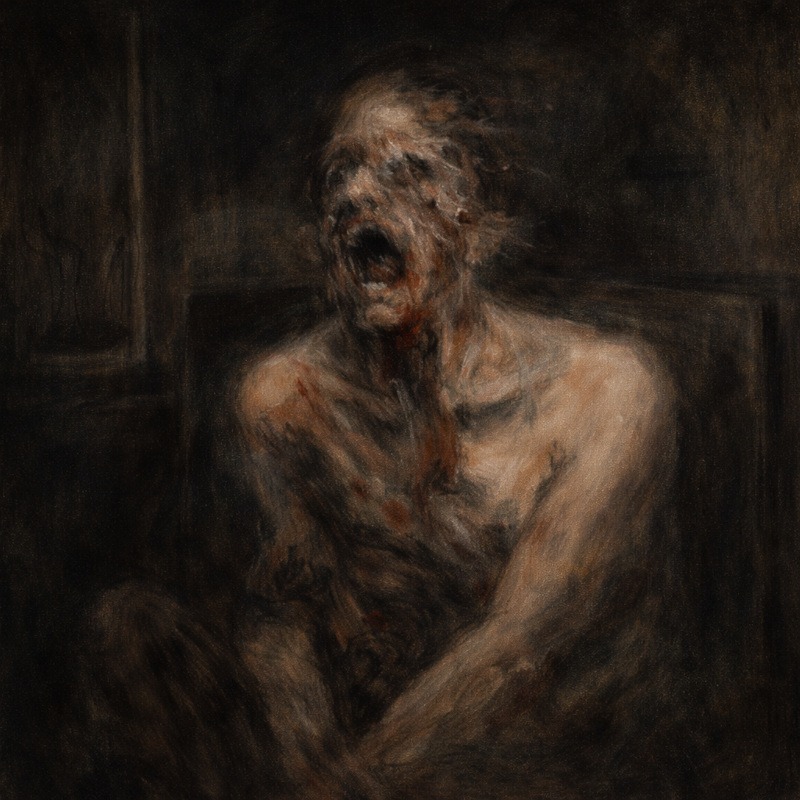
Francis Bacon took the human figure and bent it emotionally and physically.
His warped faces and stretched bodies influence:
- Psychological horror cinematography
- Creature design grounded in realism
- Modern body horror aesthetics
When a character in a game looks human but slightly off, that lineage often traces back to artists like Bacon, who explored distortion long before digital modelling existed.
He demonstrated that horror doesn’t need horns or monsters. It just needs a mouth that looks a little wrong.
Each of these artists bent reality in different ways, but they all understood one thing: fear lives in distortion.
How Influence Travels Into Modern Media
Here is where it gets interesting.
Artists influence painters.
Painters influence illustrators.
Illustrators influence filmmakers.
Filmmakers influence game designers.
And game designers influence independent artists.
Visual language evolves like a chain reaction.
The oppressive lighting in a horror film may trace back to Romantic-era painting.
The grotesque creature in a game may echo Renaissance hellscapes.
The subtle distortion in a modern illustration may trace back to Symbolist experimentation.
Horror aesthetics are complex and layered. Every generation borrows and adapts ideas from the past. Nothing exists in isolation, which means that when you create horror art today, you’re unknowingly participating in a conversation that has lasted for centuries.
No pressure.
Why This Matters for Your Own Horror Art
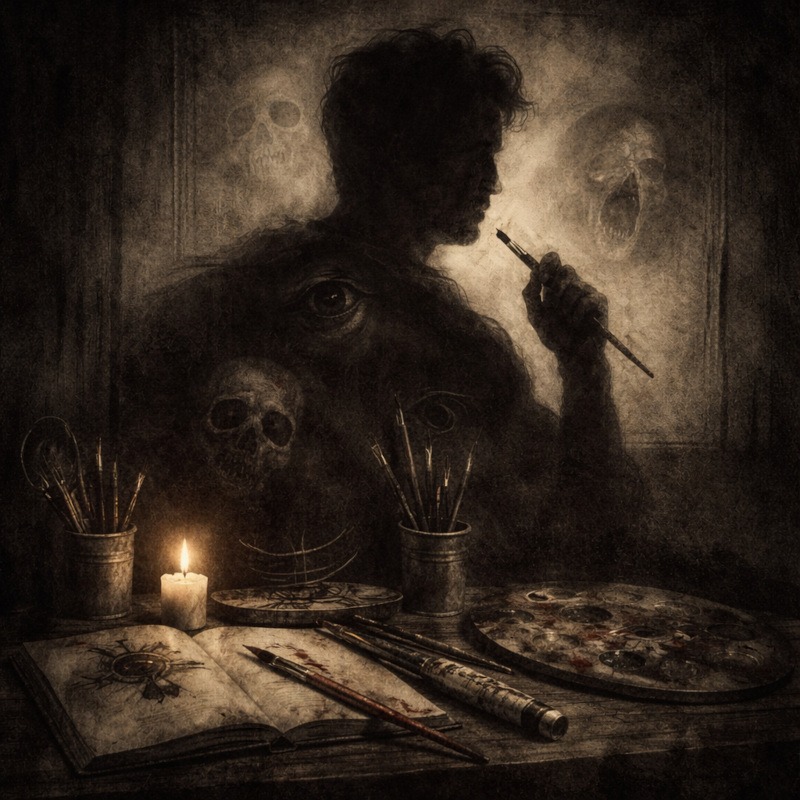
Understanding influence isn’t about copying.
It’s about recognising tools.
From Fuseli, composition and vulnerability.
From Goya, emotional darkness.
From Bosch, immersive grotesque imagination.
From Redon, symbolic suggestion.
From Bacon, psychological distortion of the human form.
When you know where these techniques originate, you can apply them intentionally.
Instead of thinking:
“I need to add something scary.”
You start asking:
“How can I manipulate atmosphere?”
“How can I distort reality slightly?”
“How can symbolism do the heavy lifting?”
That shift makes your horror more mature, layered and deliberate.
And far more unsettling.
The Evolution of Horror Aesthetics
Horror art has evolved from religious fear to psychological dread, from mythological creatures to internal collapse.
What once terrified audiences in medieval paintings now appears in stylised digital worlds.
The medium changes.
The tools evolve.
The emotional mechanisms remain surprisingly consistent.
Fear of the unknown.
Fear of corruption.
Fear of loss of control.
Fear of distorted humanity.
These themes persist because they are deeply human.
And artists across centuries have refined how we see them.
Conclusion
Modern horror art is built on layers of experimentation, distortion and symbolic storytelling that span centuries.
The monsters may look different now. The worlds may be rendered in 3D. But the visual language remains rooted in earlier artistic exploration.
When you recognise those roots, your own horror art becomes more intentional. You’re no longer guessing at what feels unsettling. You are drawing from a long lineage of artists who have already mapped fear’s visual terrain.
And once you start spotting those influences in films, games and contemporary dark art, you’ll not unsee them. Which is fascinating and slightly disturbing. Exactly how it should be.
What You Learned:
- Modern horror art is rooted in centuries of artistic experimentation with fear, symbolism and distortion.
- Early painters like Henry Fuseli helped establish psychological horror through lighting and vulnerable composition.
- Francisco Goya shifted horror toward human corruption and emotional darkness rather than myth alone.
- Hieronymus Bosch influenced creature-heavy and chaotic worldbuilding still seen in fantasy-horror today.
- Symbolist artists such as Odilon Redon showed how suggestion and dream imagery can create unease without direct violence.
- Francis Bacon demonstrated how subtle distortion of the human form creates psychological discomfort.
- Horror aesthetics evolve across mediums, influencing films, games and digital art.
- Understanding artistic influence helps you apply atmosphere, symbolism and distortion more intentionally in your own work.
Explore the Dark & Macabre Series
Curious how these artistic influences evolved into specific modern styles?
Step deeper into the shadows:
- H.R. Giger – The Architect of Beautiful Nightmares
- Zdzisław Beksiński – Painting the Beauty of Desolation
- Junji Ito – The Master of Psychological and Body Horror
Or explore how genre and psychology shape visual fear: