Folk Horror Aesthetics
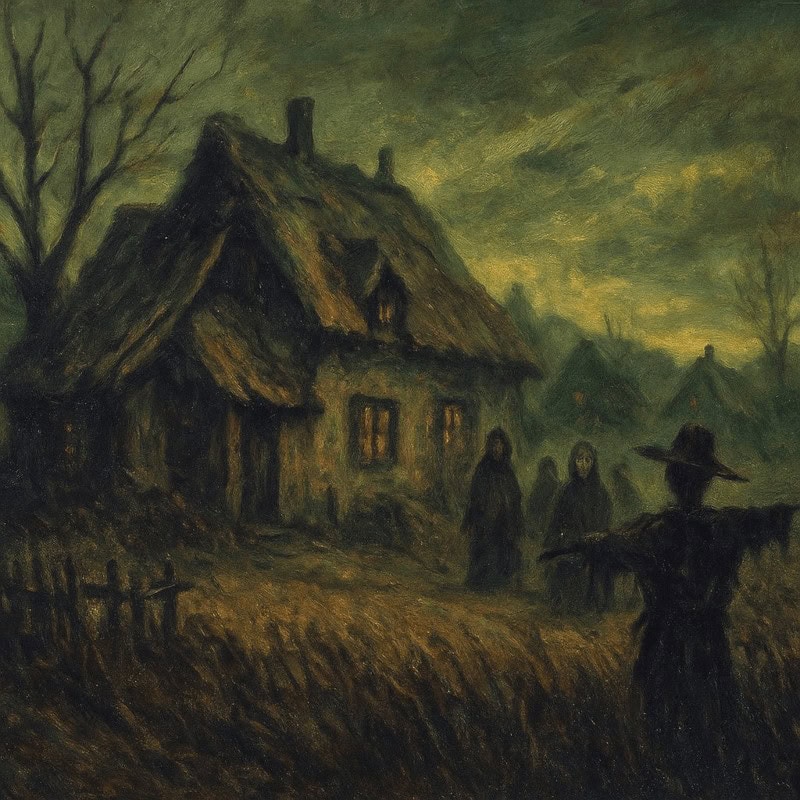
Folk horror isn’t just about monsters – it’s about the aesthetic of dread. It’s the feeling of stepping into a village where the locals smile too widely, the church bells never stop ringing, and someone insists you join the harvest ritual even though you’re allergic to hay.
Where gothic horror leans on castles, graveyards, and aristocrats with good cheekbones, folk horror thrives in fields, forests, and villages untouched by time. It’s about rituals performed without explanation, landscapes that hum with menace, and masks that appear to have been crafted by someone who’d never actually seen a human face.
Folk horror says: the real danger isn’t the monster – it’s accepting food from villagers who won’t tell you what’s in the pie.
The Anatomy of Folk Horror
What makes folk horror so effective is its slow-burning tension. Instead of throwing monsters at you, it lures you into an atmosphere that feels real, lived-in, and quietly wrong.
- Isolated Villages – Life seems stuck in another century. Technology is absent, rules are unspoken, and strangers are not welcome. You’re never sure if you’ve stumbled into a community… or a cult.
- Ancient Rituals – Traditions carried out with unshakable seriousness: masked processions, strange chants, offerings at stone altars. No one explains why; it just has to be done.
- Nature as Menace – Forests loom, crops rot too quickly, rivers whisper with things beneath. Nature isn’t a backdrop; it’s a character with its own will.
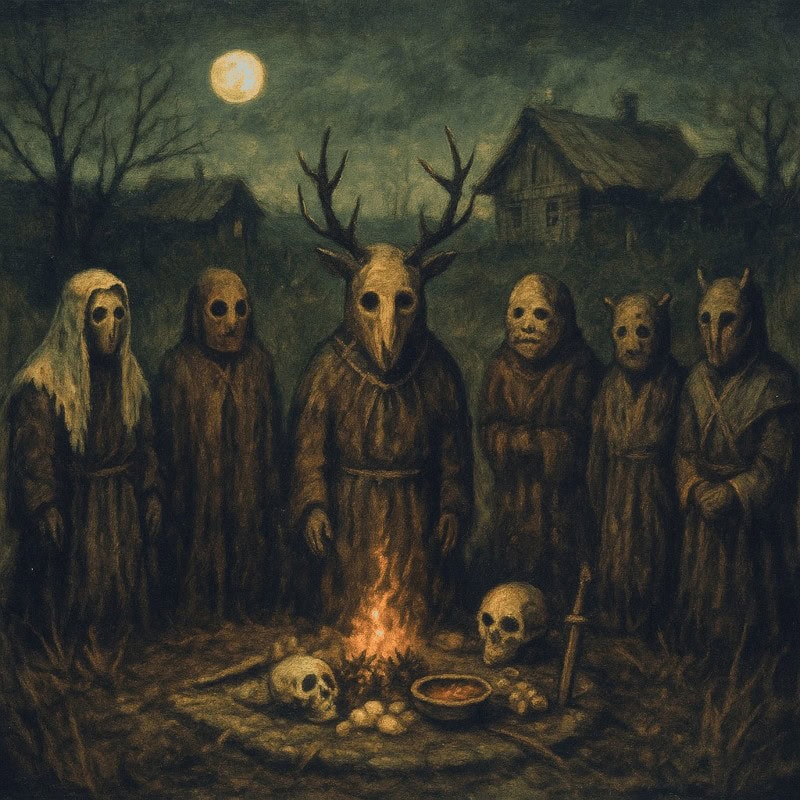
- Masks & Costumes – Worn to celebrate, to conceal, or to terrify. They’re usually handmade, featuring rough wood, stitched fabric, and antlers tied with rope. They look both ceremonial and wrong, as if they’re hiding more than just their faces.
Together, these elements create the unnerving sense that you’re witnessing something ancient, something you weren’t meant to see.
Folk Horror in Visual Art
For artists, folk horror is a treasure chest of inspiration. You don’t need elaborate monsters – the fear often lies in the human figures and their surroundings.
- Masks – Sketch masks that are crude rather than polished: carved faces with crooked features, stitched cloth bags with uneven holes, or animal skulls strapped to heads. Imperfection is what makes them uncanny.
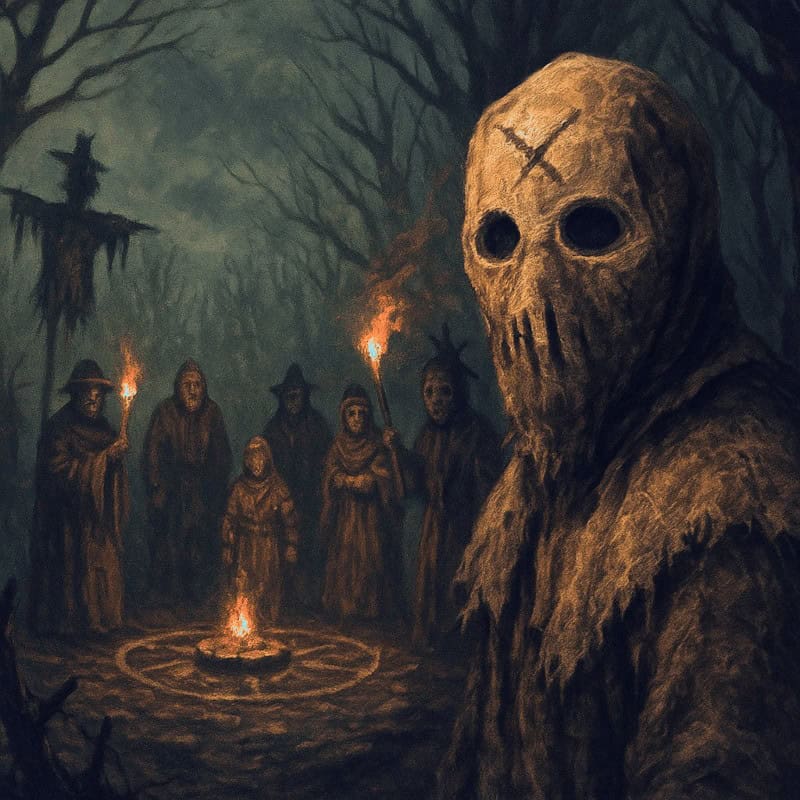
- Rituals – Depict villagers mid-ceremony. A line of hooded figures carrying torches. A circle of masked children standing too still. A bonfire with objects burning that look suspiciously like belongings of outsiders.
- Landscapes – The environment should feel alive. Draw forests where the trees lean inward, villages with crooked cottages, or scarecrows that seem to move slightly between panels. Rolling fields under blood-red skies are creepier than any castle tower.
- Props & Details – Add unsettling ritual items: bone charms hanging from trees, crops tied in strange knots, or altars covered in offerings that seem too fresh.
By layering these details, your artwork captures the feeling of folk horror, even without a single jump scare.
Masks: The Uncanny Face of Folk Horror
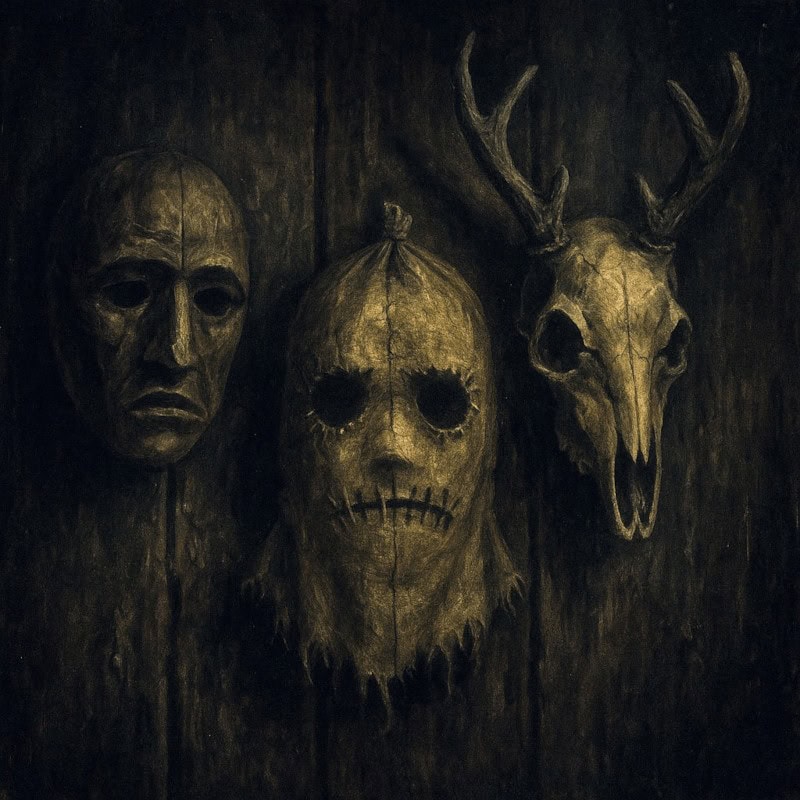
Masks deserve their own spotlight, because nothing screams “ritual gone wrong” like a face that shouldn’t exist. In folk horror, masks aren’t polished works of art – they’re makeshift, practical, and terrifying in their crudity.
- Animal masks with antlers, horns, or beaks tied on with rope.
- Cloth masks stitched hastily with uneven thread, the eyeholes too wide or too small.
- Carved masks with distorted features – grins that stretch too far, eyes that don’t align.
For artists, masks are a brilliant way to blur the line between human and inhuman. The figure wearing it might be harmless… or not. But the mask ensures you’ll never really know.
Why Folk Horror Hits Different
Unlike gothic horror or urban horror, folk horror feels grounded. It doesn’t usually rely on vampires, ghosts or skyscraper-dwelling demons. It’s built on the fear that familiar traditions have become dangerous. That’s not to say the supernatural never appears – films like The Witch prove otherwise – but in folk horror, even ghosts feel tethered to the soil, rituals, and belief systems of the community. Every culture has rituals, masks, and ceremonies – so when you see them twisted in horror art, it feels instantly familiar but deeply wrong.
It also preys on the fear of being an outsider. You walk into a place where everyone knows the rules except you. And those rules are not just inconvenient – they’re life or death.
It’s less “fight or flight” and more “nod politely, hold the ceremonial turnip, and hope you don’t end up the main course.”
Using Folk Horror in Your Art
If you want to bring folk horror aesthetics into your sketches:
- Start with Setting – Place your figure in a remote field, a forest clearing, or a crooked village square.
- Add Ritual Elements – A bonfire, strange offerings, or figures in crude costumes.
- Layer the Details – Crooked masks, ropes of herbs, dolls made from twigs, or markings carved into doors.
- Imply the Unseen – Hint at what the ritual might summon, but don’t show it. The power of folk horror lies in ambiguity.
Art Prompt Idea
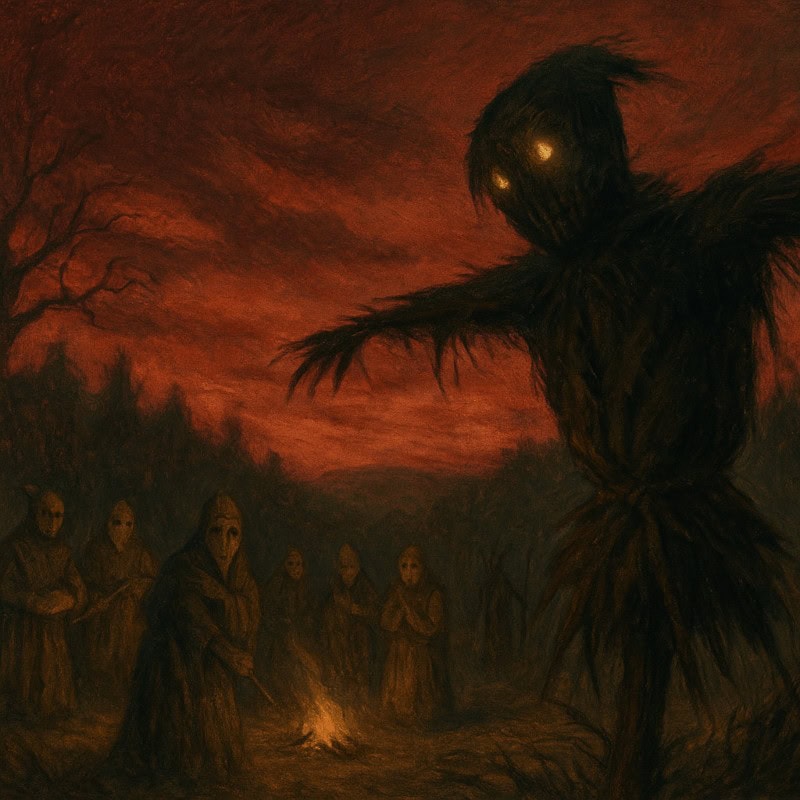
Draw an isolated village scene with masked figures preparing for a ritual. Keep the masks crude and unsettling, the costumes stitched together from scraps. Add one detail that suggests something very wrong – like a scarecrow watching, a shadow that doesn’t match its owner, or a ritual object that looks disturbingly human.
Conclusion – The Fear of Belonging Nowhere
Folk horror is unsettling because it strips horror down to its bones: people, tradition, and the land. No haunted castles, no CGI monsters – just rituals older than memory, carried out in the open fields.
For artists, it’s a reminder that you don’t need fangs or claws to scare. A mask with uneven eyeholes, a bonfire burning the wrong objects, or a village that smiles too much can be more terrifying than any monster.
So next time you’re sketching, leave the vampire capes behind and try a different approach: a crooked mask, a ritual circle, or a scarecrow that seems to lean closer when you’re not looking. At the end of the day, folk horror teaches us an important lesson: always pack extra socks and never trust a man in a goat mask holding salad tongs.
Keep Exploring Folklore in Horror Art
Keep uncovering the eerie roots of horror with more posts from the Folklore in Horror Art series, where myths, rituals, and imagination intertwine to inspire your darkest designs:
- Traditional Art Styles
From woodblock prints to ancient symbols, add old-world fear to your sketches. - Artist Spotlights
Discover horror artists who turn folklore and ritual into unforgettable visuals.