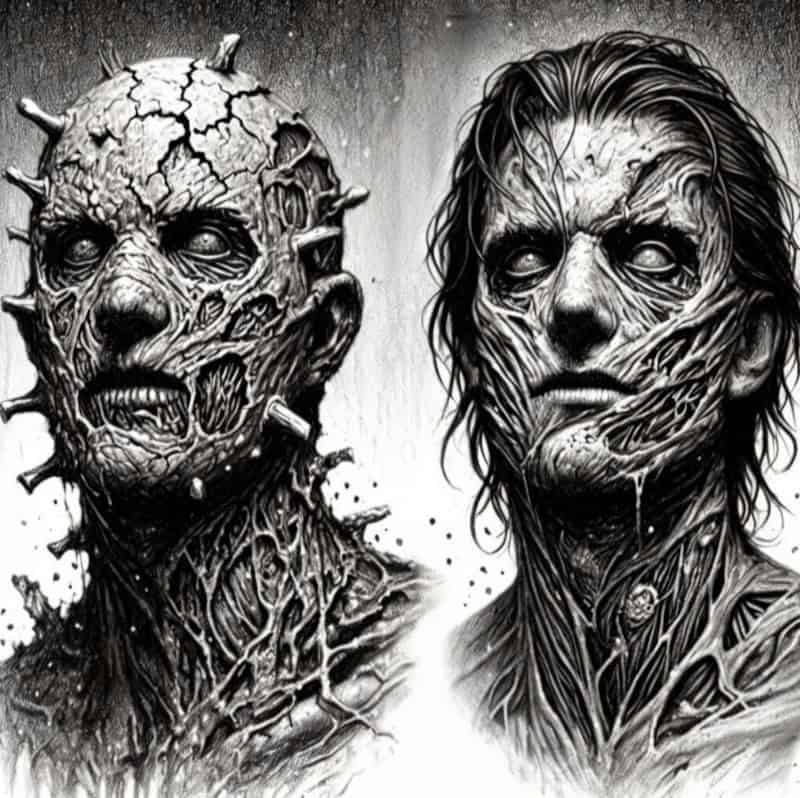
In horror art, textures do the heavy lifting in setting the mood and making viewers question their life choices. A smooth, pristine face? That’s for children’s cartoons. But add some cracks, a little decay, and maybe an oozing wound or two, and suddenly, you’ve got a piece that whispers “run”.
Textures help convey age, damage, and the grotesque, turning ordinary scenes into immersive nightmares. Whether it’s crumbling ruins, rotting flesh, or glowing eldritch runes, the right textures make horror art come alive – and possibly haunt your dreams.
This guide dives into the wonderful world of making things look horrifyingly real. From rusted metal and peeling paint to torn flesh and supernatural markings, we’ll explore how to add depth, grit, and just the right amount of disturbing to your horror illustrations.
1. Horror Art Textures: Surface & Material Decay
This section focuses on objects and environments, because haunted houses and eerie landscapes don’t texture themselves.
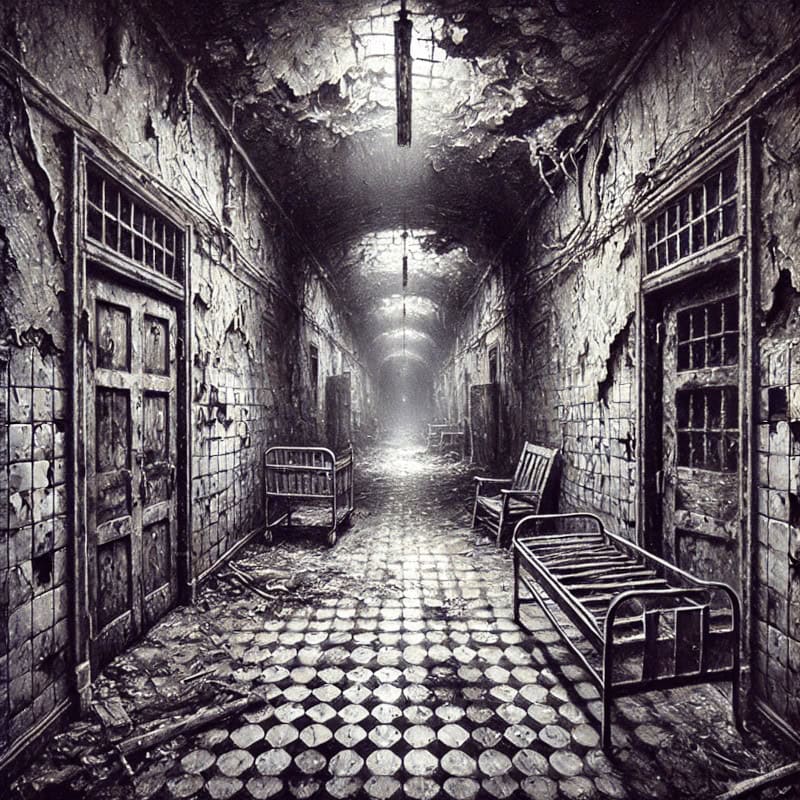
- Cracked, Peeling & Weathered Surfaces – Want your walls to look like they’ve seen a thing or two? Learn how to create aged, broken surfaces, perfect for abandoned asylums and cursed ruins.
- Rust, Mould & Corrosion – There’s nothing like a bit of decay to make your horror setting feel lived in – by ghosts, probably. We’ll cover how to illustrate rusted metal, mouldy decay, and corroded surfaces that scream, “don’t touch that.”
- Burnt & Charred Textures – Nothing says “bad things happened here” like the remnants of fire damage. We’ll explore techniques for burned surfaces, smouldering ruins, and the general aftermath of questionable life choices.
2. Horror Art Textures: Flesh, gore & wounds
Here, we shift focus to horror characters and creatures, because making human skin look nice and healthy is boring.
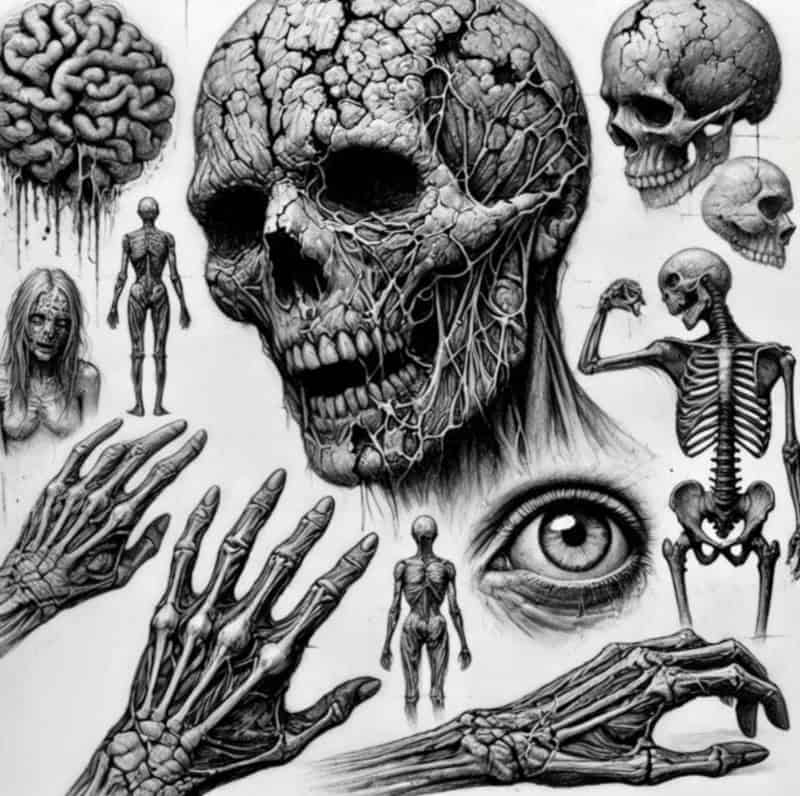
- Drawing Gore & Open Wounds – If you want to illustrate realistic cuts, gashes, and ripped flesh, this is your stop. Depth, shading, and just the right amount of ick will take your work from creepy to I-need-a-band-aid-just-looking-at-this.
- Bruises, Blisters & Swollen Flesh – Nothing says “I’ve had a rough day” like bruised, infected, or otherwise grotesquely swollen skin. We’ll cover how to make injuries look so real that viewers might instinctively reach for an ice pack.
- Exposed Bone & Torn Flesh – Want to showcase deep tissue, skeletal exposure, or torn muscle? We’ll go beyond “oops, I tripped” to “I walked straight into Silent Hill.”
3. Horror Art Textures: Organic & supernatural Effects
When realism just isn’t creepy enough, it’s time to unleash the supernatural. This section is all about eerie effects that push horror creatures and settings into nightmarish territory.
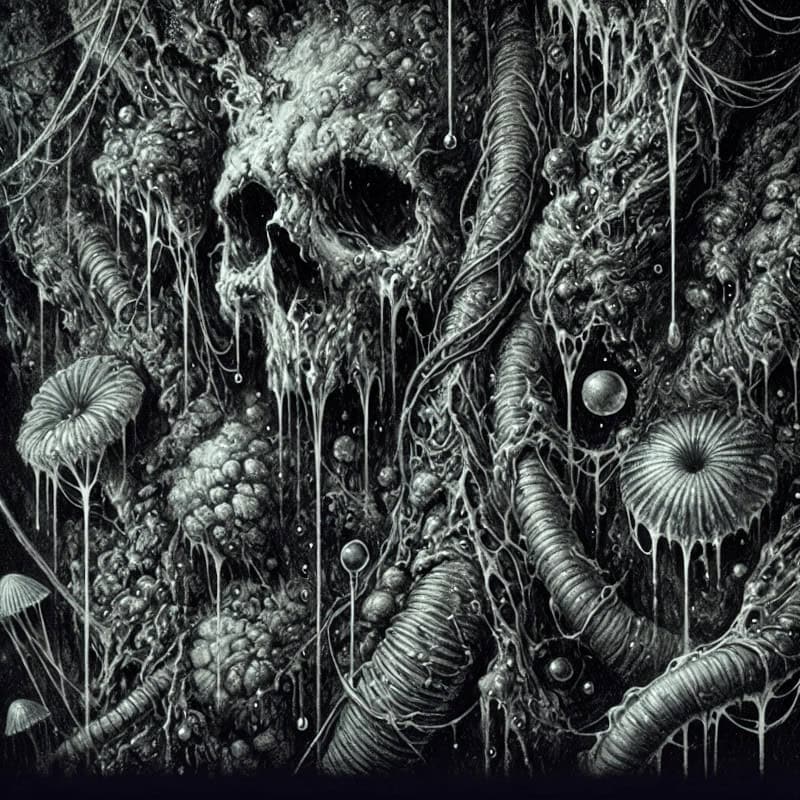
- Slimy, Oozing & Wet Surfaces – Because nothing screams “this thing should not exist” like a glossy, mucus-covered texture. Whether it’s monstrous skin or eerie cave walls, we’ll help you perfect the art of gross.
- Glowing Effects & Ethereal Markings – Need glowing runes, supernatural scars, or eerie symbols that pulse with unknown power? We’ll break down how to create haunting, otherworldly markings.
- Veins, Tendrils & Pulsing Flesh – Some creatures just have too many veins and tendrils for comfort. Learn how to draw writhing, creeping, pulsing skin effects – perfect for eldritch horrors and things that should never be named.
Conclusion
Mastering horror textures lets you push your illustrations to new levels of what-the-hell-is-that?! Whether you’re depicting eerie environments, grotesque wounds, or supernatural effects, textures sell realism and bring the creepy factor to life.
By understanding how to illustrate decay, corrosion, and eerie glowing effects, you’ll elevate your storytelling, one unsettling detail at a time. Keep experimenting, layering, and refining your approach, because horror thrives in the details.
Now, go forth and create something beautifully disturbing.