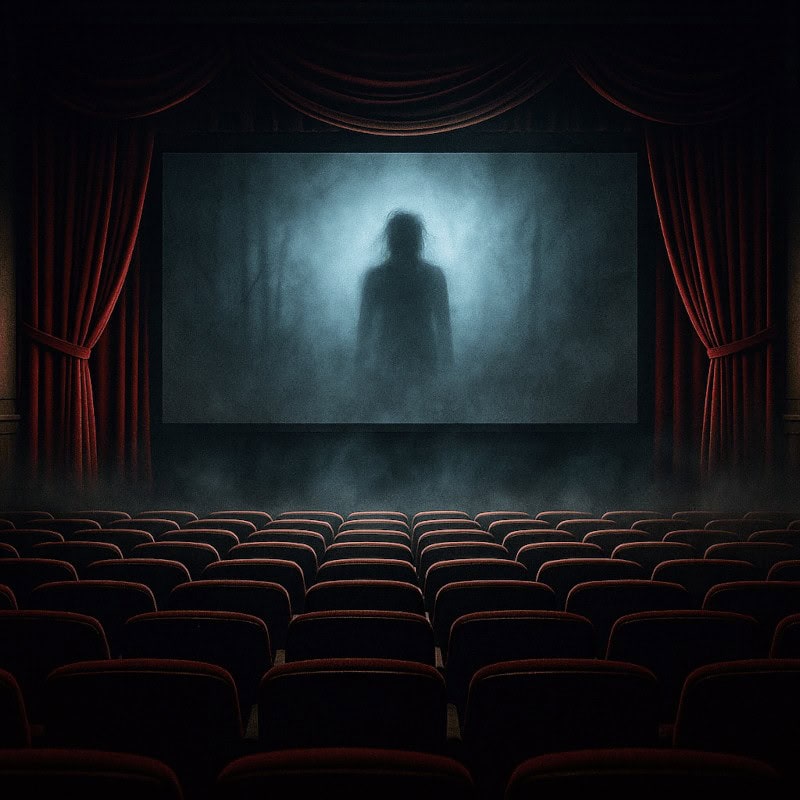
Where Silver Screen Nightmares Inspire Dark Designs.
Welcome, brave artist. Looking for cinematic horror inspiration? Horror movie aesthetics offer artists endless ways to bring dark ideas to life…
Whether you’re sketching a creepy character or crafting a chilling scene, the silver screen is a goldmine of inspiration. From the gothic whimsy of Tim Burton to the raw terror of Evil Dead, let’s explore how horror films can twist your artistic vision in all the right (and wrong) ways.
1. Cinematic atmosphere: Horror movie aesthetics in art
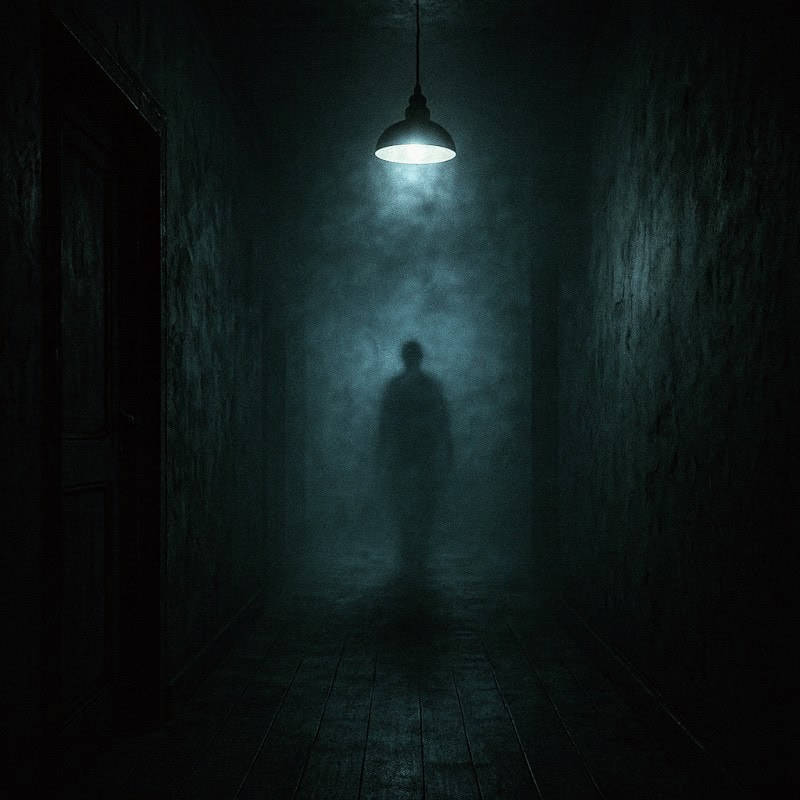
Learn how to channel cinematic atmosphere into your artwork by playing with lighting, composition, and mood.
In horror, it’s not always the monster you see – it’s the space where it might be hiding. Cinematic atmosphere is all about building tension through lighting, composition, and silence. Think of fog-choked streets, flickering bulbs, or a long corridor that feels like it stretches into another dimension.
As an artist, you can channel this by using heavy shadows, dramatic contrasts, and clever framing. Leave parts of your design “unfinished” or hidden in darkness to let the viewer’s imagination do the scaring for you. Remember – nothing is more terrifying than the unknown.
2. Tim Burton & the art of gothic whimsy
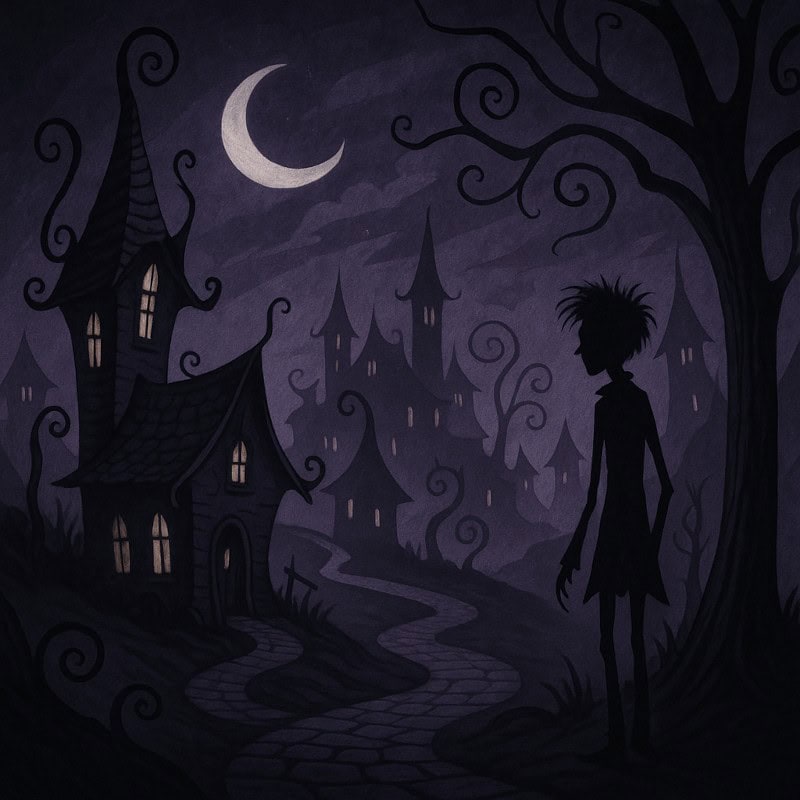
Take inspiration from Tim Burton’s twisted fairytales to add playful gothic vibes and eerie charm to your artwork.
Tim Burton proves that creepy doesn’t always have to be serious. His world is filled with twisted rooftops, spindly characters, and a playful take on the macabre. It’s gothic… but with a grin.
To bring that vibe into your art, exaggerate features – long limbs, oversized eyes, curling architecture. Embrace stripes, spirals, and stark black-and-white contrasts. Blend eerie with endearing, so your creations feel like they belong at both a haunted house and a tea party with skeletons.
3. Practical effects: bloody brilliant inspiration
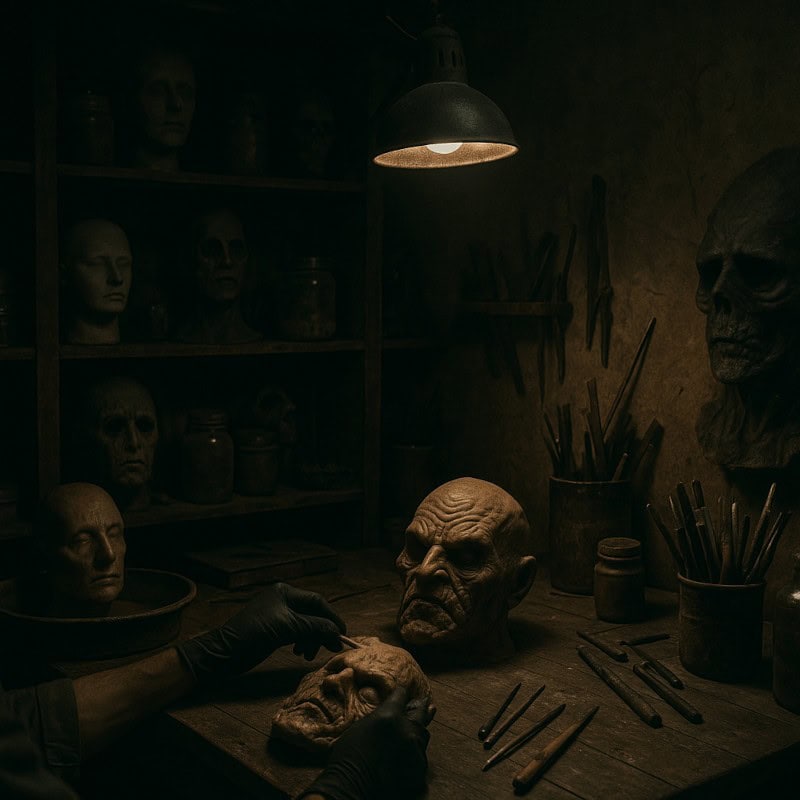
Discover how old-school horror magic – latex, fake blood, and rubber monsters – can inspire texture and raw creativity in your art.
Before CGI waved its digital wand, horror directors got their hands dirty – literally. Latex masks, buckets of blood, and animatronics were held together by hope and duct tape. Movies like Evil Dead and Chucky thrived on creativity over perfection.
As an artist, studying effects teaches you texture, imperfection, and rawness. Add gritty, organic details to your creatures – wrinkles, cracks, seams. Let your designs feel tangible, like they could lurch off the page with a squeaky rubber foot.
4. Psychological & supernatural horror: the art of suggestion
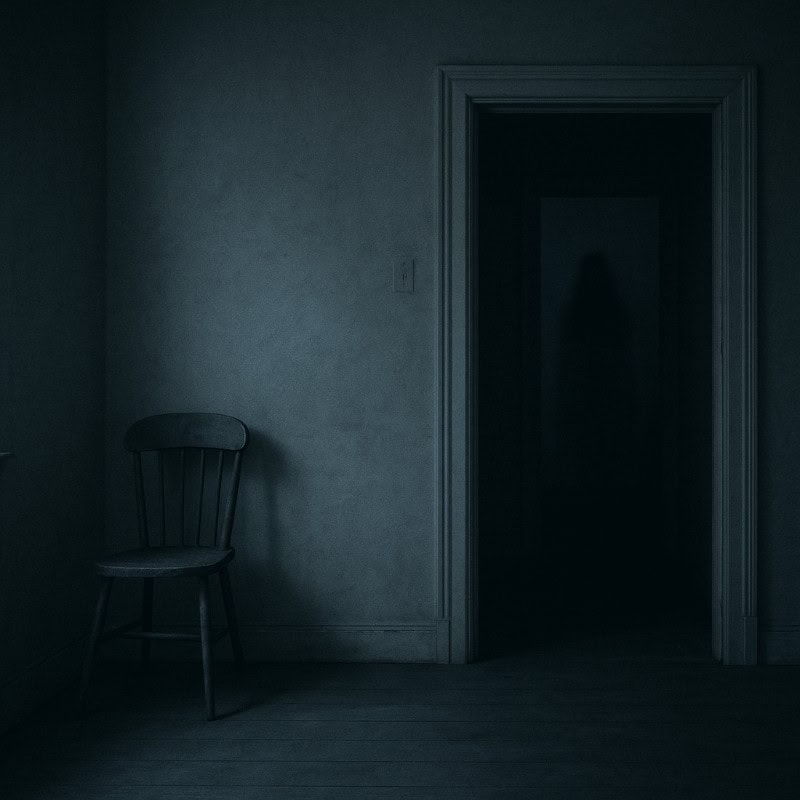
Master the unsettling power of minimalism and subtle details to create art that whispers fear instead of screaming it.
Sometimes, the scariest thing is… nothing at all. Films like The Ring and The Exorcist mastered the art of quiet terror. A still room. A TV crackling with static. A figure that’s just a little too still.
In your art, use minimalism to unsettle. Play with empty space, subtle distortions, and calm scenes where something feels very off. A crooked picture frame. Eyes that follow you. Horror doesn’t always need to whisper, “You’re not alone.”
5. Iconic monsters & horror movie aesthetics
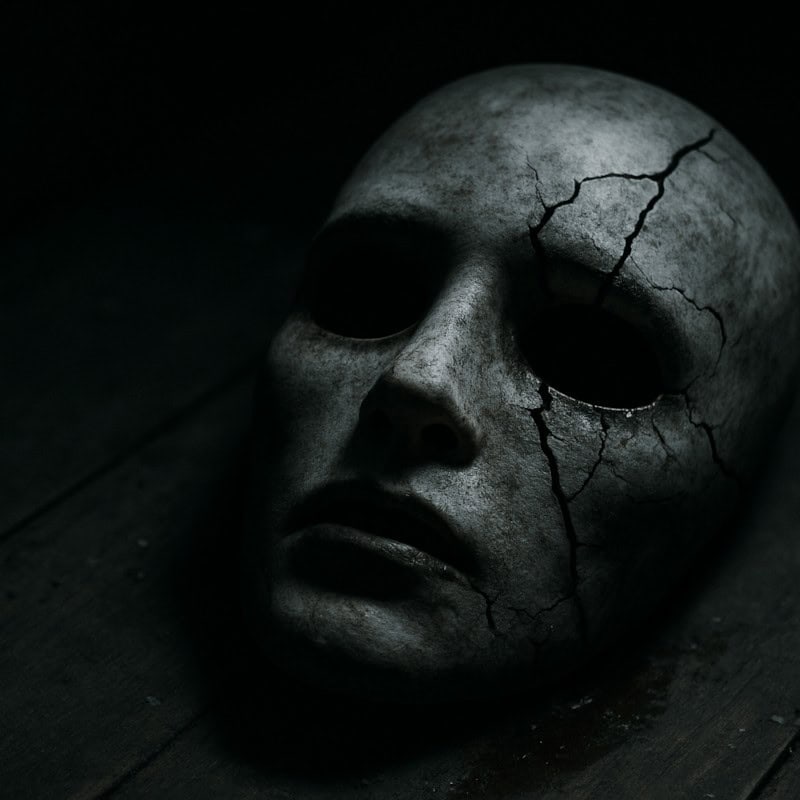
Learn what makes horror legends like Pennywise and Leatherface unforgettable – and how to design creatures that stick in the mind (and nightmares).
From Pennywise’s balloon to Leatherface’s mask, iconic horror characters know how to leave a lasting impression (and sometimes a trail). But these monsters aren’t just scary – they’re designed to haunt you.
Notice the patterns: exaggerated features, unsettling smiles, or human traits twisted just enough to feel wrong. When creating your own characters, think about what lingers in the mind – a silhouette, a mask, or a single, unblinking eye staring back.
6. Cinematic colour palettes & Lighting tricks
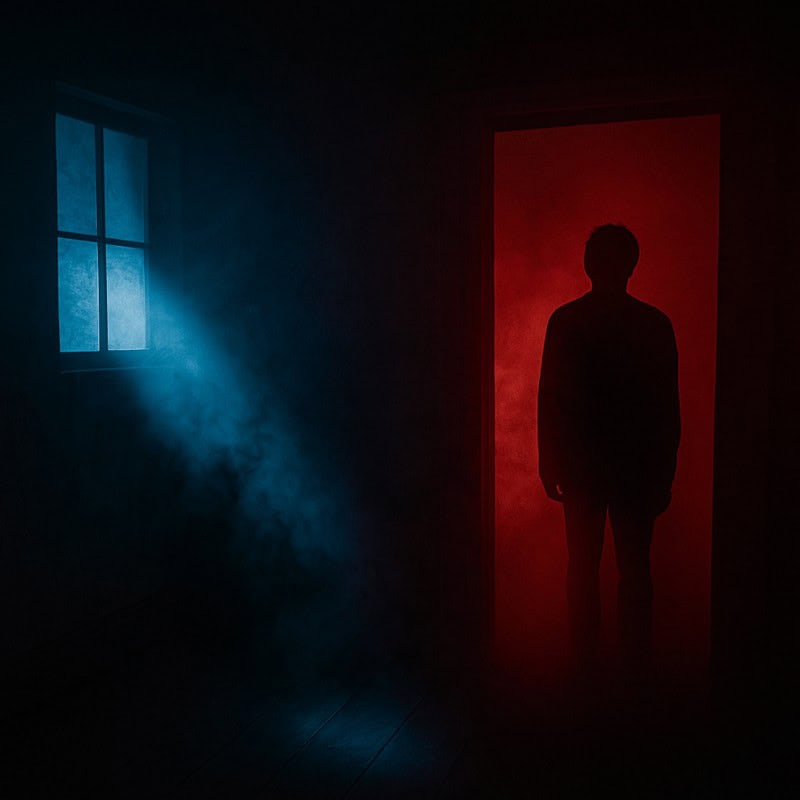
Use bold colours, harsh shadows, and dramatic lighting to give your horror art that chilling cinematic edge.
In horror, colour isn’t just decoration – it’s a weapon. The bold reds of Suspiria, the cold greys of The Witch, or the sickly greens in psychological thrillers – they all set the tone before a single scream.
Experiment with limited palettes in your art. Use harsh lighting to carve your subject out of darkness. A splash of colour in a monochrome scene can draw the eye- and dread – exactly where you want it. Let light and colour do the storytelling while your shadows hold the secrets.
Horror movie watchlist for artists
Need a little “research” (aka, an excuse to binge horror films)? Here’s a growing list of movies packed with artistic inspiration:
- Beetlejuice: Gothic humour and quirky designs
- Evil Dead: Practical effects goldmine
- IT (2017): Modern horror aesthetics
- Jeepers Creepers: Creature design done right
- The Exorcist: Atmosphere and psychological terror
- The Ring: Subtle scares and haunting visuals
- Barbarian: Twists, tension, and monstrous mystery
- Texas Chainsaw Massacre: Raw, gritty horror
- Scary Stories to Tell in the Dark: Bringing illustrations to life
- Slenderman: Minimalist horror in motion
Conclusion
Horror movies are more than just entertainment – they’re a toolkit for every dark-minded artist. So next time you watch a creepy classic, keep a sketchbook handy. You never know when inspiration will crawl out from under the bed.
Keep exploring, keep creating, and remember – the shadows are full of ideas waiting to be drawn.