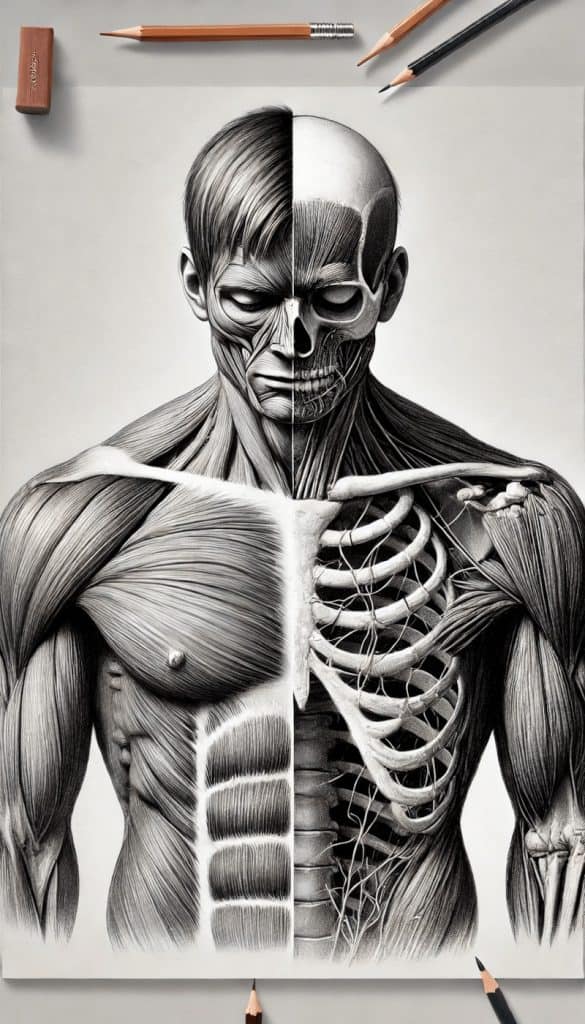
Understanding human anatomy for drawing is the secret weapon to great character design, because even the scariest monster loses its impact if it looks like a pile of noodles with teeth. Whether you’re sketching a realistic figure or designing something truly nightmarish, mastering human anatomy will help your characters feel solid and believable.
This guide will walk you through the essentials of human anatomy for drawing, from proportion and skeletal structure to muscle movement and posing. You’ll learn how the body changes with age, how muscles stretch, and how to create dynamic movement instead of still, lifeless figures. Whether you’re designing a hero, a villain, or something lurking under your bed, these principles will give you a strong foundation to build on.
1. Growth & ageing in character design
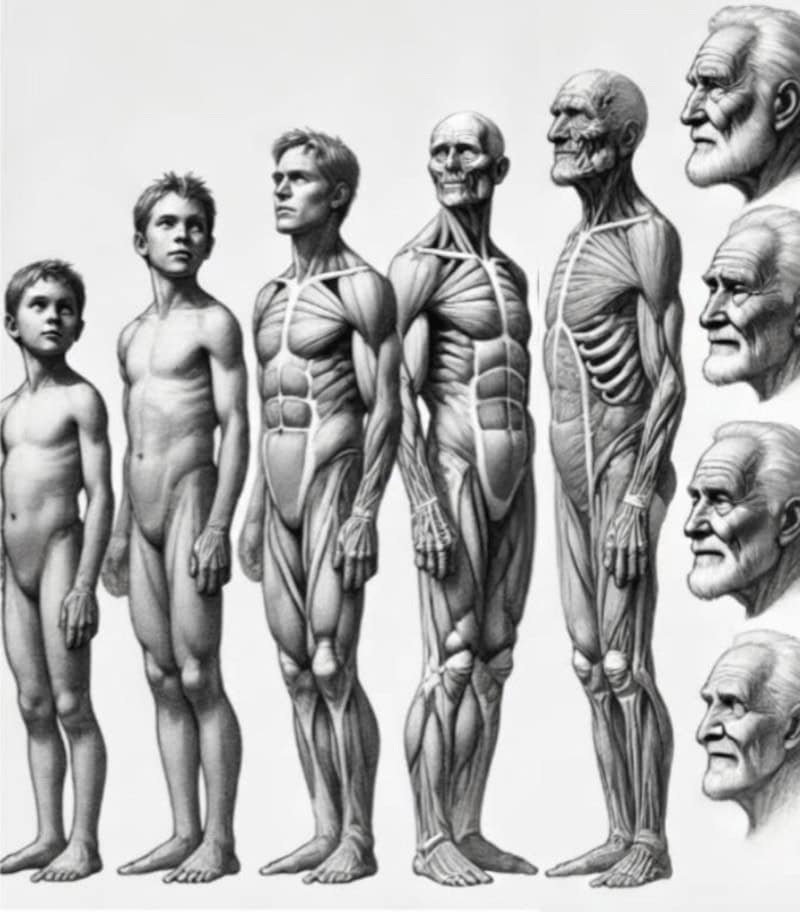
Ageing in art isn’t just about adding wrinkles and calling it a day. Body proportions change from infancy to old age, meaning your terrifying old sorcerer shouldn’t have the same proportions as a toddler (unless you’re making something truly unsettling).
- How Body Proportions Change From Infancy to Old Age
- How to Capture the Subtle Effects of Ageing in Art
- How Facial Proportions and Expressions Shift with Age
2. Muscle details & definition
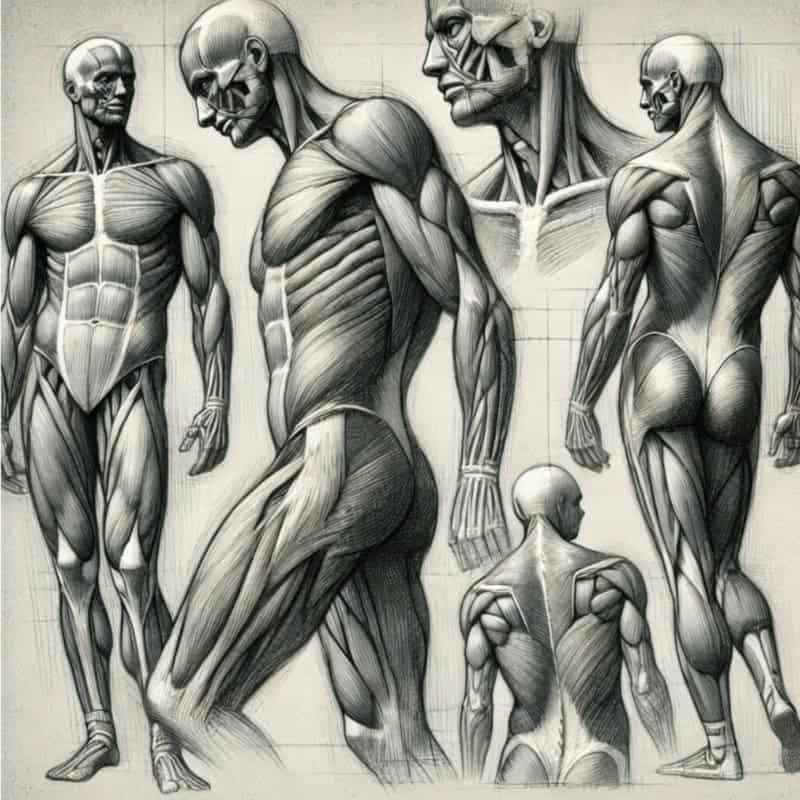
Muscles are great… until you have to draw them. Learning how muscles contract and stretch will help your characters avoid looking like rubber dolls – or worse, accidentally turning your noble hero into a bodybuilder with biceps bigger than their head.
- How Muscles Contract and Stretch During Movement
- Identifying Primary vs. Secondary Muscle Groups in Figure Drawing
- Emphasising Muscle Definition for Dynamic Poses
3. Bone landmarks & surface anatomy
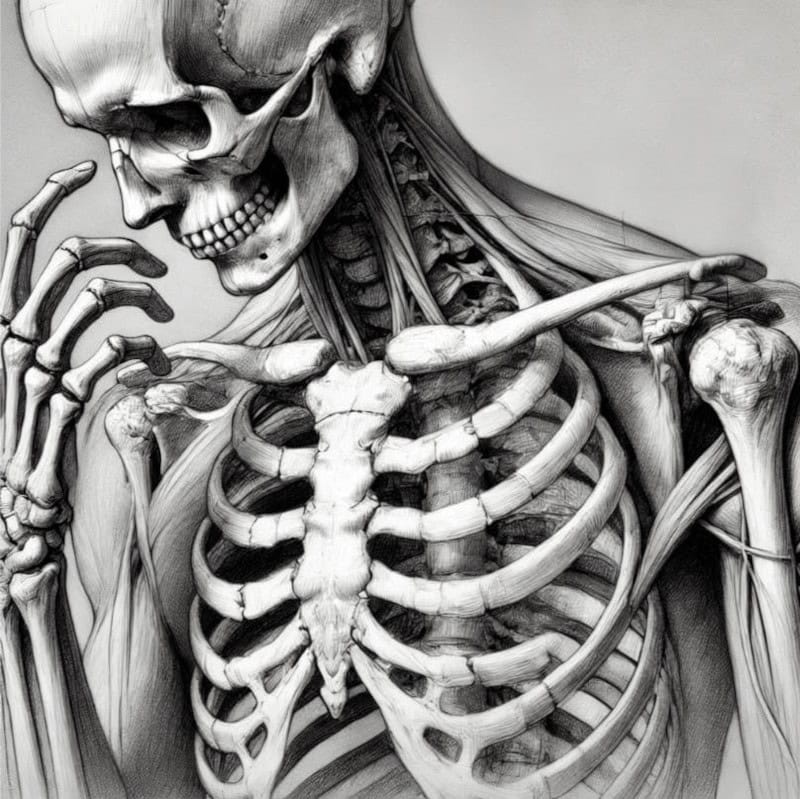
You don’t need X-ray vision, but knowing where bones are visible under the skin can prevent your characters from looking like boneless slugs. Unless, of course, that’s the look you’re going for.
- Recognising Visible Skeletal Points Under the Skin
- Understanding How Bones Define Body Shape and Proportions
- Adapting Bone Structure for Stylised or Exaggerated Designs
4. Skin & fat distribution
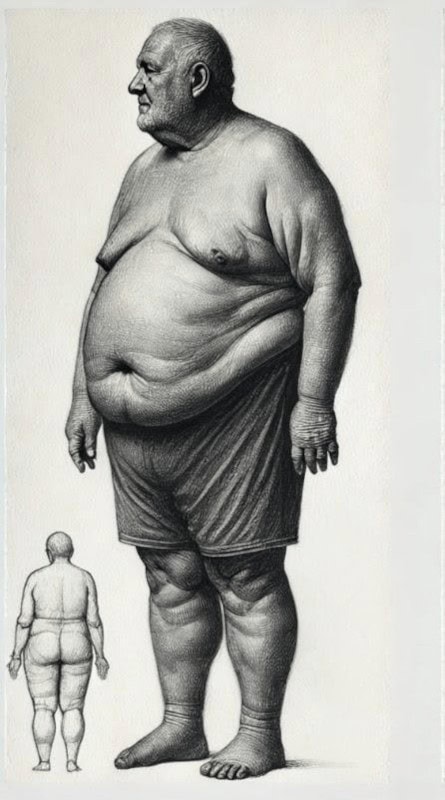
Skin and fat distribution play a big role in defining a character’s form – whether they have a lean, muscular frame or the majestic squishiness of a well-fed cat. Understanding these elements will help you create figures that feel natural.
- How Different Body Types Store Fat and How It Affects Form
- Depicting Skin Folds, Compression, and Sagging for Realism
- How Age and Body Composition Change Fat Distribution
5. Anatomy for dynamic motion
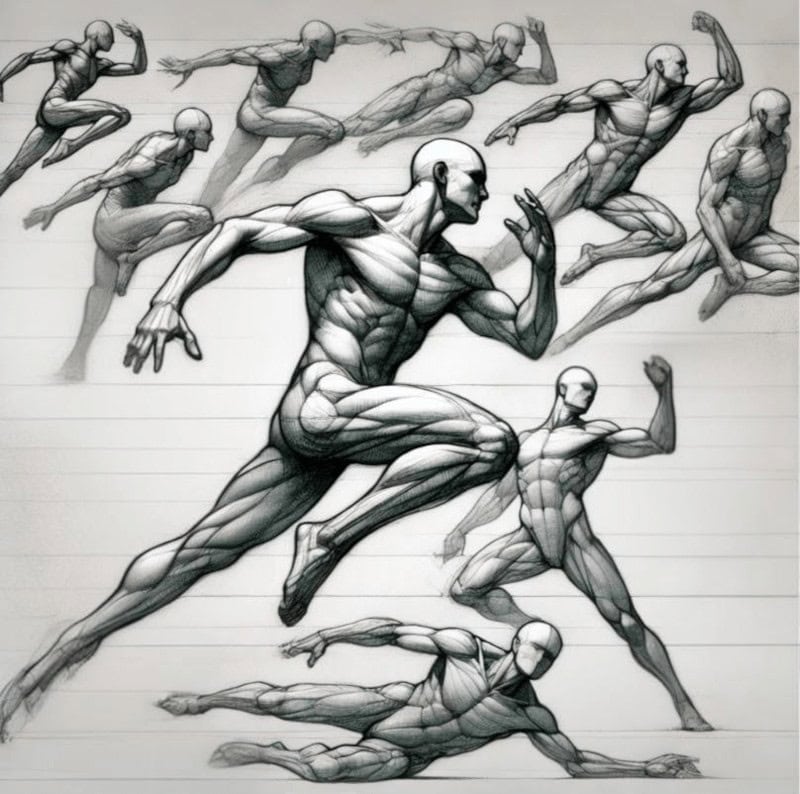
Bodies are meant to move – unless your character is a haunted doll that just sits there menacingly. Understanding dynamic motion will help bring your figures to life (hopefully not literally).
- How the Body Moves in Extreme Poses (Twisting, Foreshortening, Stretching)
- Depicting Weight Shifts and Balance Through Anatomy
- Creating Natural and Exaggerated Movement for Character Expression
6. Anatomy variations & unique body types
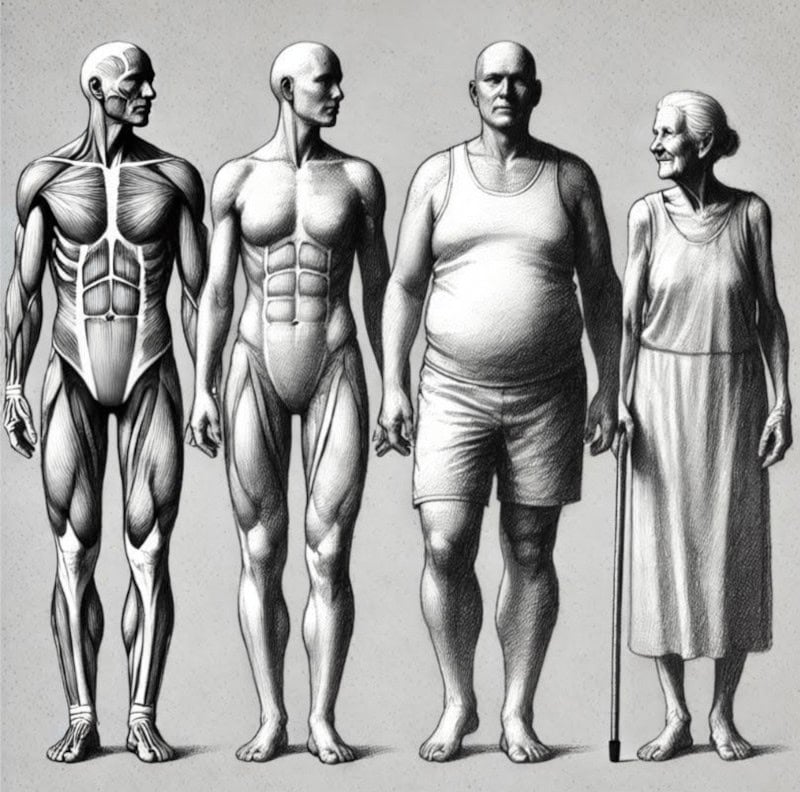
Not every character needs the perfect hero physique – unless you’re drawing a cast of action figures. Understanding body variations helps bring realism (or eerie exaggeration) to your designs.
- Studying Diverse Body Structures (Muscular, Lean, Overweight, Elderly)
- Depicting Anatomical Differences in Genders and Age Groups
- How Genetics and Lifestyle Affect Body Shape and Posture
Conclusion
Anatomy is the glue that holds character design together – without it, your creations risk looking like they escaped from a parallel universe where elbows bend the wrong way. By understanding proportions, muscle movement, and body structure, you can create characters that feel grounded, even when they’re supernatural horrors or gravity-defying.
So, keep studying, sketching, and refining your approach! Whether you’re aiming for lifelike accuracy or just trying to make sure your monsters don’t have accidental spaghetti limbs, strong anatomy skills will take your art to the next level. Now go forth and bring your creations to life – preferably in a way that won’t make physicists cry.