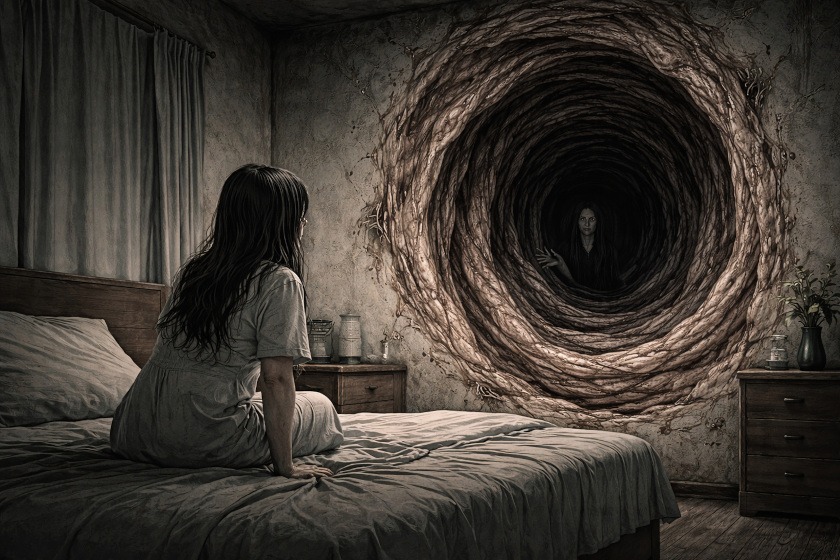
Junji Ito: The Master of Psychological and Body Horror
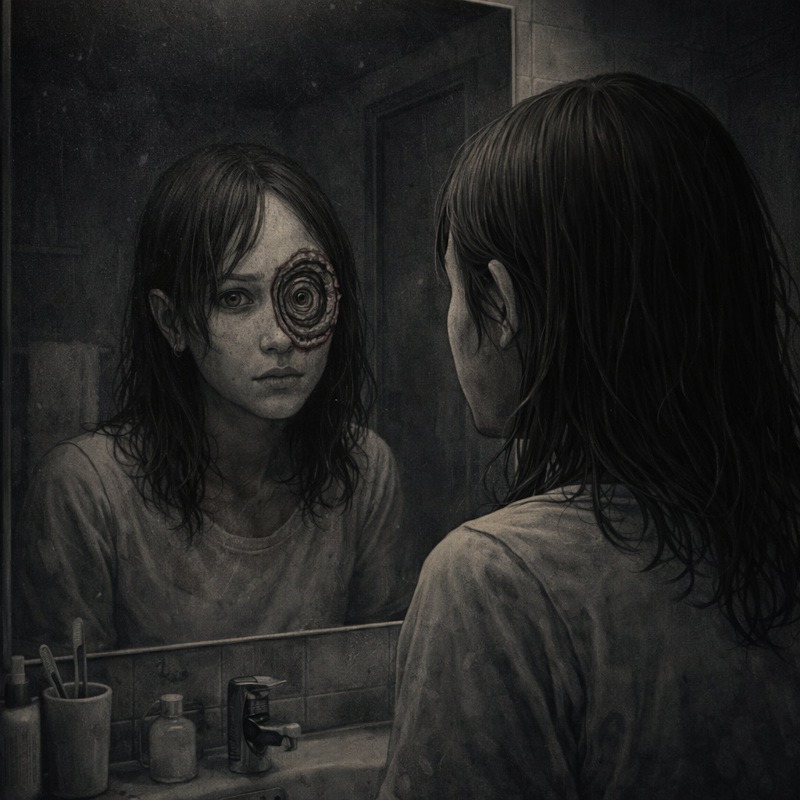
If you’ve ever looked at something completely normal, like a spiral pattern, and suddenly felt like it was looking back at you, you’re already in Junji Ito territory.
Ito doesn’t kick the door down with a chainsaw. He politely lets himself in, sits at the table, and quietly rearranges reality. By the time you notice, you’re already unsettled. He takes ordinary settings, ordinary people and ordinary shapes, then escalates them so gradually that by the time things become truly horrifying, you’re fully invested and emotionally compromised.
In this post, we break down how Junji Ito turns simple ideas into psychological disasters, why his clean black-and-white style makes everything worse, and how you can apply his techniques in your own art without developing an unhealthy relationship with geometric patterns.
Junji Ito at a Glance
- Born: 1963, Japan
- Known for: Psychological horror manga and disturbing body transformations
- Famous Works: Uzumaki, Tomie, The Enigma of Amigara Fault
- Signature Style: Detailed linework, ordinary settings, escalating dread
- Core Themes: Obsession, inevitability, body distortion, psychological collapse
- Why he matters: He redefined modern manga horror through slow-building tension
Who Is Junji Ito?
Junji Ito is a Japanese manga artist best known for turning everyday situations into deeply unsettling experiences. Unlike many horror creators who rely on constant action, Ito focuses on escalation.
His stories often begin calmly. Nothing dramatic. Nothing obviously wrong. Then something small shifts. A character becomes obsessed with a shape. A reflection behaves strangely. A pattern appears more often than it should.
Instead of rushing toward chaos, Ito allows the discomfort to build gradually. By the time the horror fully reveals itself, the reader has already been drawn in emotionally.
And yes, sometimes that reveal involves anatomy behaving in ways it absolutely should not. Calmly. In detail. With commitment.
What Makes Junji Ito’s Horror So Effective?
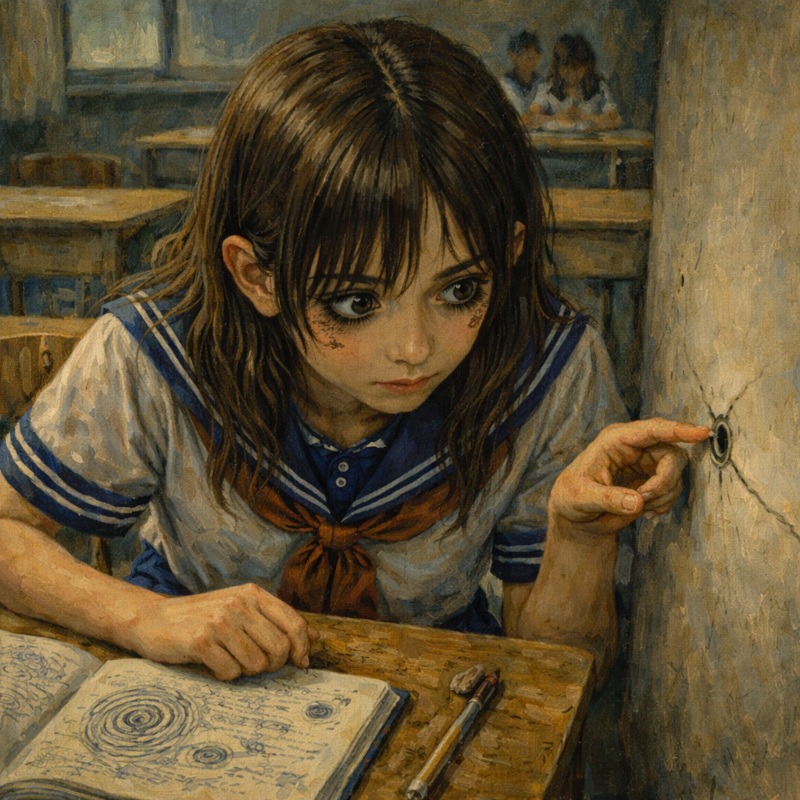
One of Ito’s greatest strengths is his use of ordinary settings. Many of his stories take place in familiar environments such as schools, homes or small towns. The normality matters. When horror invades a setting that feels safe, it becomes more personal. If something terrifying happens in a distant wasteland, it feels far away. If it happens in a quiet neighbourhood, it feels uncomfortably close.
He also excels at slow escalation. In Uzumaki, the spiral begins as a harmless pattern. Over time, it becomes an obsession that consumes individuals and eventually an entire town. The horror doesn’t arrive all at once. It grows. And because it grows gradually, it feels inevitable.
Ito’s body horror is equally deliberate. Transformations are drawn with precision and realistic linework. The base anatomy looks correct, which makes the distortions feel more disturbing. He does not exaggerate for comedy. He renders the unnatural with seriousness. That calm precision makes the horror harder to dismiss.
Psychological obsession is another core element. Characters fixate on small ideas until those ideas take control of their thoughts and actions. The horror becomes mental as well as physical. It lingers because it feels possible, even if the outcome is extreme.
Linework, Detail and Contrast
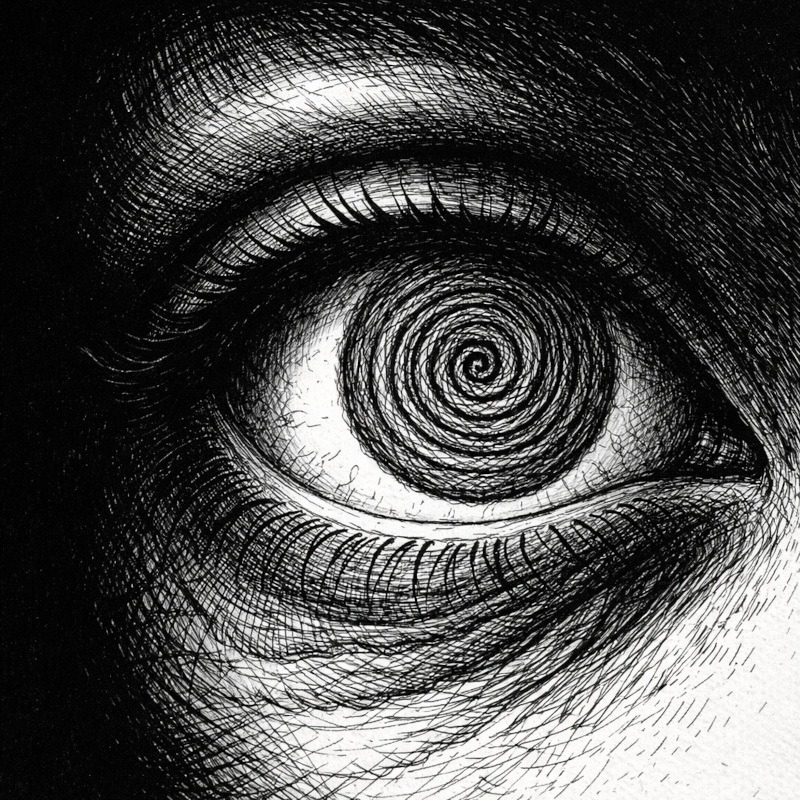
Ito works primarily in black and white, and that limitation strengthens his horror. Without colour, everything depends on contrast, shadow and clean linework. Heavy blacks create dramatic weight. Fine lines add texture and realism.
The simplicity of the palette forces attention onto detail. When something distorts or transforms, the viewer can’t look away. There is no colour distraction to soften the impact.
For horror artists, this is encouraging. You don’t need colour to create powerful imagery. Strong values and controlled linework can be just as effective. In some cases, even more so.
Panel Composition and Pacing
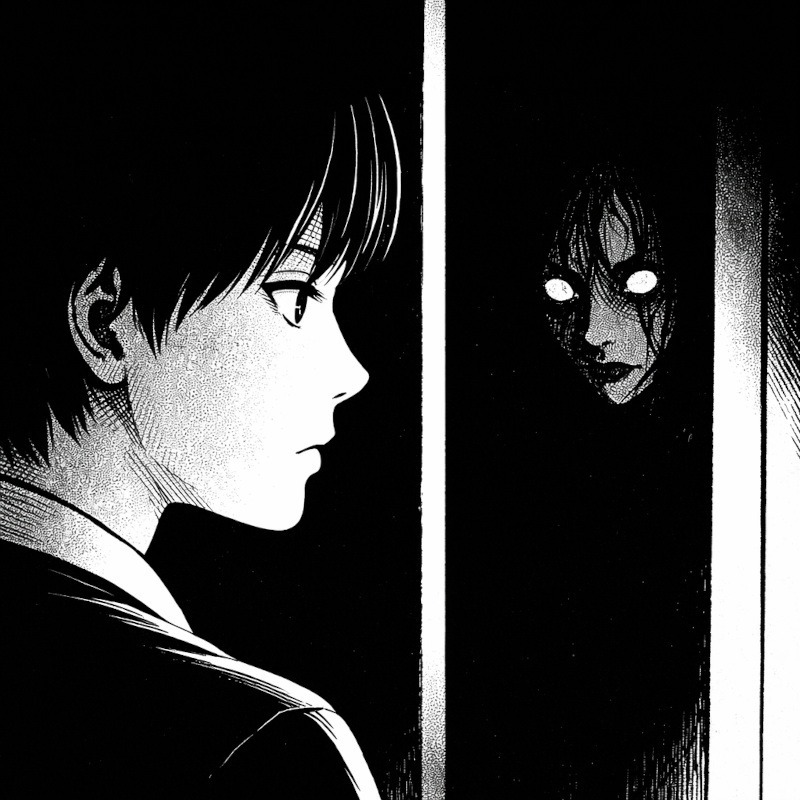
Junji Ito’s horror is not only about what he draws but how he reveals it. In manga, pacing is crucial. Ito often builds several calm panels before delivering a detailed and disturbing close-up. The reader moves through quiet scenes and normal dialogue, building comfort.
Then the page shifts.
A face stretches.
An eye opens where it should not.
Something has escalated significantly.
That contrast between calm and chaos creates impact. If every panel were extreme from the start, the shock would fade quickly. Instead, Ito carefully controls the rhythm.
He also uses page turns strategically. Sometimes the most unsettling image appears only when you flip the page. That brief moment of anticipation heightens tension. Once you turn the page, the reveal feels sudden and unavoidable. Technically, you could close the book. But you probably won’t.
For artists outside of comics, this teaches an important lesson about sequencing. Even within a single illustration, you can guide the viewer’s eye. What do they see first? What detail do they discover second? Controlling the reveal strengthens the impact.
Horror often depends on timing.
The Power of Repetition
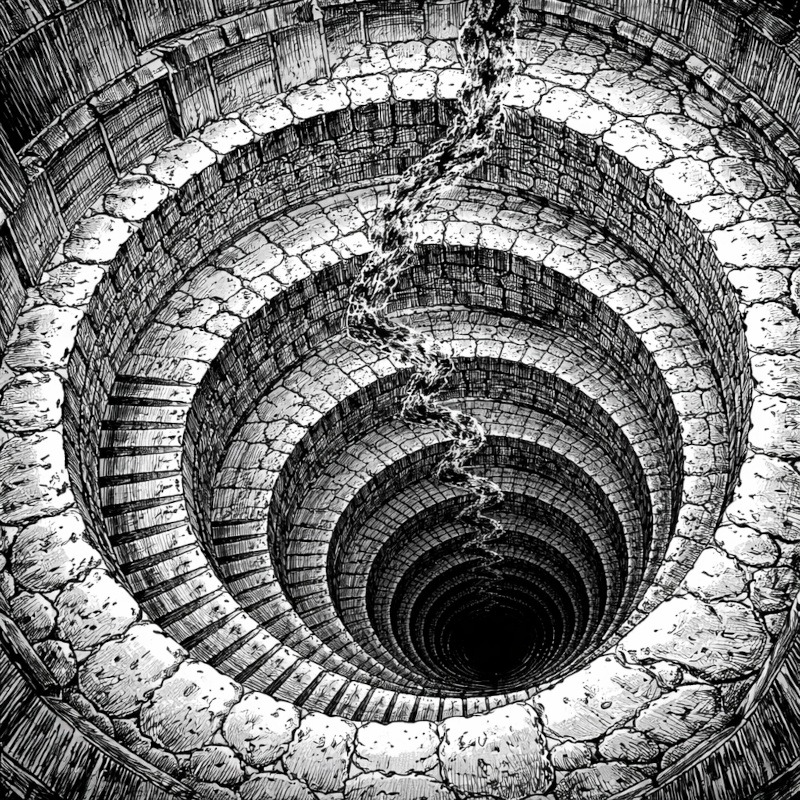
In many of Ito’s stories, a single idea repeats.
In Uzumaki, it’s the spiral.
In Tomie, it’s the recurring presence of a character who refuses to stay gone.
In The Enigma of Amigara Fault, it’s the disturbing repetition of human-shaped holes that feels unsettlingly specific.
Repetition turns something ordinary into something threatening.
A spiral is harmless. You see them on notebooks and pastries. Completely innocent.
Until they appear everywhere.
Until characters cannot stop thinking about them.
Until they begin shaping behaviour and bodies.
The more often a viewer sees a pattern, the more their brain tracks it. Anticipation builds. When repetition becomes unavoidable, it feels invasive. And once something feels invasive, it stops feeling safe.
As a horror artist, you can use repetition intentionally. A recurring symbol or shape across multiple drawings can slowly build unease. What starts as decoration can become disturbing.
Just perhaps avoid choosing something that already exists all over your home unless you are prepared to side-eye it indefinitely.
Why Black and White Works So Well
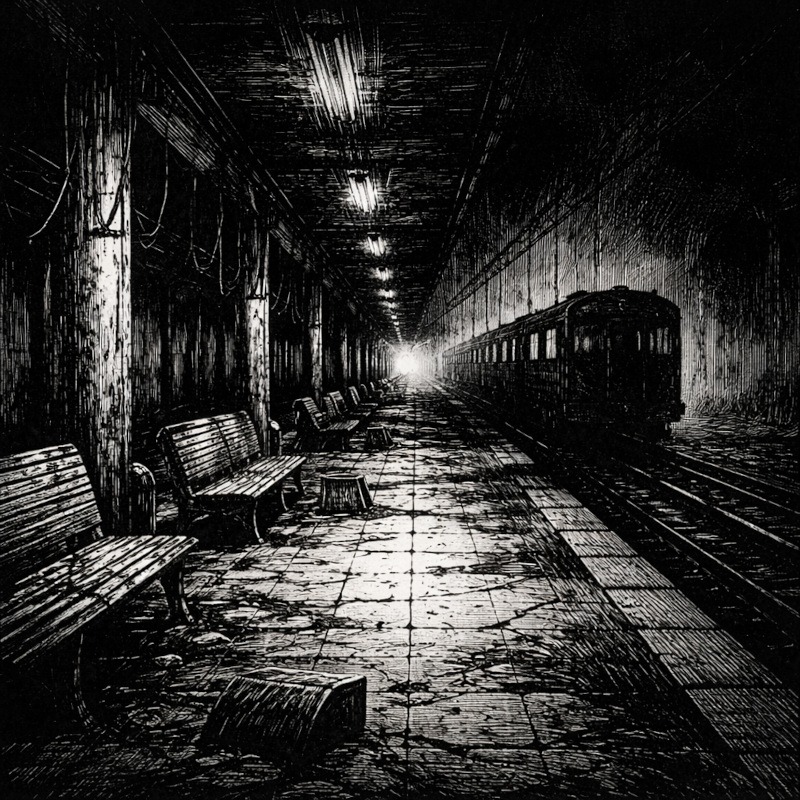
Working primarily in black and white forces clarity. Heavy shadows create weight. Clean lines define form. Fine details make distortions believable.
Without colour, every line matters. Contrast becomes the main tool for directing attention and building tension.
For artists working in pencil or ink, this is reassuring. You don’t need an elaborate colour scheme to create effective horror. Strong contrast and deliberate detail can communicate just as much mood.
When horror is rendered clearly and carefully, it becomes more convincing. And convincing horror is much harder to shake off.
What Horror Artists Can Learn From Junji Ito
Start simple. Ground your scene in something normal before introducing distortion. The stronger your foundation, the more powerful your escalation will feel.
Use repetition deliberately. A recurring symbol can build tension over time.
Render details carefully. Realistic anatomy makes unnatural transformation more disturbing.
Allow horror to build gradually. If everything is extreme from the beginning, there is nowhere left for creeping transformation to develop.
And most importantly, respect subtlety. Sometimes the smallest shift creates the greatest unease.
Sketch Exercise: Create a Simple Psychological Horror Concept
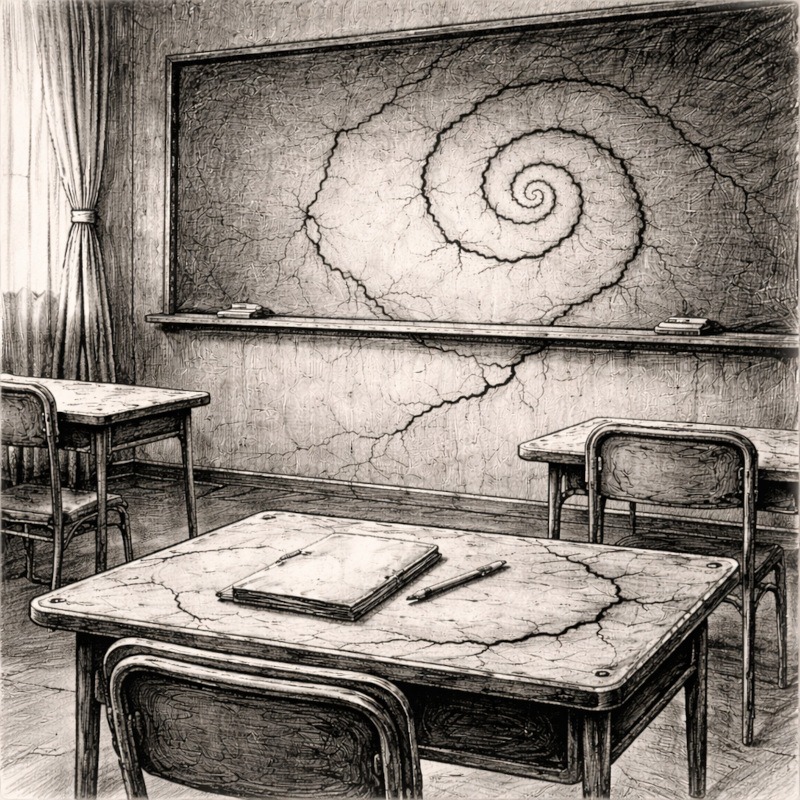
Let’s apply this practically:
Step 1: Draw an ordinary scene:
Sketch something simple and realistic, such as a mirror, a classroom desk or a portrait. Keep it calm and grounded.
Step 2: Introduce one small repeating detail:
Add a subtle shape or symbol that appears more than once. It could be a pattern in the background or a crack forming the same design repeatedly.
Step 3: Slightly distort one feature:
Choose one element and alter it just enough to feel wrong. Keep it subtle at first.
Step 4: Gradually increase the distortion:
If you continue the drawing, exaggerate the change slowly. Avoid jumping straight to chaos. Escalation is key.
Step 5: Keep your linework clean:
Use controlled lines and clear shading. The cleaner your drawing, the more unsettling the distortion will feel.
Step back and ask yourself whether the scene feels like something is slowly going wrong. If it does, you are capturing Ito’s psychological escalation. If everything looks dramatic immediately, reduce the intensity and rebuild the tension gradually.
Conclusion
Junji Ito proves that horror doesn’t need to shout to be effective. It can start small, build slowly and tighten its grip so subtly that you do not realise how deep you are until it is far too late.
By grounding his stories in ordinary settings and escalating them with precision, he creates horror that feels personal rather than distant. The clean linework, the repetition and the careful pacing all work together to make the impossible feel disturbingly inevitable.
If you build tension gradually in your own work instead of revealing everything at once, your art will linger in the viewer’s mind long after they look away. And if someone starts staring at a simple pattern just a little longer than necessary because of something you drew… well. That is when you know you have done it properly.
What You Learned:
- Ordinary settings make horror feel closer and more personal.
- Slow escalation builds stronger tension than immediate chaos.
- Realistic linework makes body distortion more disturbing.
- Repetition can turn simple shapes into unsettling symbols.
- Psychological obsession can be as powerful as physical horror.
Continue Exploring Horror’s Dark Influences
If Junji Ito’s slow-building psychological horror unsettled you, explore how other artists approached fear:
- H.R. Giger – The Architect of Beautiful Nightmares
- Zdzisław Beksiński – Painting the Beauty of Desolation
Want to see how horror art evolved into modern film and game aesthetics?
Or dive deeper into genre and psychological techniques: