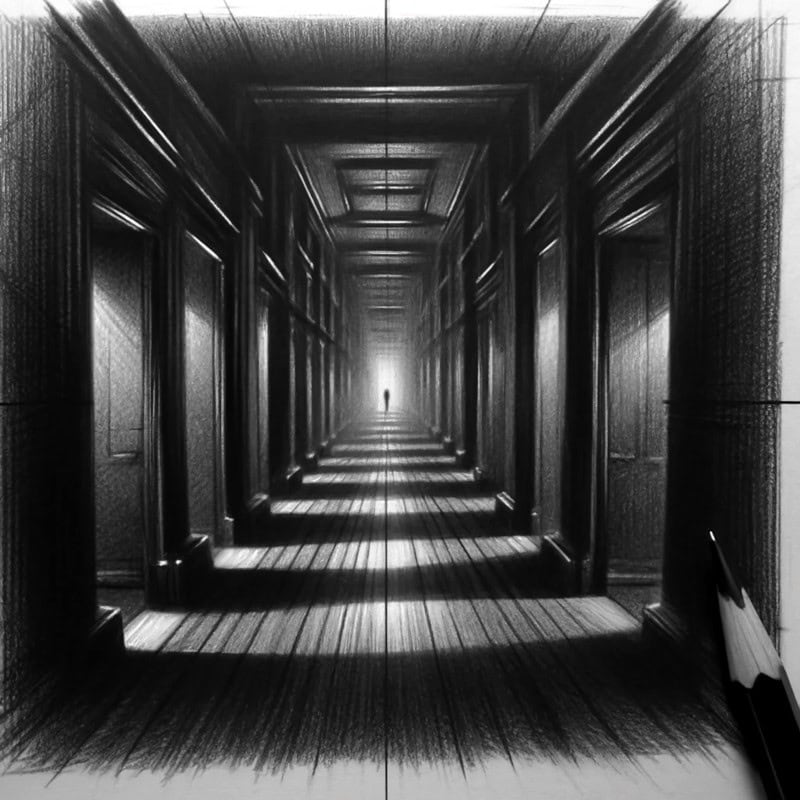
Mastering perspective in drawing is crucial for creating depth, realism, and dynamic compositions. Whether you’re sketching eerie landscapes, twisting architecture into unsettling forms, or simply trying to place characters in believable spaces, understanding perspective will take your art to the next level. Plus, it prevents your characters from floating in the void like lost souls in an existential horror film.
This hub will guide you through the fundamentals of perspective, from basic one-point structures to complex three-point and atmospheric techniques. You’ll also discover how to bend perspective to your advantage – whether for traditional realism or to create warped, unsettling visuals for horror-themed artwork. Because let’s face it, nothing says terror like an impossibly stretched hallway leading to unknown horrors.
Ready to bring your drawings to life with depth and dimension? Explore the guides below and take your perspective skills to the next level!
1. Understanding the basics of perspective
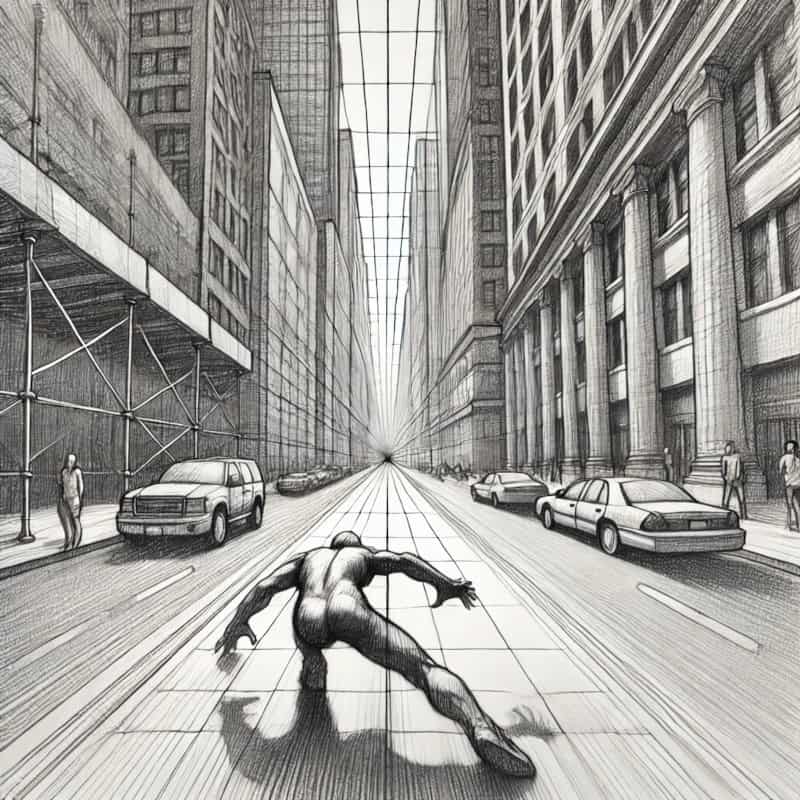
Think of perspective as the difference between “Hey, that looks so real!” and “Why does that house look like it’s melting?” It’s all about the role of horizon lines, vanishing points, and how perspective affects object proportions and foreshortening. Get these right, and your art will make sense. Get them wrong, and, well… let’s just say you’ll have invented a new genre of surreal horror.
- What is Perspective?
- The Role of Horizon Lines and Vanishing Points
- How Perspective Affects Object Proportions and Foreshortening
2. Types of perspective in drawing
Perspective in horror art drawing isn’t just about making things look 3D – it’s about controlling how your audience feels when looking at your art. Do you want them to feel grounded in reality, or like they’re falling into a never-ending void of existential dread? The type of perspective you choose will set the mood of your piece, whether it’s a cosy townscape or a nightmarish maze of impossible angles.
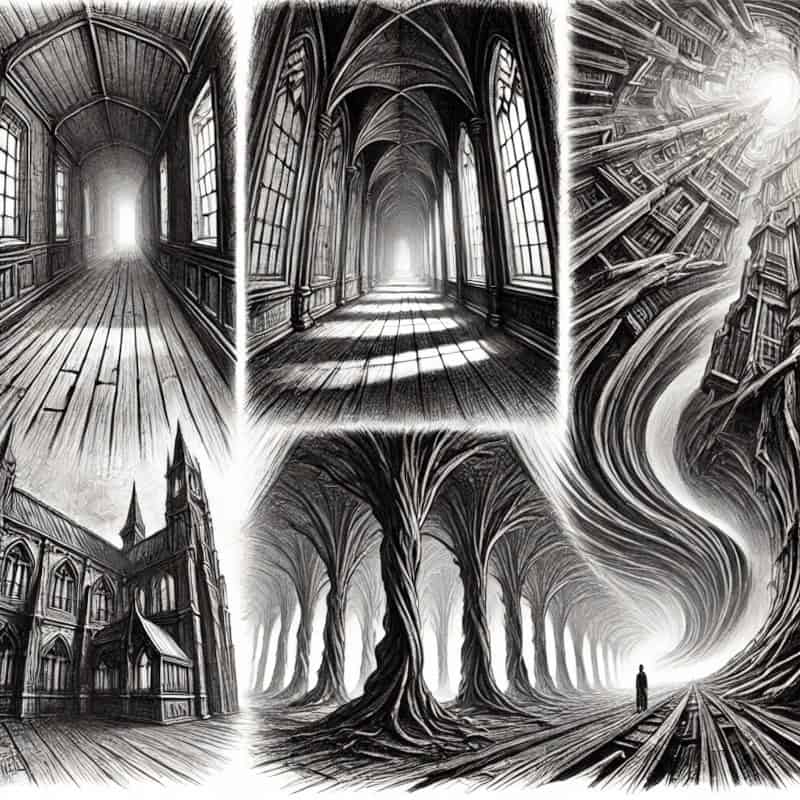
- One-Point Perspective – Best for simple scenes, hallways, roads, or setting up a very ominous, endless corridor.
- Two-Point Perspective – Great for urban settings, buildings, and natural landscapes.
- Three-Point Perspective – Ideal for dramatic angles, tall buildings, and making your audience feel small and insignificant.
- Curved & Organic Perspective – Perfect for surreal horror environments where reality bends in on itself.
- Atmospheric Perspective – Using contrast, detail, and colour to show depth.
- Perspective for Horror Art – How to use exaggerated or warped perspectives to make your viewers question their sanity.
3. Practical applications & exercises

Mastering perspective is like learning a magic trick – once you get it right, your art suddenly looks 10 times more professional. But if you skip the practice, you might end up with buildings that defy physics and characters that look like they’ve been caught in a warp zone.
- Step-by-Step Tutorials for Practising Perspective
- Tips for Maintaining Correct Proportions in Perspective Drawings
- Common Mistakes & How to Fix Them
Conclusion: Mastering perspective in horror drawing
Perspective is a powerful tool that can transform your horror artwork, creating depth, tension, and eerie visual effects. By mastering different types of perspective, whether it’s the structured precision of one-point perspective or the warped reality of atmospheric and organic perspectives, you can push your horror illustrations to new levels of realism and distortion.
Once you’ve mastered the basics, don’t be afraid to break the rules for unsettling effects. Stretching proportions, skewing vanishing points, and using exaggerated angles can amplify the unsettling nature of your scenes. Keep refining your skills, studying real-world perspectives, and exploring creative ways to manipulate space for maximum horror impact.
Now, it’s time to put these techniques into practice and bring your dark visions to life – one perspective at a time.