Regional Folklore: Nightmares That Call Your Hometown Home
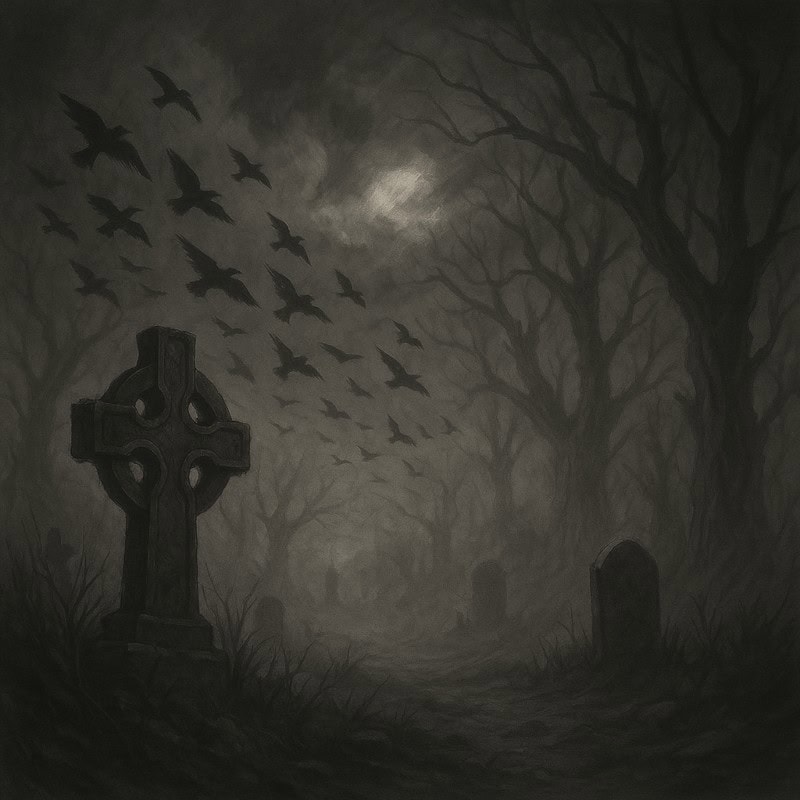
When Legends Lurk Just Down The Road…
Welcome to Regional Folklore in horror art inspiration. Proof that you don’t have to travel to some ancient ruin or haunted castle to find a good scare. The darkest stories often come from the places we know best. Every town, no matter how small or sleepy, has its own ghost tales whispered by grandparents, warnings posted at crossroads, and shadows you’d rather not follow home. These aren’t just myths; they stitch themselves into the history and personality of the places we live.
Behind every quiet streetlight, there’s a phantom passenger. Behind every bridge, a hungry spirit. These tales help communities pass down warnings, explain tragedies, or give shape to the fear of the unknown.
And for horror artists? They’re a treasure trove.
Local legends give you grounded horror to work with – familiar landscapes twisted into something terrifying. They’re specific yet somehow universal. Ordinary places become extraordinary through blood, bones, and bedtime stories meant to keep you wide awake.
Because no matter where you are, there’s always something waiting just outside your door… if you dare to look.
Why Artists Should Draw Regional Folklore
Folklore breathes atmosphere. It’s tied to the places we live, walk, and dream, making it hit closer to home than far-off myths or fairy tales. Drawing regional folklore forces you to confront the uncanny hidden in the everyday: the empty road at night, the river that never seems still, the dark stretch of woods where the trees whisper.
Drawing regional folklore in horror art ties your work to familiar places, turning hometown legends into something haunting. These stories also give you texture – foggy hills, cracked bridges, old signs with peeling paint. They root your horror art in real places, making it feel more believable and unsettling.
For artists, regional folklore offers incredible creative flexibility. You can interpret these stories through the lens of local culture, add your own twists, and experiment with how the setting influences the mood.
When you draw these legends, you keep their memory alive, giving voice to a place’s fears, sorrows, and secrets. Every sketch you make becomes part of the folklore itself, reshaping and continuing it for a new audience. And what better way to honour your own hometown than by turning its ghosts into your next masterpiece?
Meet the Regional Nightmares Hiding Near You:
Here’s a closer (but not too close) look at some iconic regional legends you can sink your pencils into:
The Lady in White – The Eternal Mourner
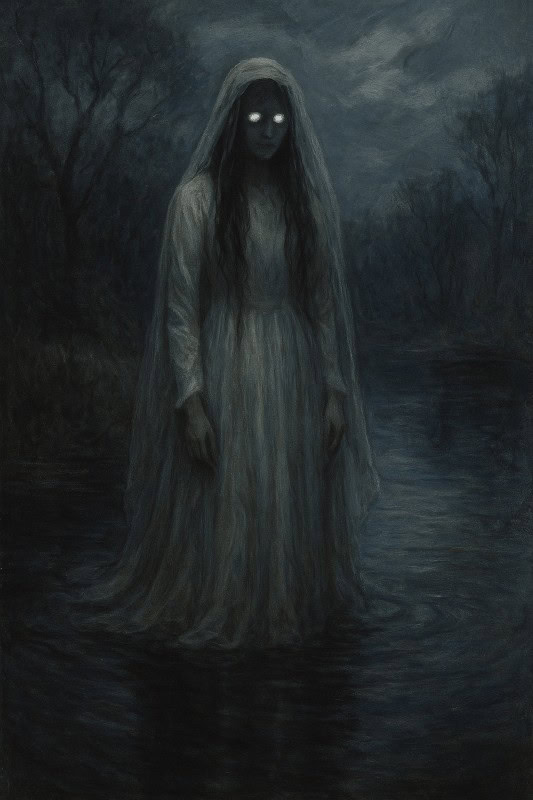
The Phantom Bride Who Waits Forever
Origins & Lore:
Numerous regional legends feature the Lady in White as a ghostly figure across different towns. While her story varies slightly from place to place, it consistently embodies a sense of tragedy.
Always depicted in a long, billowing white gown and veil that obscures her face, she glides silently along rural roads, lonely bridges, riverbanks, and even through graveyards. Many believe she is the restless spirit of a young bride who died before her wedding day – either betrayed by her groom or struck down by cruel fate. In other versions, she took her own life after losing her children, unable to bear the weight of her grief.
In some tales, she’s a mother endlessly searching for her lost children, sobbing and calling their names into the darkness. Others paint her as a jilted lover who appears to warn young women off treacherous men – or to punish those who stray from fidelity.
An eerie chill in the air, the faint rustle of her gown, and the soft echo of weeping on the wind herald her presence.
Witnesses claim that if you see her face, it may appear as a hollow mask or one full of sorrow and rage. Those who follow her into the fog, or accept her outstretched hand, vanish into the water – never to surface again. If you meet her gaze at midnight on a bridge, she whispers your own deepest regret… then vanishes, leaving you haunted long after she’s gone.
Though sometimes confused with Latin America’s La Llorona, the Lady in White appears in folklore worldwide, often tailored to the tragedies of each region.
Why This Story Still Haunts:
She lingers because we all understand grief – and the way it can twist into something darker when left unresolved. Her sorrow echoes through generations, not with screams, but in the silent weight of pain that never truly left.
Her story endures because she could be anyone: a bride, a mother, a lover. Someone who lost too much, too suddenly, and was never given peace.
She reminds us that emotions don’t die when the body does. Heartbreak can haunt a place forever, leaving behind shadows that cry not for revenge, but for release. And maybe that’s the most haunting part: not that she screams, but that somewhere in the quiet, we can still hear her mourning. And we understand why.
Art Inspiration:
Sharpen those pencils – the Lady in White wants her portrait done… preferably before you join her in the afterlife.
- Veil of Grief:
Draw her kneeling alone at the edge of a blackened river or fog-covered lake, her long veil blending into the water like smoke. Her reflection in the surface shows a face contorted in sorrow, rage, or something in between. Is she mourning… or warning? - Eyes of Loss:
Position her in a wooded area, half-obscured by tree trunks and shadow. Only her veil is visible from behind. In the background, faint silhouettes of ghostly children linger – like memories refusing to let go. - Ghostly Road:
Illuminate her figure in the dark – eerie headlights as she stands on a deserted highway. Make her gown nearly translucent. Position her beneath her veil, surrounded by fog silhouettes. Just moments before the driver realises she isn’t quite real – or alive. - Silent Scream:
Freeze her mid-wail – mouth open in agony, hair whipping around as if caught in a violent storm. Her arms stretch toward the viewer, and the background distorts like ripples in water. No sound… just the sense of being pulled into her pain. - Symbolism:
Scatter small, heartbreaking details throughout the scene. Wilted white roses, decayed wedding bouquets, or drowned doll limbs at her feet. These symbolic elements deepen the tragedy and hint at the story that made her scream echo through time.
The Headless Horseman – The Rider Who Never Rests
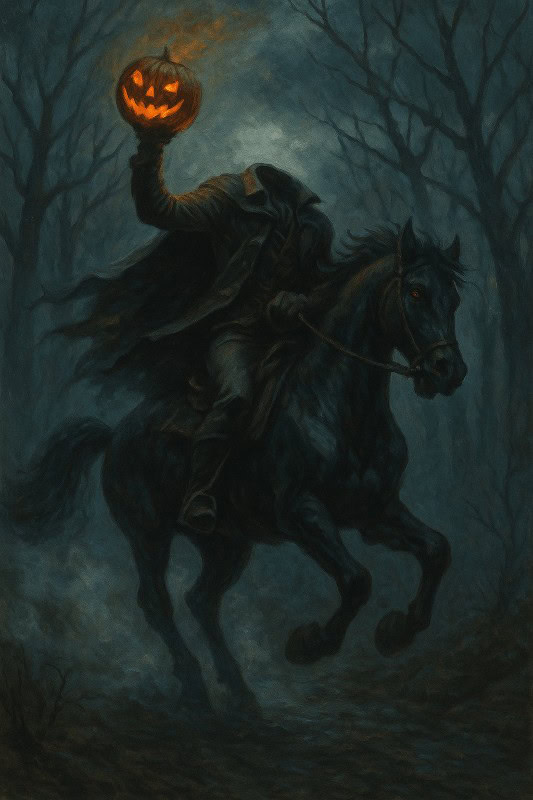
The Galloping Terror of Foggy Roads
Origins & Lore:
Somewhere beyond the foggy battlefields, shadowy crossroads, and forgotten graveyards, the Headless Horseman continues his eternal ride. His story has roots in European and American folklore, but similar figures appear in legends worldwide.
The most famous telling says he’s the tormented spirit of a soldier who lost his head in a cannonball strike during a brutal battle. He was left unburied, and his skull was either stolen or never recovered. Unable to rest, his soul roams endlessly through the mist in search of his missing head – night after night – until it’s returned.
In some versions, he isn’t just searching; he’s hunting. The Horseman gallops down moonlit roads, his black stallion’s hooves striking sparking like stormfire. He may appear clutching a severed head, a flaming jack-o-lantern, or nothing at all – just the echo of what he’s lost. If he catches you on his path, some say he takes your head to replace his own, leaving you another restless soul to join his endless ride.
Why This Story Still Haunts:
Older European versions describe him as a ghostly executioner. He breathes smoke and flame, and his eyes glow like embers in the dark. He gallops across bridges and ancient battlefields, marking the death of someone nearby. In some tales, he’s seen waiting silently at crossroads – always shrouded in mist.
To this day, the faint sound of hooves on an empty road at night is enough to make even the bravest traveller quicken their pace. Because when the Headless Horseman finds you, there’s no outrunning him.
He terrifies us because he’s relentless – a force you can’t reason with. Charging through the fog, he’ll keep coming, no matter how fast you run.
His ghostly presence isn’t driven by rage alone, but by a need to reclaim what was stolen: his identity, his peace, his head.
His legend reminds us that sometimes, the past doesn’t stay buried. It gallops back, shrouded in mist and fury, demanding what it’s owed. And deep down, we fear being hunted by something that doesn’t speak, doesn’t stop, and doesn’t care who you are.
Because when the Headless Horseman rides, it’s not just a ghost story. It’s a warning – that some wrongs are never forgotten, and some spirits never stop searching.
Art Inspiration:
Grab your sketchbook – the Headless Horseman is proof you don’t need a head to make a lasting impression… just a flaming pumpkin and questionable road safety skills.
- Flaming Pumpkin:
Show the Horseman mid-throw, launching a blazing jack-o’-lantern with fiery trails spiralling behind it. His horse’s mane whips in the wind like flames, while ghostly fog churns around them. Is it a warning shot – or the last thing his victim ever sees? - Fog & Hooves:
Create a silhouette emerging from dense, rolling fog. The Horseman galloping across a cobbled bridge, hooves striking sparks on the stones. Add faint skeletal soldiers trailing behind him – just visible in the mist like shadows of past victims. - Battlefield Echoes:
Place him on a ruined, moonlit battlefield – sword raised high, his own skull cradled under one arm. Spectral warriors gather behind him, their forms fading into smoke and memory, as if answering the call of an unfinished war. - Midnight Ride:
Focus on a dramatic close-up of his silhouette from behind, his figure stretching impossibly long as he rides through a forest tunnel. Faint, bloody footprints mark the path – hinting at those who tired (and failed) to run. - Symbolism:
Add a glowing crescent moon overhead – the only silent witness to his hunt. You could subtly embed hidden shapes in the fog (like eyes or skulls), suggesting that the night itself is watching too.
The Phantom Hitchhiker – The Ghost Who Needs a Ride
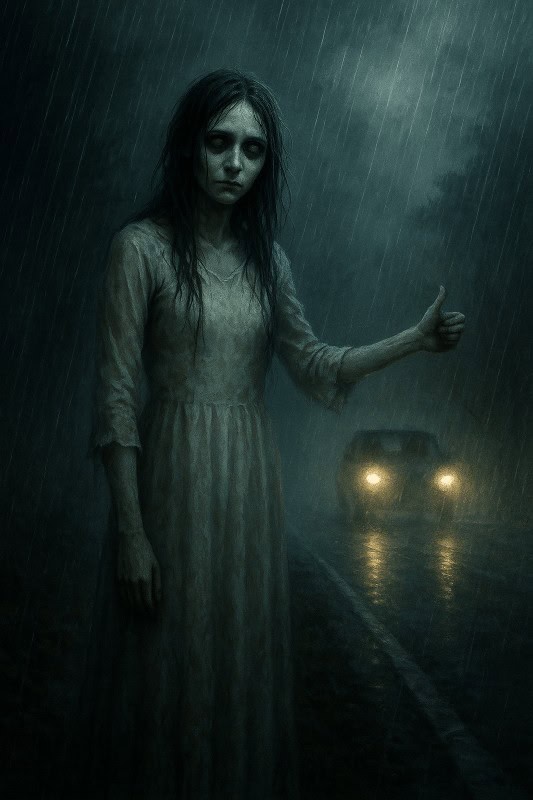
The Vanishing Passenger of Lonely Highways
Origins & Lore:
You’re driving home late at night. It’s raining – the kind of cold drizzle that seeps into your bones. At the side of the road stands a young woman, pale, silent, soaked to the skin. And you stop because it feels wrong not to. She says little, only asking to go home.
But her story began long before you might think. Variations of the phantom hitchhiker legend have been told for decades – sometimes centuries – across highways, backroads, and mountain passes all over the world. In some tales, she’s a young bride killed on her wedding night in a tragic accident, forever trying to return to her waiting groom. In others, she’s a runaway, a heartbroken bride, or a young woman lost on a stormy night, forever trying to return where she felt safe.
When you arrive, the house is dark, and the backseat is empty. The people inside tell you she died on that very road years ago, struck down on a rainy night just like this one. They say her parents still wait for her, unaware she’s been gone for decades.
Why This Story Still Haunts:
Some say she leaves behind a damp scarf, a faint wet footprint on the floor mat, or a shiver that lingers long after you’ve left her by the roadside. Others say she smiles at you in the rearview mirror just before vanishing, her eyes hollow with longing. And in the most chilling version… she doesn’t just vanish. She whispers your name before she’s gone, leaving you wondering how she knew it at all.
Either way, she leaves you with a chill you won’t shake for weeks. And an uneasy feeling every time you drive alone, especially when the rain begins to fall.
She stays with us because she seems so real – so ordinary – until she isn’t. Her story plays on the unease of helping a stranger and the unsettling thought that some souls never truly make it home.
But deeper still, it haunts because it preys on that quiet fear we all carry – that we might witness a tragedy already written, powerless to stop it. She’s a ghost not just of the past, but of misplaced kindness, lost futures, and the heartbreaking echo of someone who never got to say goodbye.
And when the rain falls on an empty road, you might find yourself checking your backseat… just in case.
Art Inspiration:
Let’s bring the Phantom Hitchhiker to life – ironically, something they haven’t been for quite a while.
- Rain-Soaked Figure:
Portray her sitting silently in the backseat of a car. Her white dress is soaked, rain trailing from her veil as if the storm follows her. Her face is unreadable – shrouded in shadows or mist. The driver glances nervously at the rear-view mirror, questioning what they just picked up. - Rearview Terror:
Focus solely on the mirror’s reflection – her hollow, sorrowful eyes staring directly at the driver. In the background, the seat is empty. Add condensation on the window and faint handprints to amplify the unease. - Vanishing Point:
Show her figure dissolving into the rain on a long, wet highway. Only damp footprints remain behind, glowing faintly in the headlights before fading. A distant silhouette might still be visible – just enough to raise the hairs on your neck. - Spectral Glow:
Capture the moment she hitches a ride. She stands at the roadside, hand outstretched, glowing faintly under a flickering streetlamp or passing headlights. As you look closer, the edges of her form dissolve into the mist, as if she’s never fully there. - Symbolism:
Scatter subtle, eerie clues in your artwork – a torn photo on the seat, a child’s hair ribbon left behind, or a single shoe abandoned on the roadside. These ghostly leftovers hint at her life and loss without saying a word.
The Black Dog – The Omen on the Road
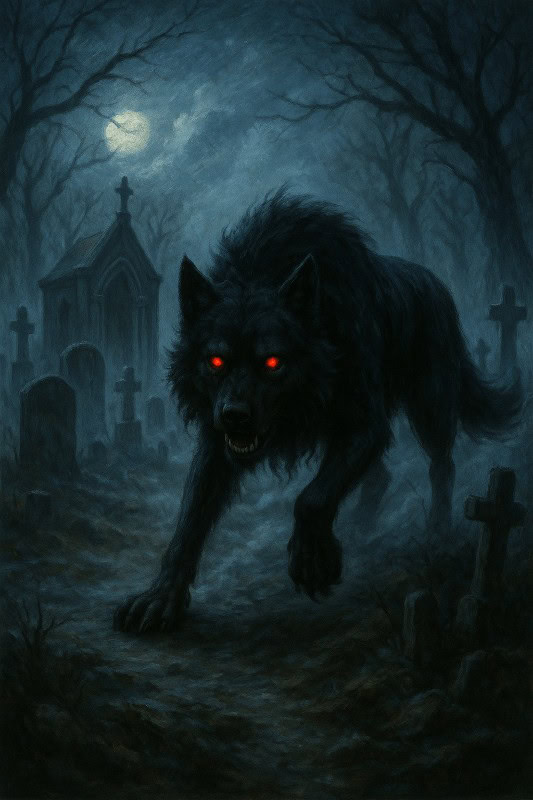
The Shaggy Shadow of Death
Origins & Lore:
The Black Dog appears suddenly – a huge, shaggy hound with fur darker than night and eyes glowing like hot coals. It prowls lonely crossroads, graveyards, and the windswept moors, shadowing travellers in eerie silence. Some say it blocks the road ahead as a warning – a beast that sees the end before you do, and silently decides whether you’ll face it. Others claim it walks behind you, its claws clicking softly on the stones, waiting for the right moment to strike.
This spectral beast has haunted folklore for centuries. In England, it’s called Black Shuck, and stories of its crimson eyes terrorised entire villages along the coasts of Suffolk and Norfolk as far back as the 1500s. Some tales say it burst through the doors of churches during storms, killing parishioners with a single touch before vanishing into smoke.
In Latin American folklore, the Cadejo appears in two forms, white and black, but both are part of the same myth. The white Cadejo is seen as a guardian spirit, while the black Cadejo is a sinister omen, stalking the unlucky through the night.
Why This Story Still Haunts:
One of the most infamous early accounts of the Black Dog comes from England in 1577. During a violent storm, villagers in the towns of Bungay and Blythburgh claimed a monstrous black hound burst into two churches. It left claw marks scorched into the stone and panic in its wake.
Some believe the Black Dog isn’t merely a ghost, but a hellhound or cryptid-like creature – a servant of the underworld sent to collect souls or deliver warnings to those who have strayed from the right path. In Scottish lore, it’s sometimes linked to Cù Sìth, a monstrous fairy dog whose howls foretell death.
Whether it’s a demon, a spirit, or something older, the Black Dog remains one of the most chilling omens in regional folklore. If it crosses your path, some say you have three days to live. Others say if you dare to meet its gaze, it already knows your name… and it’s coming for you.
It haunts us because it’s primal – eyes glowing in the dark, impossible to predict, impossible to escape. The Black Dog reminds us that death doesn’t always come with fanfare. Sometimes, it waits in silence.
We fear what watches from the shadows – not charging at us, but following, step by silent step, until it’s too late to turn back. It’s the terror of being seen by something ancient, something that knows your name before you speak.
A glimpse of glowing eyes on a lonely path stays with you long after dawn – because when the Black Dog crosses your path, you don’t forget… and you don’t walk alone.
Sometimes it vanishes just as quickly as it appeared. Other times, it follows you all the way home, padding softly behind you until the sun rises. And even then, you’ll never forget its glowing eyes or the sound of its claws scraping the road behind you.
Art Inspiration:
Let’s get the Black Dog on paper – before he learns to drive and starts following you in a hearse.
- Burning Eyes:
Draw a hulking shadow crouched on the roadside, its burning red eyes the only sharp contrast in the fog – as if staring directly at the viewer’s soul. - Graveyard Sentinel:
Place it perched atop a crumbling headstone under a cold, moonlit sky. Claws dig into the stone, tail curling upward like smoke – a silent guardian of the dead. - Pavement Stalker:
Show it pacing a few steps behind a lone traveller at night, paws tapping faintly on damp asphalt. Add a low-hanging mist to hide everything but its glowing gaze. - Dual Nature:
Split the composition down the middle – one side shows the dog as regal and noble, with sleek fur and golden eyes; the other as a skeletal, snarling beast with decayed features, embodying both warning and doom. - Symbolism:
Integrate broken chains around its legs or subtle spectral skulls in the mist, hinting that this dog may have once been bound… and now walks free, delivering judgment or mercy depending on who finds it.
The Bell Witch – The Spirit That Terrorises a Family
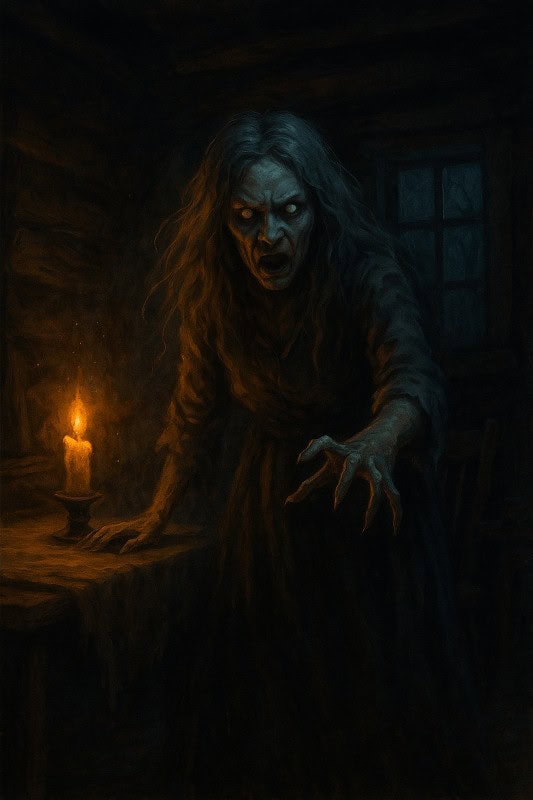
The Poltergeist of Tennessee’s Dark Past
Origins & Lore:
It started small – faint whispers, just at the edge of hearing, and the little things moved around the Bell family’s Tennessee farmhouse. At first, they thought it was their imagination. But soon, what began as a nuisance grew into a nightmare.
The entity, calling itself the Bell Witch, made her presence felt. She gained a terrifying reputation for scratching walls, rattling doors, and hurling objects with unseen hands. She pinched and slapped the Bell children as they slept, leaving welts on their skin, and whispered their names in the dark, laughing when they begged her to stop.
Her voice grew louder and crueller, mocking the family and revealing secrets no one else could have known. Visitors, too, felt her chilling touch – icy fingers on their necks, a breath in their ear, or disembodied whispers telling them to leave.
Local legend claims she especially tormented John Bell Sr., cursing him with fits and illness that some believed ultimately led to his death.
Why This Story Still Haunts:
Her legend spread so widely that even President Andrew Jackson was said to have visited the Bell home. But after just one night of eerie sounds and ghostly activity, he reportedly fled, declaring he’d rather face the British army than the Bell Witch.
Some claimed she was the vengeful spirit of a neighbour, Kate Batts, who swore revenge on the Bell family over a land dispute, though historians debate whether she had any real connection to the haunting. Others think she was something older and far darker. A malevolent force that fed on fear and chaos, taking on the name “Witch” to play on human superstition.
Her legend only deepened after the family fled. Even after the house was long gone, visitors to the site reported hearing scratching in the earth, faint giggles in the wind, and cold hands clutching at them as they stood in the empty fields where the Bell home once stood. Some even say she still roams the woods nearby, waiting for the next family to disturb her slumber.
She endures because she brings horror into the most familiar place – your own home. Her whispers aren’t just ghostly sounds – they’re reminders that even the safe spaces can be invaded, twisted into places of fear.
She doesn’t appear with fanfare. She creeps in quietly – through rattling walls, invisible hands, and mocking voices – until you’re no longer sure what’s real.
Her story haunts us because it’s not just about one haunted house. It’s about the idea that something unseen can know your secrets, target your family, and tear your comfort apart from the inside. And perhaps worst of all – she never left. Some say she’s still waiting… listening… for someone new to disturb the silence.
Art Inspiration:
Sharpen your pencils – the Bell Witch is here, and she’s already rehearsing insults for your shading.
- Whispering Shadows:
Show a terrified family huddled in candlelight. A dark female figure leans in close to the father’s ear, her form half-faded into smoke, with whispered shapes spiralling through the air like a storm. - Shattered Peace:
Illustrate a chaotic cabin interior: floating chairs, walls splintering, and a girl suspended mid-air, screaming silently while the walls crack and blue light bleeds in from unseen sources. - Scratches in the Night:
Focus on long, unnatural claw marks etching themselves into wooden walls, forming cryptic shapes or names as laughter echoes from nowhere. - Eyes in the Dark:
In a pitch-black corner, show two eerie, glowing eyes, set too wide and too high to belong to a person, peering down at the viewer like something that shouldn’t exist. - Symbolism:
Outside the window, ghostly silhouettes press against the glass, watching the family like an audience watches a play. Add a single, overturned bible, a cracked mirror, or a faint pentagram in dust to hint at deeper, possibly darker forces.
Conclusion: Fear Lives Here
Regional folklore in horror art reminds us that monsters don’t just live in far-off castles or ancient ruins. They’re here – lurking on our streets, hiding in rivers, whispering in the woods just beyond town. These stories stay with us because they’re part of us, shaping the dark inspirations behind horror art. They grow from the places we walk, rooted in familiar landscapes and human fears we all recognise.
Drawing these legends gives you the chance to channel those emotions into something haunting and timeless, especially when you place them in moody environments and eerie perspectives. You’re not just sketching a ghost or a beast – you’re designing creatures inspired by folklore and capturing the soul of a place. The collective memory of everyone who’s ever walked that road at night and shivered at nothing in particular.
As artists, we get to make those whispers visible. We can give shape to the stories our hometowns have been telling for generations – and keep them alive for new eyes to see.
So next time you hear a strange noise in the dark, or see something watching you from the tree line… don’t just run. Draw it. Add your own twist to the story. Because every hometown has its ghosts, and they’re waiting for someone like you to bring them back into the light.
And remember… not all monsters come from dark fairytales. Some live just down the road.
You Might Also Like:
Still feeling brave? These other nightmares are waiting for you…
- Dark Fairytales: Nightmare Fuel From the Storybook.
Uncover the gruesome truths behind childhood fairytales and how they inspire haunting horror art. - Visual Storytelling: Shadows, Symbols & Atmosphere.
Discover how folk tales use symbolism, shadow, and mood to craft powerful, eerie narratives – and how you can use the same techniques in your own horror art.