Simple Guidelines for Horror Characters (Beginner)

Getting started with horror drawing can feel surprisingly tricky, especially when faces start drifting, bodies feel unbalanced, or your character slowly mutates into something you absolutely did not plan. That’s completely normal, and it’s usually not a skill issue.
This is where simple drawing guidelines come in. Guidelines are light, temporary lines that help you plan your drawing before committing to details. They provide structure, balance, and placement, which is especially helpful in horror art where exaggeration and distortion are part of the fun.
In this beginner-friendly post, you’ll learn how to use simple face and body guidelines to build horror characters with confidence. Nothing rigid, nothing overly technical. Just enough structure to stop your drawing from becoming a cursed Picasso experiment where one eye files for independence, the nose packs its bags, and the mouth relocates somewhere it definitely did not discuss with the rest of the face.
Why Guidelines Make Horror Drawing Easier (Not Scarier)
If you’ve ever drawn a face and watched the eyes slowly drift apart like they’re trying to avoid each other, you’re not doing anything wrong. You’re just missing guidelines.
Guidelines are light, temporary lines that help you place features and keep your drawings balanced before adding details. They’re especially helpful in horror art, where things can get exaggerated, twisted, or unsettling very quickly.
This post will show you how to use simple guidelines to build horror characters that feel intentional and readable, without worrying about perfection. No fine details yet, no pressure to get it right. Just structure, confidence, and a lot fewer floating eyeballs.
What Guidelines Actually Are

Guidelines are:
- Light sketch lines
- Drawn loosely
- Meant to be adjusted or erased
They help you plan your drawing before committing to details. Think of them as a rough map before the horror story unfolds.
At this stage, your lines should be light enough that you can erase them easily without leaving marks behind. If your guideline is darker than your final line, your pencil might be trying a little too hard.
And yes, these lines are intended to disappear later. They are not permanent life choices.
Basic Face Guidelines for Horror Characters
Faces are where guidelines really earn their keep.
Start with:
- A vertical line down the centre of the head
- A horizontal line across the face for eye placement
These lines help you:
- Keep facial features centred
- Place eyes evenly
- Stop faces slowly sliding sideways
The horizontal guideline is typically located just below the mid-point of the head. That said, horror art gives you plenty of room to bend this rule later. For now, it’s about learning control before you start breaking things on purpose.
Horror faces can be uneven, exaggerated, or distorted, but having a basic structure underneath makes those choices feel deliberate rather than accidental.
If you’d like a clearer breakdown of how these guidelines work together, you can follow along with the Basic Face Guidelines for Horror Characters post.
Simple Guidelines for the Body
Bodies don’t need complicated guides either.
Use:
- A central line to show posture and balance
- Simple lines or shapes to suggest shoulders, hips, and limbs
These lines help you:
- Keep proportions under control
- Suggest movement or weight
- Avoid stiff or awkward poses
These are not anatomy lessons. They’re just there to help you understand direction and balance before adding shapes. Think of them as scaffolding, not a full skeleton.
You can find a simple example of this process in the Simple Body Guidelines for Horror Characters post.
Horror Art Loves Guidelines More Than You Think
Here’s the important part. Horror art doesn’t need perfect symmetry or realism. In fact, uneven features often make characters more unsettling.
Guidelines don’t stop you from exaggerating. They help you exaggerate on purpose.
The goal isn’t symmetry. The goal is control before distortion.
Once the structure is in place, you can:
- Tilt the head
- Lower one eye
- Stretch the mouth
- Twist the posture
The creepiness works better when there’s something solid underneath it.
Common Beginner Worries (Perfectly Normal)
1. “My guidelines make it look messy.”
They’re supposed to. This is the planning stage.
2. “I can still see my lines.”
That’s completely fine. They’ll fade, get erased, or disappear under later lines.
3. “It doesn’t look creepy yet.”
That’s because details and shading come later. Right now, you’re building the bones.
Every strong horror drawing has an awkward stage. You’re standing right in it.
Optional Practice Prompts (No Pressure)
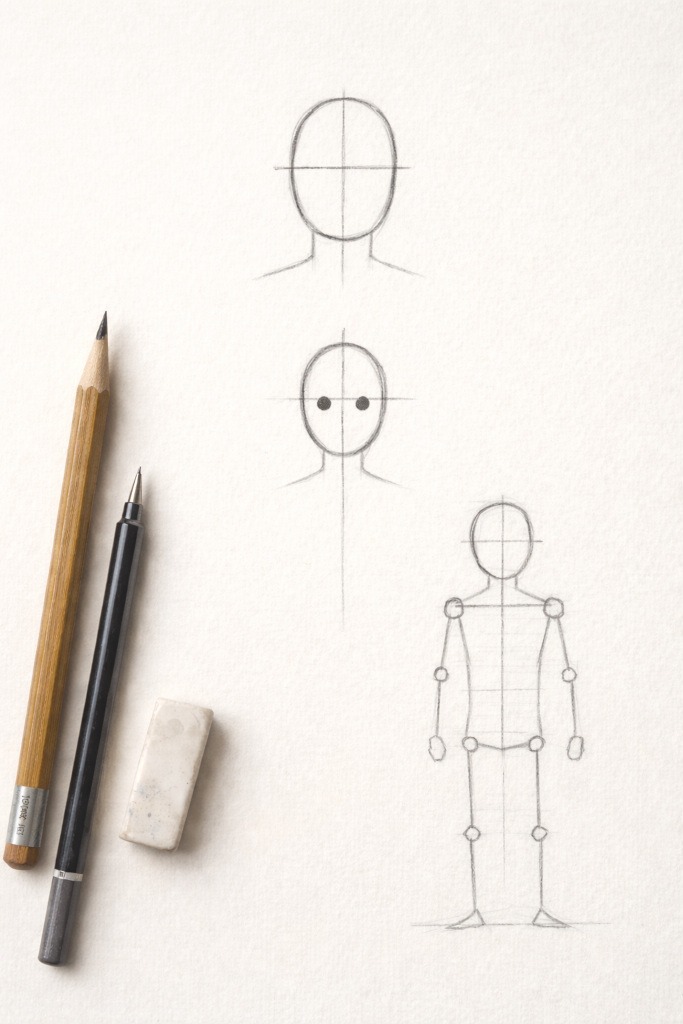
These are quick practice sketches, not finished drawings.
If you’d like to try this out:
- Draw a simple oval head and add a vertical and horizontal guideline
- Place eyes along the guideline without worrying about details
- Sketch a light spine line and add simple limbs
Five minutes is plenty. Stop before it feels like work.
Conclusion: Structure First, Chaos Later
Guidelines are basically a gentle intervention for your pencil. They stop it from running wild and doing whatever it wants the second you look away.
When you establish a clear structure, your horror characters begin to take shape and become more coherent. Eyes stay on the face, mouths stop wandering south, and your drawings no longer look like they were created during a dramatic argument between you and the paper.
Keep things light, erase often, and remember that no one gets this perfect the first time. Especially not horror artists. Especially not us.
What You Learned:
- Guidelines help place facial features and body parts correctly
- Light planning lines make drawing less frustrating
- Structure makes exaggeration easier and more intentional
- Messy early sketches are a normal part of the process
What’s Next
If you want to revisit the foundations or fill in any gaps, these posts will support you as you continue building confident horror characters. They focus on the basics that make everything else easier later on: