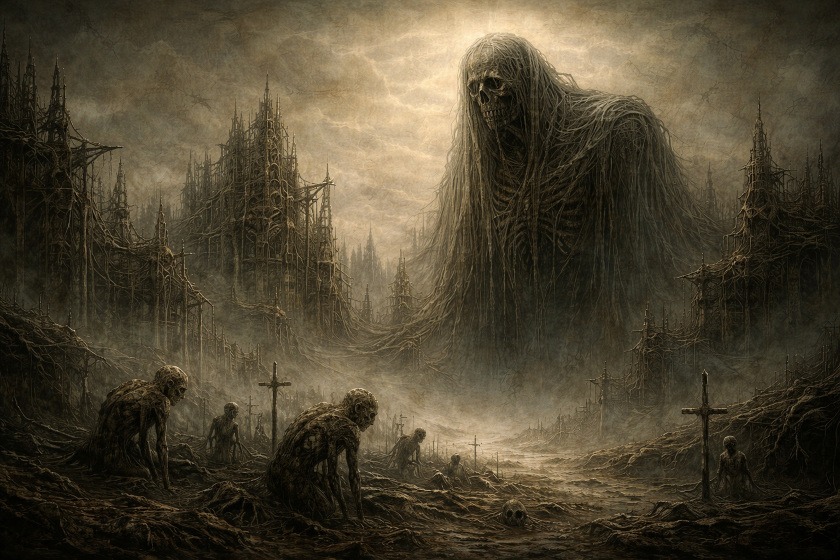
Zdzisław Beksiński: Painting the Beauty of Desolation
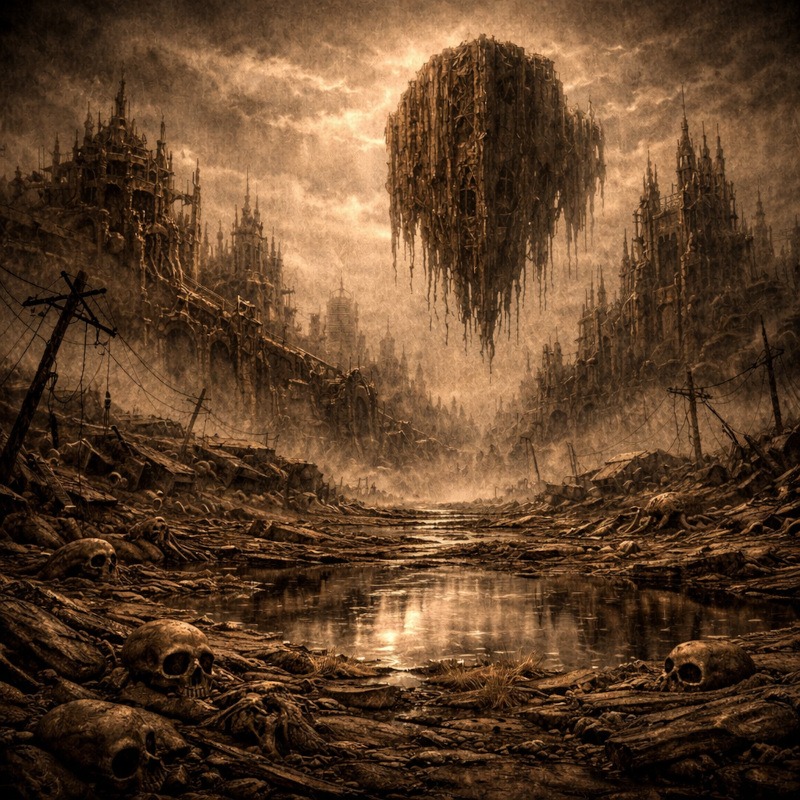
If you have ever looked at a painting and felt like the world inside it ended several centuries ago and nobody bothered to clean up, you are already circling the world of Zdzisław Beksiński.
While some horror artists design creatures, Beksiński painted entire realities where something clearly went wrong. His work feels like a dream you cannot fully explain, except the dream involves decaying landscapes, towering skeletal forms and an unsettling amount of silence.
In this post, we’re breaking down what makes his surreal horror so powerful, why his art feels both beautiful and deeply disturbing, and how you can use similar techniques in your own work without accidentally creating something that looks like a haunted pile of laundry.
Zdzisław Beksiński at a Glance
- Born: 1929, Poland
- Died: 2005
- Known for: Surreal dystopian landscapes and haunting figures
- Medium: Primarily oil painting
- Signature Style: Detailed, decaying environments and distorted humanoid forms
- Core Themes: Isolation, decay, dreamlike horror
- Why he matters: He reshaped surreal horror through atmosphere rather than shock
Who Was Zdzisław Beksiński?
Zdzisław Beksiński was a Polish artist who originally trained in architecture, and that structural understanding shows in his work. Even when his paintings look chaotic or collapsing, there is always an underlying design. The ruins feel constructed. The arches feel intentional. The world may be ending, but it is ending with good composition.
Before focusing on painting, he experimented with photography and sculpture. Eventually, his surreal, dystopian paintings became his most recognised work. Interestingly, he rarely gave his paintings titles, and this was deliberate. He did not want to guide interpretation. He wanted viewers to react emotionally rather than intellectually.
So if you find yourself staring at one of his works thinking, “I have absolutely no idea what is happening here,” that confusion is part of the experience. He wasn’t painting literal horror scenes. He was painting atmosphere, isolation and emotional collapse.
What Makes Beksiński’s Work So Unsettling?
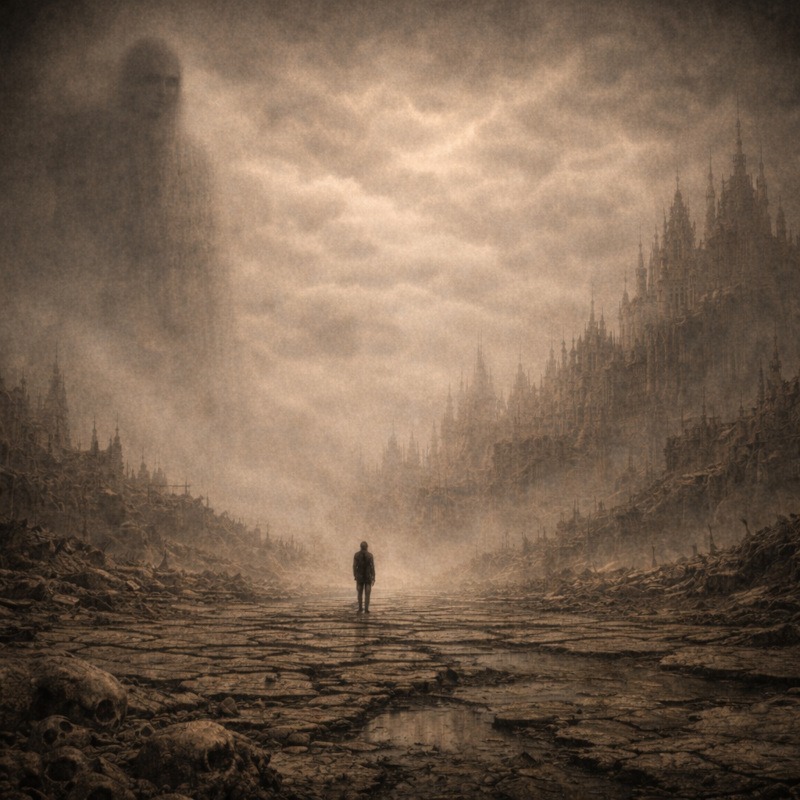
One of the most striking features of his art is the landscape. His environments often look post-apocalyptic, but not in a dramatic explosion-filled way. Instead, they feel abandoned. Ancient. As if whatever happened occurred long ago, and no one came back to fix it. Cracked earth, broken towers and endless skies create a sense of vast emptiness.
Scale plays a huge role here. When small figures appear inside these enormous spaces, they feel fragile and exposed. Isolation intensifies discomfort. A lone silhouette surrounded by ruin feels far more unsettling than a crowded, chaotic scene.
He also frequently painted faceless or distorted humanoid figures. Sometimes skeletal, sometimes wrapped, sometimes barely recognisable as human, these forms lack clear emotional expression. Without a readable face, viewers cannot easily connect or predict intention. That uncertainty creates distance and unease.
Another key element is dream logic. His compositions often feel like fragments from a dream. There is no clear storyline. Structures merge into figures. Proportions feel slightly off. The world follows its own rules. When the brain cannot neatly categorise what it is seeing, it becomes unsettled. That subtle confusion lingers.
Detail, Texture and Believability
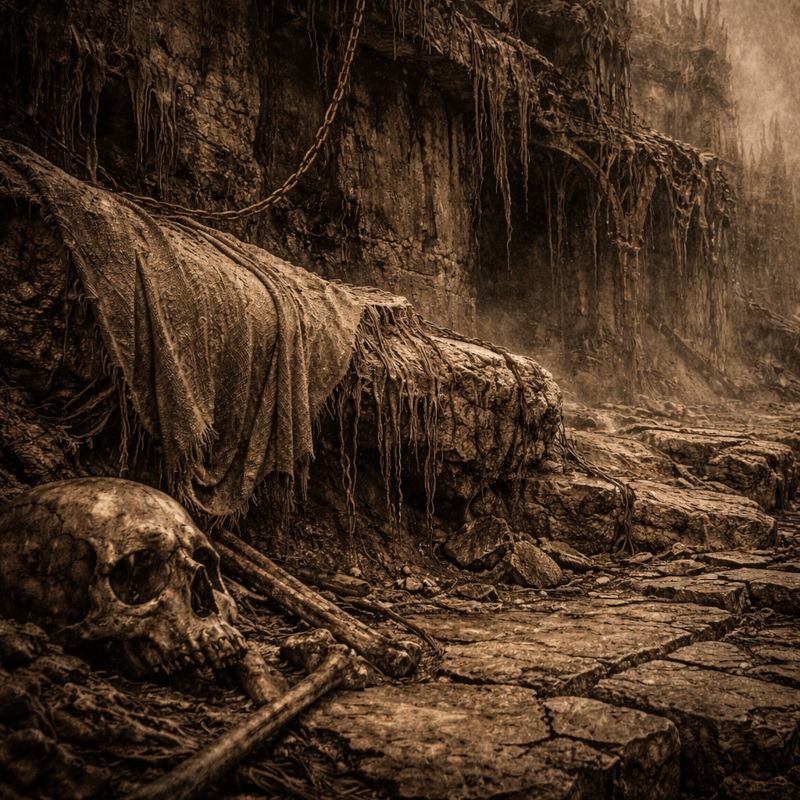
Although his subjects are surreal, Beksiński’s execution is extremely detailed. Surfaces look worn. Stone looks eroded. Fabric appears torn and heavy. Light shifts subtly across forms, giving depth and realism.
This realism is crucial. Even if the subject is impossible, believable texture grounds it. The more convincing the material, the more the viewer accepts the impossible environment.
For horror artists, this is an important lesson. If your textures feel real, your surreal ideas will feel stronger. A cracked wall drawn carefully is more effective than a vague scribble meant to represent “decay.” Detail doesn’t need to be overwhelming, but it needs to feel intentional.
Emotional Horror Instead of Shock Horror
Beksiński’s work rarely relies on gore or dramatic violence. Instead, it creates emotional weight. His paintings feel quiet and heavy, almost frozen in time. There is no obvious action, yet there is tension in the stillness.
This kind of horror creeps in slowly. It doesn’t jump at you. It settles. The longer you look, the more unsettling it becomes.
Sometimes silence is more powerful than spectacle.
What Horror Artists Can Learn From Beksiński
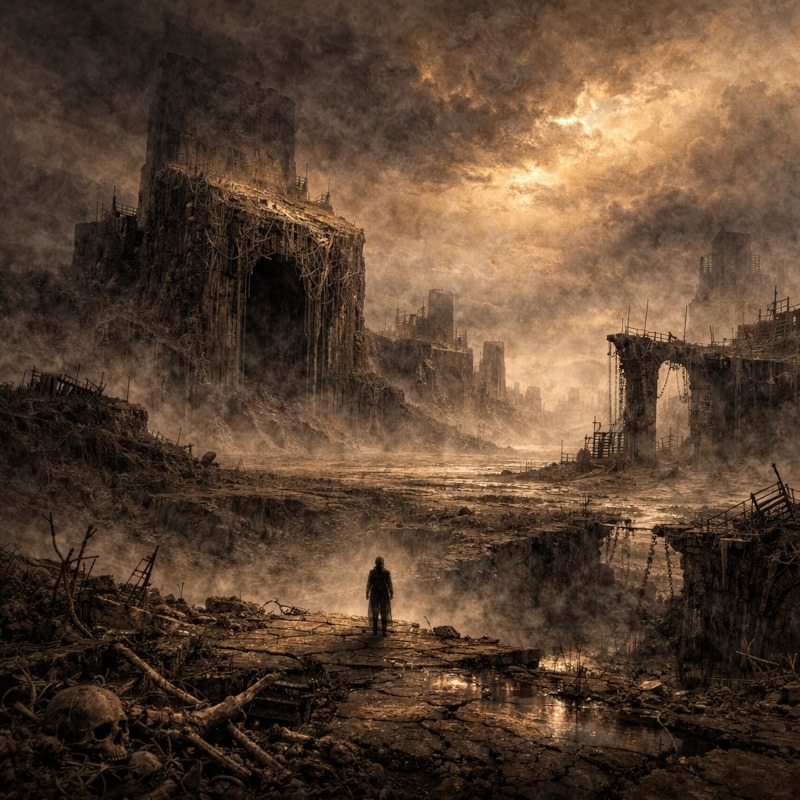
Rather than beginning with a creature, consider starting with environment. The sky, the scale of structures and the overall mood can establish unease before a single character appears.
Use scale intentionally. A small figure in a large, empty setting immediately communicates vulnerability. Space itself can feel threatening.
Embrace ambiguity. You don’t need to explain every shape or structure. When viewers can’t fully interpret an image, they project their own fears into it.
Most importantly, focus on atmosphere. Texture, lighting and composition can create emotional tension without relying on obvious horror symbols.
Sketch Exercise: Create a Surreal Desolate Scene
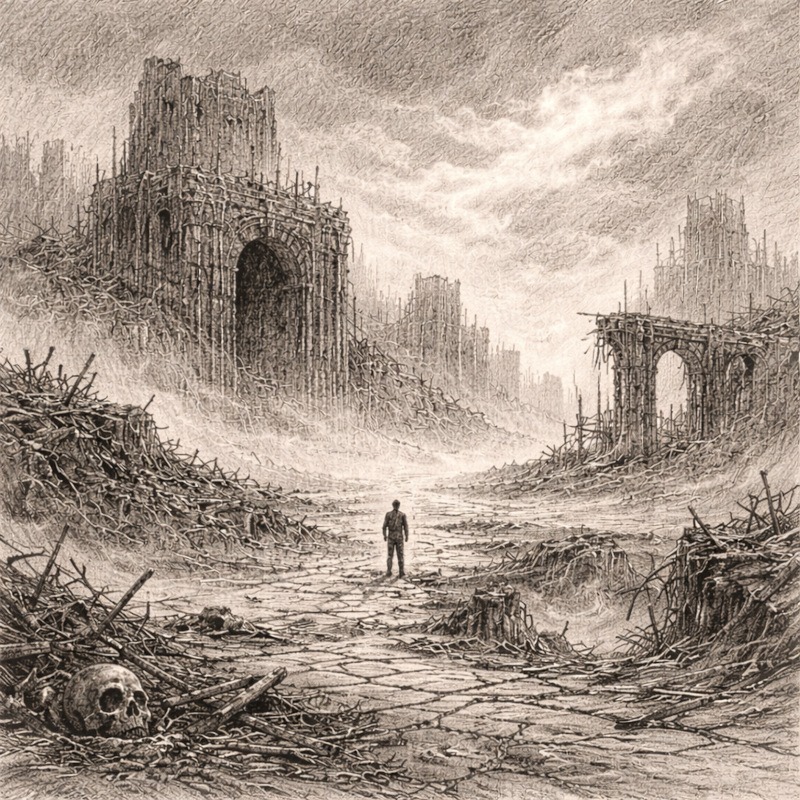
Let’s turn Beksiński’s atmosphere into something practical:
Step 1: Draw a low horizon line:
Lightly sketch a simple horizon line near the bottom third of your page. Leaving more space for the sky helps create that feeling of openness and emptiness.
Step 2: Add one large ruined structure:
Draw a tall, broken tower, archway or cathedral-like shape. Focus on the overall silhouette first. Do not worry about cracks yet. Strong shapes create strong mood.
Step 3: Add surface texture:
Begin shading the structure with short, uneven pencil lines to suggest erosion and age. Vary your pressure so the cracks feel natural. Think worn stone, not tidy brickwork.
Step 4: Place a small figure in the scene:
Add a very small, simple silhouette somewhere in the environment. Keep it minimal. No facial details. No dramatic pose. The scale difference is what creates vulnerability.
Step 5: Shade the sky softly:
Use light, blended shading to create a hazy or heavy atmosphere. Avoid sharp contrast. The sky should feel still and quiet rather than dramatic.
Step 6: Step back and assess the mood:
Ask yourself whether the scene feels empty and slightly uncomfortable. If it does, you are heading in the right direction. If it looks like a themed attraction instead of a forgotten world, simplify the details and soften the contrast.
Conclusion
Zdzisław Beksiński showed that horror can exist in stillness. Through vast landscapes, faceless figures and carefully layered texture, he created worlds that feel emotionally heavy rather than visually loud.
His work proves that atmosphere can be more powerful than shock. Silence, scale and ambiguity can linger far longer than dramatic action.
If you begin building your horror art around environment and mood instead of immediate impact, you will start to create work that feels deeper and more immersive. And if someone stares at your drawing and feels slightly uneasy without knowing exactly why, you are doing something right.
What You Learned:
- Large empty environments can make small figures feel isolated and vulnerable.
- Removing facial detail makes characters feel more symbolic and unsettling.
- Realistic texture helps surreal ideas feel believable.
- Ambiguity encourages viewers to project their own fears onto an image.
- Atmosphere can create emotional horror without relying on gore.
Continue Exploring Dark & Macabre Art
If Beksiński’s desolate dreamscapes resonated with you, step into other corners of horror:
- H.R. Giger – The Architect of Beautiful Nightmares
- Junji Ito – The Master of Psychological and Body Horror
Curious how atmospheric dread evolved across the centuries?
- Famous Horror Artists and Their Influence on Modern Horror Art
- Dark Fantasy vs. Horror Art – Finding Inspiration in the Shadows
Or explore how subtle distortion creates unease in: