How to Find Your Horror Art Style
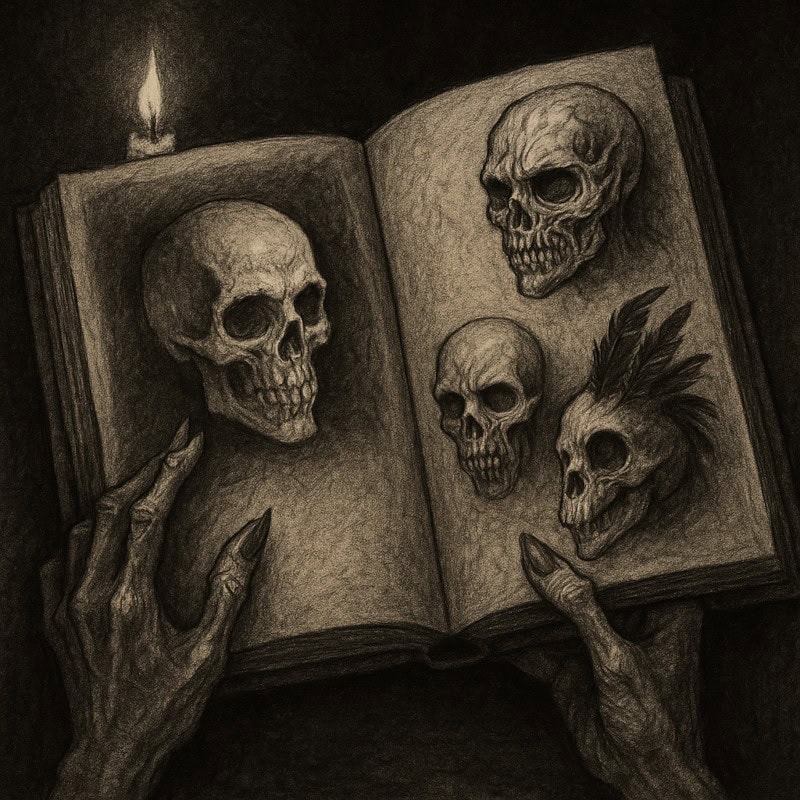
From gothic chills to grotesque thrills, your horror art should look like you, not just a collection of borrowed screams.
Horror art is as diverse as the nightmares that inspire it. Some artists lean into the eerie elegance of gothic horror: haunted mansions, flickering candles, endless staircases. Others revel in body horror: twisting anatomy into grotesque shapes that make your skin crawl. Then there’s psychological horror: uncanny smiles, warped perspectives, and imagery that feels wrong in ways you can’t quite explain.
Each horror sub-style has its own flavour of fear. But here’s the thing: your art doesn’t need to mimic anyone else’s recipe. You can (and should) develop your own unique brand of creepy. This post will help you experiment, learn, and build a style that reflects both your influences and your imagination.
Step 1: Experiment with Different Horror Aesthetics
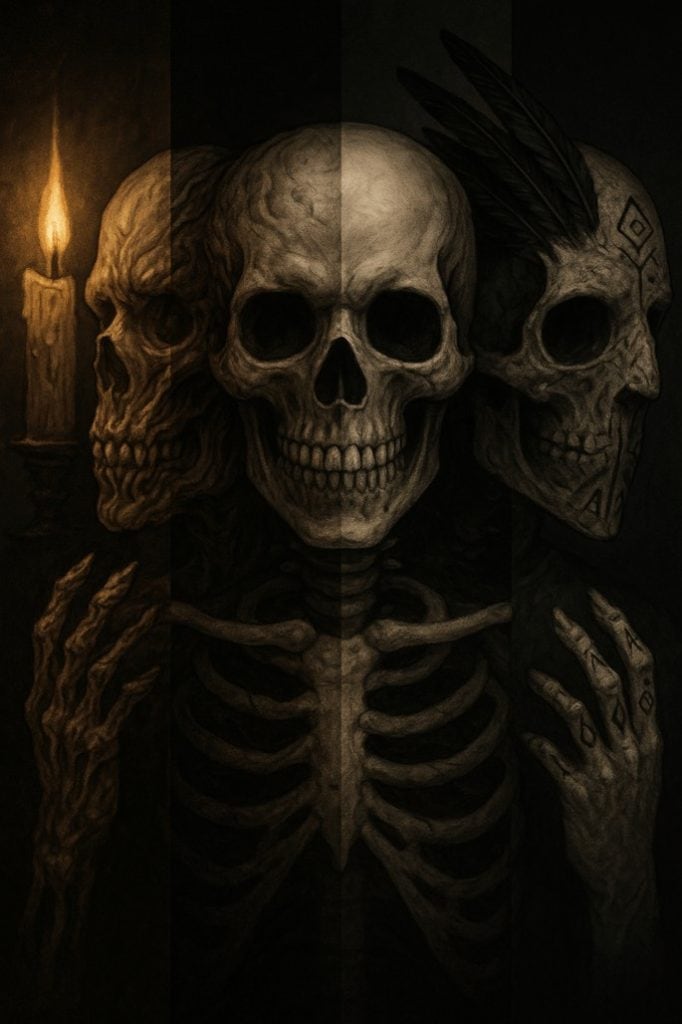
Before you can settle into your own style, you need to taste-test the nightmares. Try dipping your pencil (or brush, or stylus) into different aesthetics and see what feels natural.
- Gothic Horror – Think decaying castles, candlelight, shadows that stretch too far, and eerie symmetry. Great for practising atmosphere, lighting, and architecture.
- Body Horror – Mutated anatomy, organic textures, skin, teeth, bone. Perfect for pushing anatomy studies into terrifying territory.
- Psychological Horror – Distorted faces, uncanny smiles, warped rooms. This style leans on perspective tricks and subtle discomfort.
- Creature Horror – Monsters, cryptids, hybrids. A playground for anatomy mash-ups and imaginative design.
- Folklore & Myth – Regional legends, spirits, and strange creatures with cultural roots. A way to blend history with creative interpretation.
Exercise: Pick one subject (like a skull) and redraw it five times – once in each horror style. You’ll quickly notice which one feels most natural to you.
Step 2: Learn From Horror Artists Without Copying Them
Looking at other artists is essential. But here’s the danger: it’s easy to fall into copying their style so much that you forget your own voice.
Instead of imitating, study with purpose:
- Ask yourself: What makes this piece unsettling? Is it the lighting? The textures? The proportions?
- Notice recurring motifs. Do they use heavy shadows, distorted limbs, or limited colour palettes?
- Write down what sparks your interest, then practice applying that one element in your own way.
Tip: Imagine horror artists as creepy mentors. You can borrow their “lessons,” but don’t raid their coffins and steal their bones.
Step 3: Ways to Develop a Unique Horror-Inspired Approach
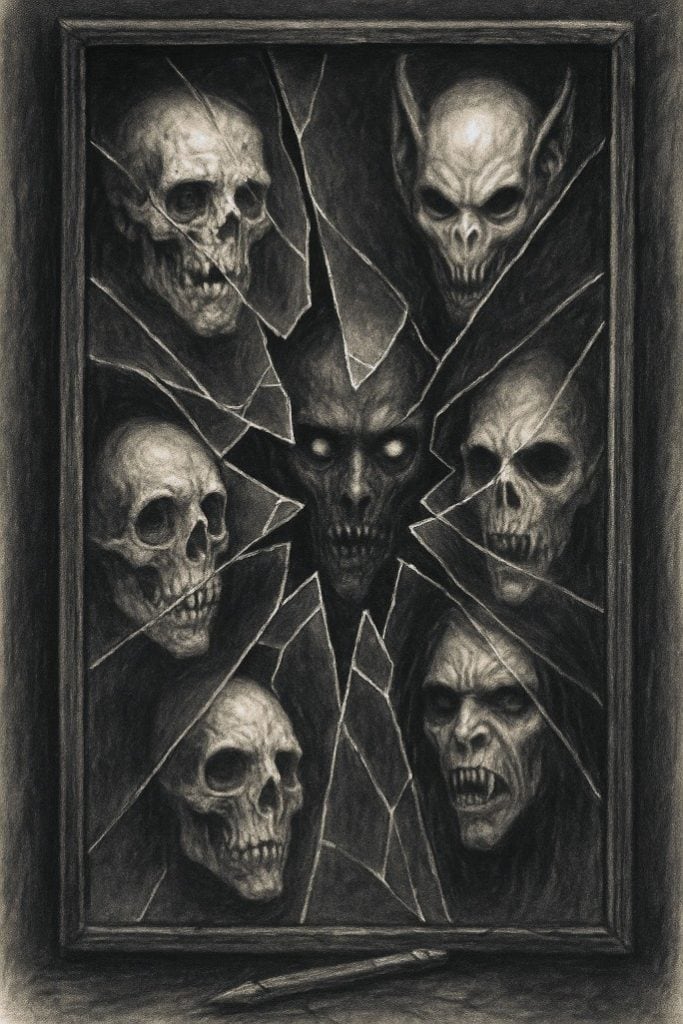
This is where the magic (or the curse) happens. Building your style isn’t about inventing something 100% brand new – it’s about combining influences into something recognisably yours.
1. Combine Unlikely Influences
Take elements from different places and fuse them.
- Gothic architecture + body horror textures = crumbling cathedrals with living, pulsing walls.
- Cute cartoons + psychological unease = disturbing but deceptively playful monsters.
Think of it like Frankenstein’s monster – stitched together from different parts, but alive with its own character.
2. Play With Mediums & Techniques
- Try charcoal for gritty raw textures.
- Use ink for bold, graphic creepiness.
- Experiment with coloured pencils for eerie highlights (red glows, green mists).
- Digital tools let you warp, distort, and layer like a horror director.
Different mediums can shift your entire mood. A werewolf drawn in soft graphite looks gothic; the same werewolf in jagged inks? Suddenly, it’s a punk-rock nightmare.
3. Find Your Personal Symbols
Every artist develops visual “signatures.”
For horror, this might be:
- Eyes hidden in strange places.
- Hands reaching from the dark.
- A recurring animal (ravens, snakes, wolves).
- Twisted plants or fungi.
Look at your past doodles and sketches – you may already have repeating themes you didn’t notice. Those motifs can become part of your unique voice.
4. Lean Into What You Love (and Fear)
The best horror art often comes from what unsettles the artist themselves. If you hate dolls, draw creepy dolls; if medical stuff makes you squirm, explore body horror. If you’re fascinated by forests, create twisted trees that feel alive.
Your personal fears + your personal fascinations = art that feels uniquely yours.
5. Practice “Style Journaling”
Create a sketchbook (physical or digital) where you experiment without pressure.
Fill it with:
- Texture studies.
- Small monster thumbnails.
- Notes about films. games, or myths that inspire you.
- Experiments with exaggeration (what happens if you stretch a limb three times too long?).
Over time, patterns will emerge. That’s your style talking to you.
Common Traps to Avoid
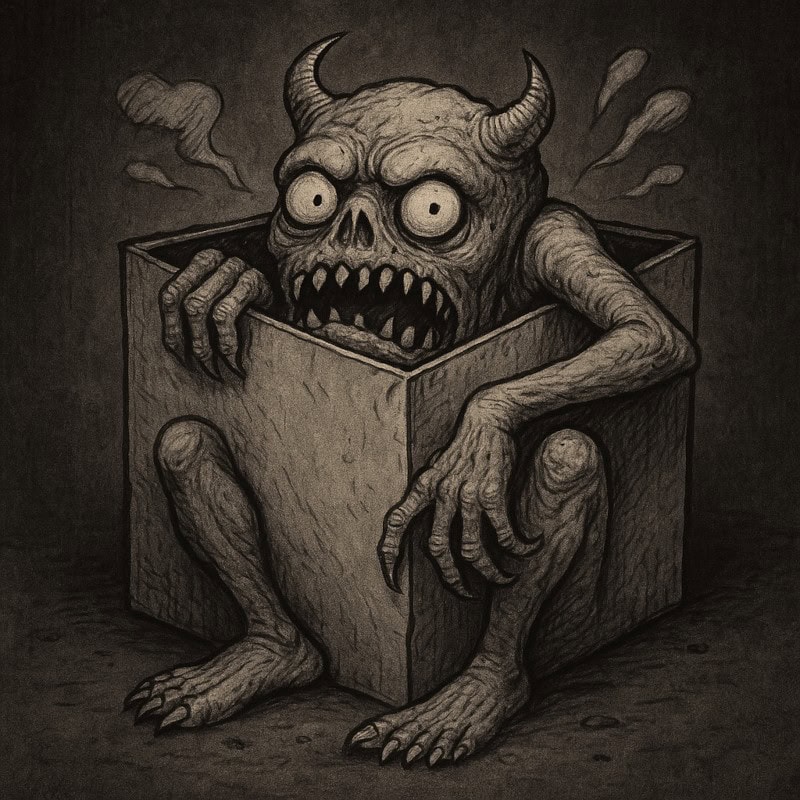
When developing your horror art style, watch out for these pitfalls:
- Copying too closely – It’s okay to learn from others, but your goal is adaptation, not duplication.
- Rushing – Style takes time to grow. Think of it as a “haunted forest” – you can’t map it in a day.
- Forcing yourself into one box – You don’t have to pick just gothic or just body horror. Blending is often where the best styles are born.
- Thinking your style is “done” – Style evolves. The creepiest thing about it? It never stops changing.
Quick Prompts to Explore Your Style
Want to test different horror vibes?
Try sketching these:
- Gothic: A candlelit stairwell where the shadows stretch like claws.
- Body Horror: A hand with too many joints.
- Psychological: A mirror that reflects a distorted version of yourself.
- Creature Horror: A hybrid between a wolf and a crow.
- Folklore Horror: A spirit born from local urban legends.
Do these back-to-back and see which ones excite you most – that’s a clue to your natural style.
Step-by-Step Practice Guide: Discovering Your Horror Art Style
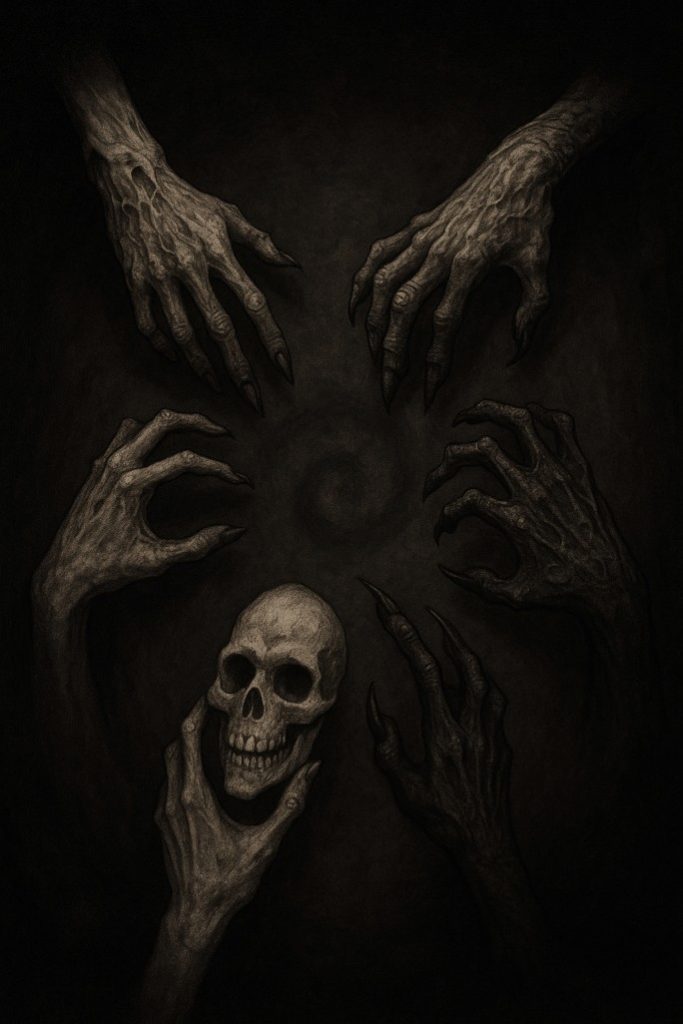
When you’re unsure where your style lives, sometimes the best way to find it is to experiment with clear, small steps. Here’s a practical routine you can follow (and repeat) to see where your horror instincts naturally pull you.
Step 1: Pick a Subject (5 minutes)
Choose something simple to focus on so you can explore style instead of getting stuck in the details.
- Ideas: a skull, a hand, an eye, a doorway, a candle.
Goal: Create consistency. You’ll draw the same subject in different styles for comparison.
Step 2: Draw It in Gothic Horror Style (10 minutes)
- Add atmosphere: shadows, candlelight, dramatic lighting.
- Think of eerie environments like cathedrals, crypts, or graveyards.
- Exaggerate vertical lines and ornate details.
Example: A skull lit only by flickering candlelight, surrounded by cracked stone.
Step 3: Draw It in Body Horror Style (10 minutes)
- Distort anatomy or add unnatural textures.
- Push the “gross” factor: extra teeth, misplaced eyes, warped bone structures.
- Don’t be afraid to make it uncomfortable.
Example: A skull with skin stretched too tightly over it, veins and tendons crawling across the surface.
Step 4: Draw It in Psychological Horror Style (10 minutes)
- Play with the uncanny – things that look almost normal, but not quite.
- Distort proportions, warp perspectives, or give it a too-wide grin.
- Think unsettling, not just scary.
Example: A skull that appears normal at first glance, but its eye sockets are slightly too deep, and its jaw stretches too far into a smile.
Step 5: Draw It in Creature Horror Style (10 minutes)
- Blend your subject with an animal or mythological features.
- Try hybrids (insects, birds, wolves, snakes).
- Exaggerate movement and anatomy.
Example: A skull with crow feathers sprouting from the sides, beak-like cracks forming in the bone.
Step 6: Compare Your Work (5-10 minutes)
Lay all your sketches side by side.
Ask yourself:
- Which one excites you most?
- Which felt natural to draw?
- Which gave you ideas for expanding into a bigger piece?
Goal: Notice your natural leanings. Your “style” will start to emerge from what feels most fun, eerie, or interesting to you. And if 10 minutes per style feels too short, stretch it – the goal is to sketch, not stress.
Conclusion: Your Horror, Your Way
Finding your horror art style isn’t about “picking one lane and never leaving it.” It’s about experimenting, stealing little sparks of inspiration (ethically!), and stitching them together into something that feels like your nightmares and imagination combined.
Don’t rush it and don’t force it. Draw what creeps you out, what fascinates you, and what makes you laugh nervously. That’s where your style lives.
And remember – your art doesn’t have to look like anyone else’s to be terrifying. Your monsters, your shadows, your twisted visions… they’re yours. And that’s what makes them scary.
Pro Tip: Repeat this exercise with different subjects (hands, eyes, full characters). Over time, you’ll see patterns, textures, lighting, or motifs that keep creeping into your work. That’s your horror art style forming.
Stay spooky, experiment often, and let your style crawl out of the dark (preferably not from under your bed).
Keep Exploring the Motivation & Creativity Series
Keep your artistic energy flowing with more guides from the Motivation & Creativity series: