Traditional Horror Art Styles
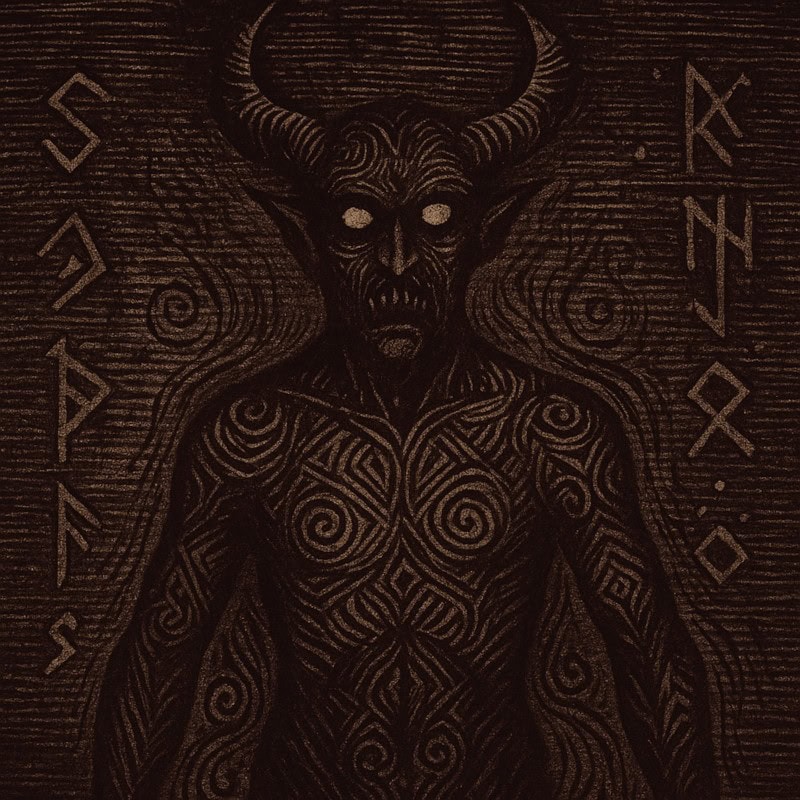
Modern horror art might use digital brushes and glowing effects, but its roots are far older. Long before movies or Photoshop, people used art to warn, terrify, and control the unknown. Demons were carved into woodblocks, protective patterns were painted on masks, and ancient scripts were scratched into stone walls.
These weren’t just pretty designs. They were a way of keeping the supernatural close, or keeping it out. And when we pull from these styles today, we’re borrowing centuries of cultural unease and weaving it into our own work. That’s why a simple carved line or repeating symbol can feel just as chilling as a hyper-realistic monster.
Back then, horror artists didn’t worry about perspective – they worried about accidentally summoning something that smelled like onions.
Let’s examine three traditional styles that influence the appearance and atmosphere of horror.
Woodblock Prints
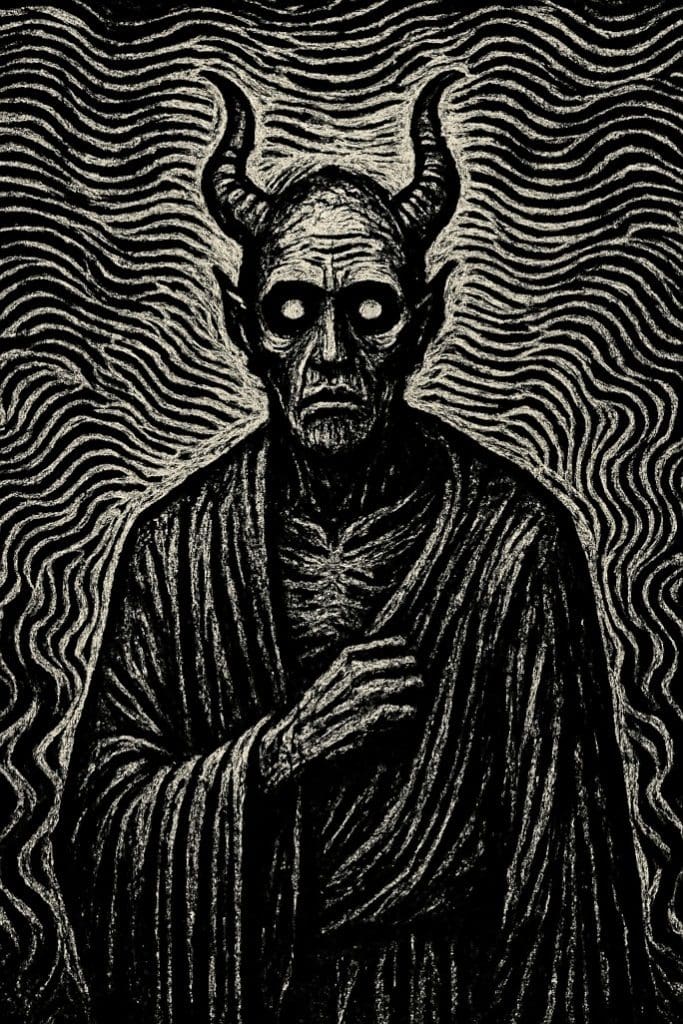
Woodblock art is rough, bold, and unforgettable. Whether it’s Japanese ukiyo-e prints of vengeful spirits (yūrei) or European woodcuts showing demons and hellfire, these styles packed an impact with just a few lines. Different traditions, same eerie result: sharp contrast, stiff figures, and an atmosphere that makes your spine do a little shimmy.
What makes woodblock prints creepy is their contrast and flatness. Shadows become solid black shapes. Figures look stiff and unnatural. Faces are simplified but strangely expressive, with hollow eyes or exaggerated grimaces. Instead of realism, the art hits you with symbolism and stark atmosphere.
Even better: woodblocks were often used to mass-produce frightening content – ghost stories, morality warnings, apocalyptic imagery. Basically, they were the original horror zines.
Art Challenge:
- Try sketching a creature using only flat shapes and bold outlines.
- Use no gradients – just carve-like black and white contrasts.
- Give the background repeating textures (waves, clouds, flames) that feel stamped or patterned.
- Example: a demon emerging from the sea, the water reduced to jagged lines, its face flat but eerily screaming.
Tribal & Folk Patterns
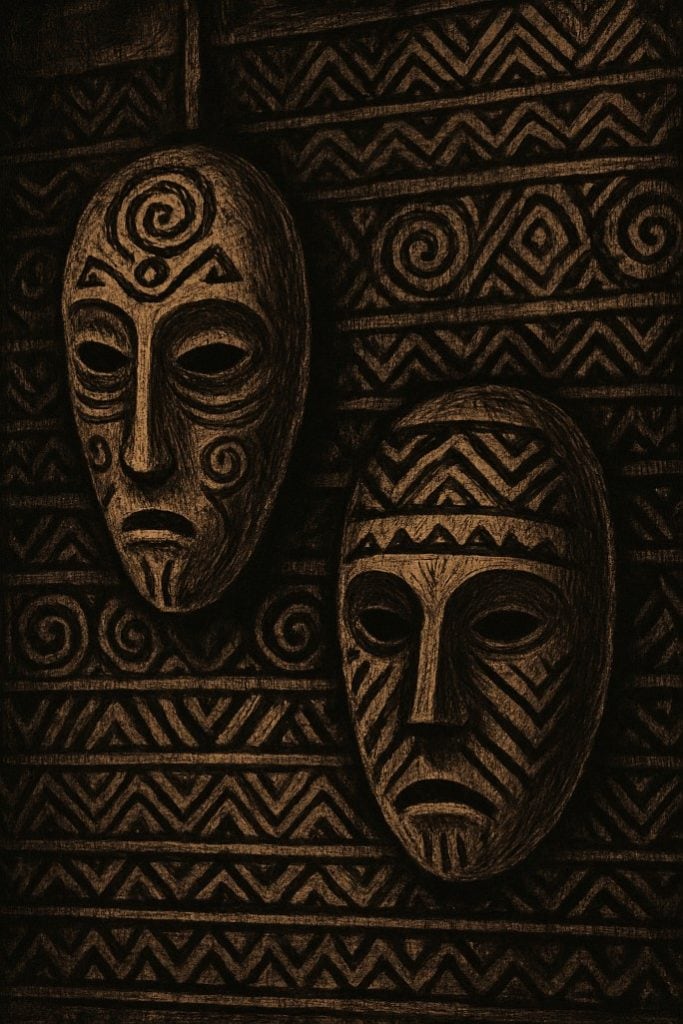
Patterns aren’t just decoration – they’re a visual language. Across the world, indigenous and folk artists used repeating spirals, zigzags, animal motifs, and geometric shapes to tell stories, express identity, or mark important rituals. In horror art, those same shapes can shift meaning – what once stood for life, fertility, or belonging can just as easily become a spiral that never seems to end. They were painted on skin, carved into masks, stitched into fabric, or painted on walls.
When you see these designs, you sense a ritual in them – as if each line holds power. That’s why they work so well in horror art. Imagine a creature covered in protective markings, or cursed symbols painted across its face, or an object wrapped in endless spirals that never seem to stop.
Tribal and folk designs give your art a rooted authenticity. They tie your creature to something ancient, something cultural, something humans have whispered about for centuries.
Art Challenge:
- Take a basic monster silhouette and overlay it with folk-inspired patterns.
- Carve spirals into its chest, jagged chevrons down its limbs, or animal motifs etched into its back.
- Play with contrast – should the patterns glow like magic, or look scarred into the flesh?
- Example: a forest spirit with bark skin covered in swirling tribal marks, as though the forest itself branded it with meaning.
Ancient Symbols
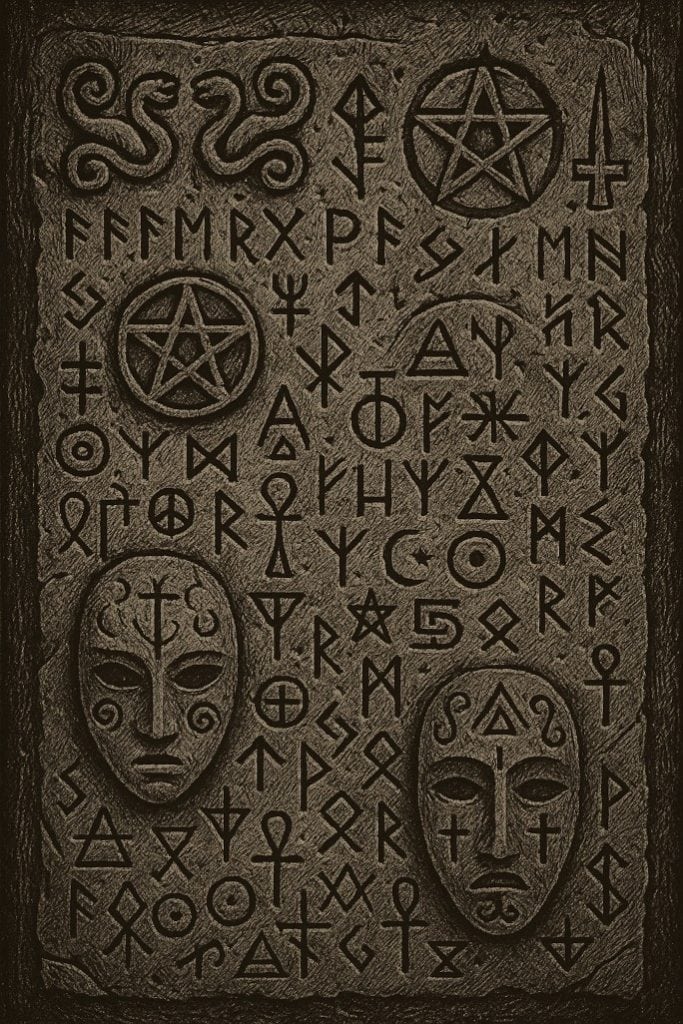
Symbols are the ultimate shortcut to unease. They carry meaning whether or not we understand them. A Norse rune, an Egyptian hieroglyph, or a medieval sigil might have been used for protection, record-keeping, or ritual – but when we see them out of context, they spark mystery. To modern eyes, they can feel like warnings, secrets, or even curses.
For centuries, people carved or painted symbols to summon, protect, or record the unexplainable. And in folklore, messing with those marks usually ends badly. (If horror movies have taught us anything, it’s not to read the Latin out loud.)
In art, symbols flip a switch in our brains almost instantly. A single rune on a gravestone, a wall covered in shifting hieroglyphs, or scars carved into a monster’s body tell a story before the viewer even asks questions.
Art Challenge:
- Create a scene where symbols are part of the environment.
- Carve runes into a crumbling wall, cover the ground with a summoning circle, or make tattoos across a creature’s body that glow with energy.
- Mix real symbols with invented ones for maximum unease.
- Example: a mummy whose wrappings are etched with shifting hieroglyphs that change when you look twice.
Old-World Fear in Modern Sketches
What makes these styles so powerful is that they were never just “art.” They were warnings, protections, and ways to understand what couldn’t be explained. That’s why, even today, a repeating spiral or jagged black line feels heavier than a random doodle – it carries centuries of human fear behind it.
For horror artists, blending traditional styles into your work is like tapping into a shared nightmare history. Woodblock shadows bring harsh drama, folk patterns give spiritual weight, and ancient symbols whisper that something terrible is about to happen.
Art Prompt Idea:
Draw a spirit or creature whose entire body is covered in folk-inspired patterns. Start with a simple silhouette – human, animal, or something in between. Then layer on designs like spirals, zigzags, or animal motifs until the patterns almost hide its shape. The goal is to make the viewer wonder: Is this a living being, or just the pattern itself come to life?
Conclusion – Let the Past Haunt Your Art
Horror thrives on atmosphere, and traditional art styles deliver it in spades. They connect us to ancient fears – the things our ancestors drew when they couldn’t explain the dark. Whether you’re experimenting with blocky prints, spiralling patterns, or cryptid symbols, each line you make links your work to a long chain of human terror.
So next time you sketch, think about how your creature would look if it walked out of an ancient scroll, a tribal mask, or a stone wall carving. Give it those textures. Give it that history. Let the past bleed into the present – because in horror, nothing truly stays buried.
Traditional horror styles remind us that the scariest thing isn’t the monster – it’s realising you’ve spent six hours shading its armpit hair.
Keep Exploring Folklore in Horror Art
If you enjoyed diving into traditional art styles, you’ll love these other dark corners of horror inspiration:
- Folk Horror Aesthetics
Explore eerie rituals, isolated villages, and the unsettling question: “Why is everyone wearing masks?” - Artist Spotlights
Discover horror artists inspired by myth, blending surrealism with cultural symbolism.