Visual Storytelling in Horror Art: Shadows, Symbols and Atmosphere
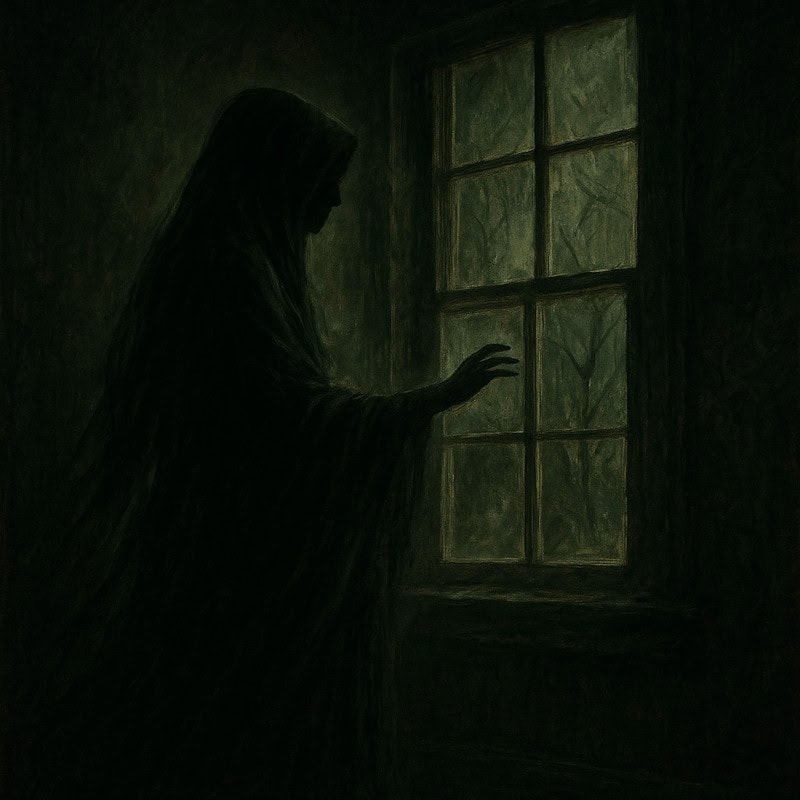
When Pictures Whisper Stories…
Not all stories need words. Some of the most chilling tales are told through a glance, a silhouette, or a single broken object resting where it shouldn’t be. That’s the magic of visual storytelling in horror art – the power to plant an entire narrative in the viewer’s mind without saying a single word.
For horror artists, mastering visual storytelling means learning to use every element of your piece – light, shadow, colour, and composition – to hint at something lurking just beneath the surface. Every brushstroke can whisper a secret. Every detail can be a clue to the nightmare you’ve woven into the scene.
Whether you’re drawing inspiration from twisted fairytales, local folklore, or your own dark imagination, this post will show you how to harness atmosphere, shadow, and symbolism to make your art feel alive and unsettling.
Why Atmosphere Matters in Horror Art
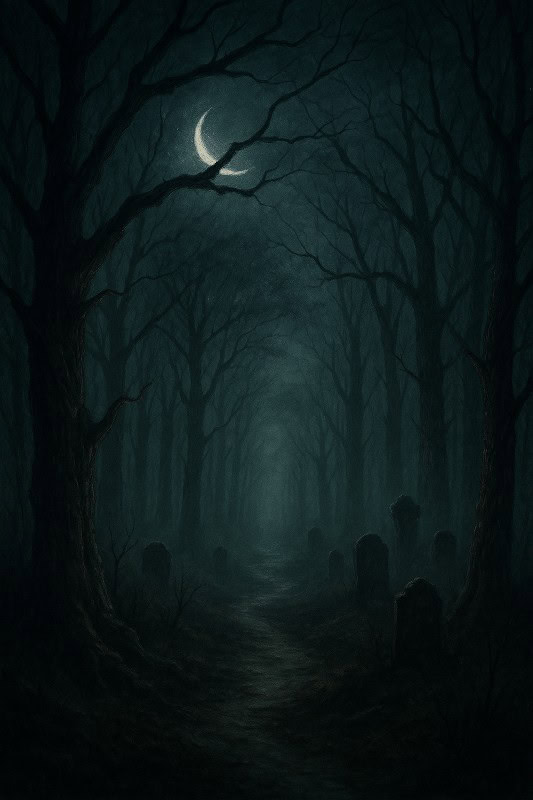
Atmosphere is the first thing your audience feels. It’s the intangible mood of a scene – the way it seeps into their bones before they even notice what they’re looking at. Done well, atmosphere creates tension, unease, and immersion in your work, making the horror feel real.
How to Build Atmosphere:
- Lighting Choices:
Bright, even light flattens everything and kills tension. Instead, use harsh directional lighting, dappled moonlight, or faint glows that leave more in darkness than they reveal. Shadows are your friend. - Colour Palettes:
Colours evoke emotion – muted, sickly greens and yellows can feel diseased or wrong, deep reds can feel violent, and icy blues can evoke loneliness and death. Choose colours that match the emotional undertone of your story. - Weather & Environment:
Misty air, rain, snow, dust – all of these add texture and can make your scene feel oppressive or fragile. A figure standing in dense fog is already telling you something ominous. - Texture & Detail:
Cracked walls, peeling paint, warped wood – the textures of a place tell you its history. Adding those details makes your horror art feel grounded and believable. - Sound in Silence:
Even in a still image, you can evoke sound – a dripping tap, creaking floorboard, distant whisper. Suggesting noise can heighten tension in the viewer’s imagination.
Atmosphere isn’t just a backdrop – it’s a character in its own right. It lets the viewer feel what the unseen things in your scene are feeling.
Shadows That Speak
Shadows aren’t just “the absence of light.” In horror art, they become part of the storytelling. If you’re still learning how light behaves in drawings, it helps to understand the fundamentals of light and shadow effects in horror art.
Ways to Use Shadows in Your Work:
- Implied Figures:
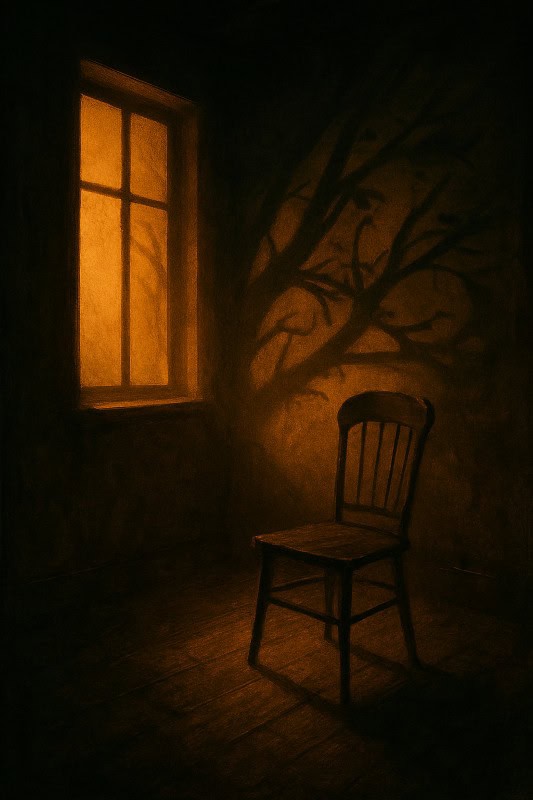
A human-shaped shadow on the wall, but no one is standing there. A claw-shaped darkness reaches around a corner. These hint at unseen forces. - Depth & Layering:
Shadows can make a space feel bigger and emptier – or tighter and more claustrophobic. Use overlapping layers of darkness to create unsettling spaces. - Conceal & Reveal:
Show just enough of your subject. Let half their face sink into shadow. Let the hands be visible, but the rest lost to blackness. The viewer will fill in the blank with their own fears. - Movement in the Stillness:
Sometimes, adding the faintest suggestion of a shadow where it shouldn’t be – like on a ceiling, or moving away from your light source – can chill the viewer even in a still image.
Shadows are where the story hides. Use them as narrative tools, not just as afterthoughts.
Symbolism: The Silent Language
Symbols are how you make your piece feel like it has history, like it’s one moment in a much larger, darker story. Symbols can be literal or abstract, obvious or subtle. They give your viewer something to interpret, making your work more layered and rewarding.
Common Symbol Ideas for Horror Art:
- Flowers:
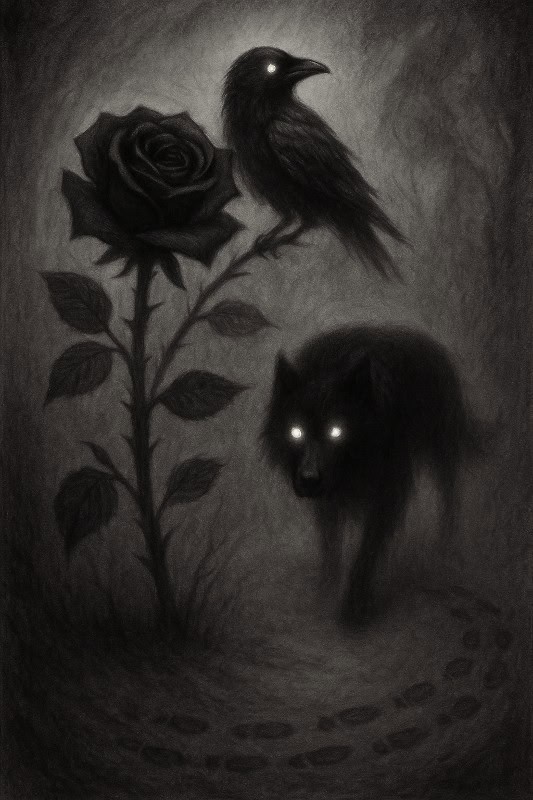
A single wilted flower on a pristine grave suggests forgotten grief. Black roses might imply obsession or poison. - Birds & Animals:
Ravens, owls, black dogs, and snakes have centuries of folklore tied to death, betrayal, or transformation. - Objects Out of Place:
A child’s toy in an abandoned hallway. A clean knife on a filthy table. A pair of shoes pointing the wrong way. These small details tell you something went very wrong here. - Colours as Symbols:
Red doesn’t always mean blood – it can suggest rage, danger, or temptation. White can mean purity, but in horror, it can also mean absence, coldness, or death. - Numbers, Marks & Patterns:
Symbols scratched into walls, numbers repeated over and over, footprints circling endlessly – these add narrative clues for viewers to discover.
When you choose your symbols, think about the kind of story you’re telling. Is this about vengeance? Loneliness? A curse? Then select elements that fit that theme.
Why Visual Storytelling Elevates Your Art
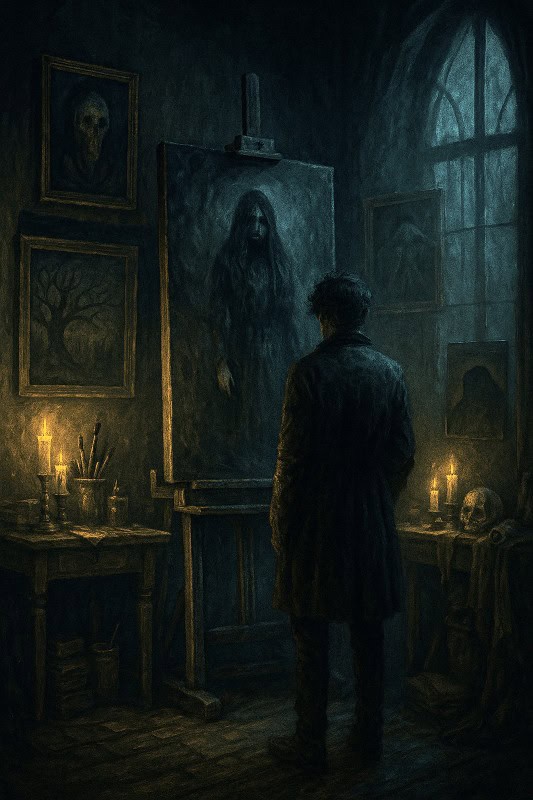
At its core, horror is about what you don’t see – and what you feel. When your art can tell a story through mood, shadow, and quiet details, it becomes more than just a cool image – it becomes an experience.
Visual storytelling makes your work feel alive. It lets your viewers enter the scene and imagine what came before… and what might happen next.
It also gives your art a personal stamp – your choice of symbols and atmosphere makes it uniquely yours. That’s what keeps people coming back to look at your work again and again.
Art Prompt Idea:
Design a haunted street corner at dusk, where a lone figure leans against a lamp post, barely lit by its failing light. Around them, faint scratches and symbols cover the walls, and their shadows seem to stretch in two directions at once.
Conclusion: Your Art Deserves a Little Darkness
When it comes to horror art, it’s not always about the blood, teeth, or claws – sometimes, the quiet power lies in what you don’t show. Shadows, symbols, and atmosphere are the brushstrokes that whisper to your audience, drawing them closer before they even realise the danger. These elements let your art breathe with tension, mystery, and meaning, ensuring that every viewer feels something crawling just out of sight.
Mastering visual storytelling in horror art lets you create pieces that linger in your audience’s mind long after they’ve looked away – proof that the real terror is in the details you don’t have to say out loud.
So next time you sketch, don’t just draw what’s there. Draw what’s lurking. Play with the light. Hide your monsters in plain sight. Use a single, eerie symbol to say what words never could. That’s the secret sauce of great horror storytelling – it haunts long after the page has been turned.
And hey, if your drawing keeps you awake at night staring at it on your desk… congratulations, you’ve done it right.
Stay spooky – and remember: art doesn’t bite… unless you want it to.
Keep the Story Going…
If you want to explore more ways to bring haunting stories into your art, check out these related posts:
- Dark Fairytales: Nightmare Fuel From the Storybook
The real versions of fairytales are nightmare fuel, perfect for horror-themed redraws. - Regional Folklore: Nightmares That Call Your Hometown Home
Scottish kelpies, Slavic forest spirits, and chilling tales of the undead remind us that the scariest stories are often the ones closest to home.