
Creativity doesn’t always behave itself. Some days, ideas come easily and you can’t wait to start drawing; other days, even putting pencil to paper can feel difficult. Creative blocks, self-doubt and periods of low motivation are all normal parts of making art.
I know that feeling well. I stopped drawing for years because I constantly doubted my ability and felt as though everything I created needed to be perfect. I also convinced myself that improving meant spending hours practising every day, which gradually made drawing feel overwhelming rather than enjoyable.
Coming back to art meant learning to approach it differently. Horror art doesn’t need perfection to be effective. Atmosphere, emotion, unusual ideas and personal interpretation can matter just as much as technical skill, and sometimes the rougher or less polished parts of a drawing are what give it character.
This section brings together advice and inspiration for overcoming creative blocks, building confidence, developing your own horror art style and finding new ideas when inspiration feels thin. You’ll also find ways to stay motivated without turning drawing into another source of pressure.
Whether you’re struggling to begin, returning after a long break or simply looking for something to spark your next idea, this page is here to help you keep creating in a way that works for you.
Overcoming Creative Blocks in Horror Art
Creative blocks can happen for all sorts of reasons. Sometimes it’s self-doubt, sometimes it’s burnout, and sometimes your brain simply refuses to produce anything useful no matter how long you stare at the page.
The important thing is not to treat a creative slump as proof that you’ve somehow lost your ability. Creative energy naturally comes and goes, and forcing yourself to produce something impressive can often make the block feel worse.
This section explores:
- Common reasons motivation disappears and why recognising the cause can make it easier to move forward.
- Practical ways to start drawing again without putting pressure on yourself to create a finished piece.
- How horror themes, prompts and unusual references can help spark new ideas when inspiration feels completely absent.
Sometimes getting unstuck means changing what you draw, lowering the stakes or simply allowing yourself to make something rough.
If you’re struggling to get started again, my Overcoming Creative Blocks in Horror Art guide goes into the subject in more depth and gives you practical ways to find your way back into drawing.
How to Find Your Horror Art Style
Finding your own style usually takes time. It develops gradually as you experiment with different subjects, techniques and influences and start noticing which choices you naturally return to.
Horror gives you plenty of room to explore because it can be gothic, grotesque, psychological, surreal, subtle or completely over the top. Trying different approaches can help you work out what actually feels like you, rather than forcing yourself into a particular look too early.
This section explores:
- Experimenting with different horror aesthetics to see which themes and visual ideas appeal to you most.
- Learning from other horror artists without copying their work, so inspiration becomes part of your development rather than a replacement for your own ideas.
- Recognising the techniques, subjects and moods you enjoy using repeatedly, which can gradually shape a more personal approach.
You don’t need to decide on a fixed style straight away. In fact, it’s usually more useful to let it develop naturally as your skills, interests and confidence grow.
If you want to explore this in more depth, my How to Find Your Horror Art Style guide looks at practical ways to develop an approach that feels more personal to you.
How to Stay Motivated as a Horror Artist
Staying motivated doesn’t mean forcing yourself to draw constantly. In fact, pushing too hard can make something you enjoy start to feel like another obligation. Motivation tends to last longer when drawing still feels rewarding, rather than something you have to prove yourself through.
This section looks at:
- Managing burnout and recognising when you need a break instead of pushing through for the sake of it.
- Setting realistic goals that encourage progress without adding unnecessary pressure.
- Finding a balance between improving your skills and actually enjoying the process of creating.
It can also help to remember that motivation naturally changes. Some weeks you might want to draw every day, while other times you may barely touch your sketchbook. Neither means you’re failing as an artist.
If you’re struggling to keep going or drawing has started to feel more like work than something you enjoy, my Staying Motivated as a Horror Artist guide explores practical ways to rebuild that momentum without burning yourself out.
Building Confidence in Your Artwork
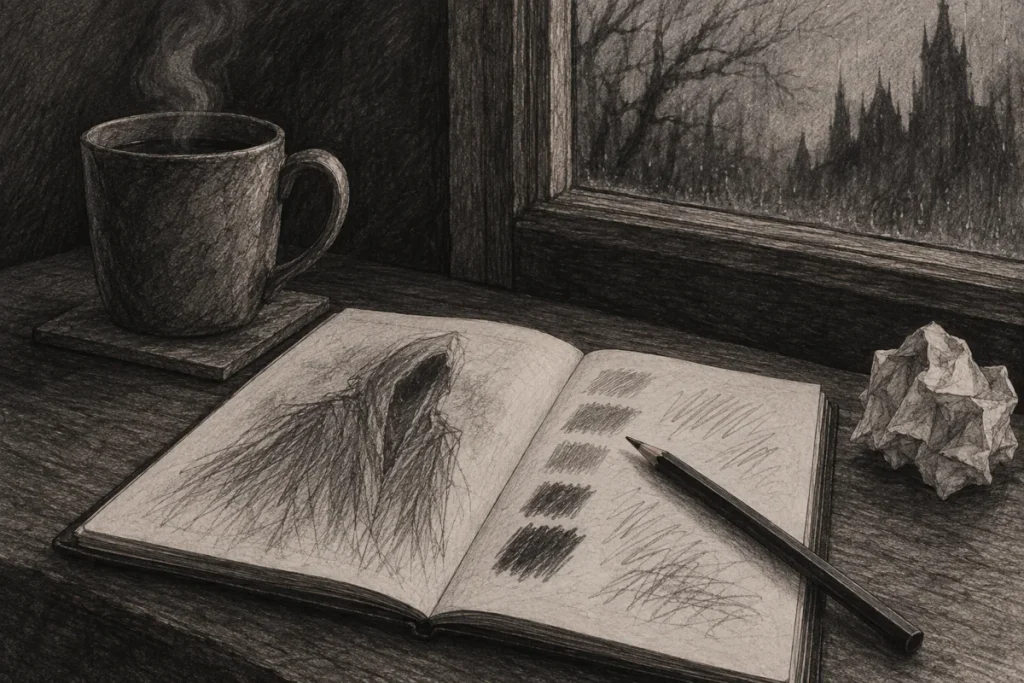
Confidence in art rarely appears all at once. It usually grows quietly through practice, repetition and learning to trust your own decisions a little more each time you draw.
Self-doubt can make it easy to focus on everything you think is wrong with your work, especially when you compare yourself to artists who seem further ahead. But progress is often much easier to see when you look back at where you started rather than constantly measuring yourself against someone else.
This section explores:
- How to recognise and quieten your inner critic when it starts taking over.
- Why self-doubt is a normal part of developing as an artist, rather than proof that you’re not good enough.
- How to notice your progress and build confidence through practice instead of chasing perfection.
Confidence doesn’t mean loving every drawing you make. It means being able to keep going, learn from what didn’t work and trust that your skills will continue to develop.
If this is something you struggle with, my Building Confidence as a Horror Artist guide looks at practical ways to become more comfortable with your work and recognise how far you’ve already come.
Finding Inspiration for Horror Art
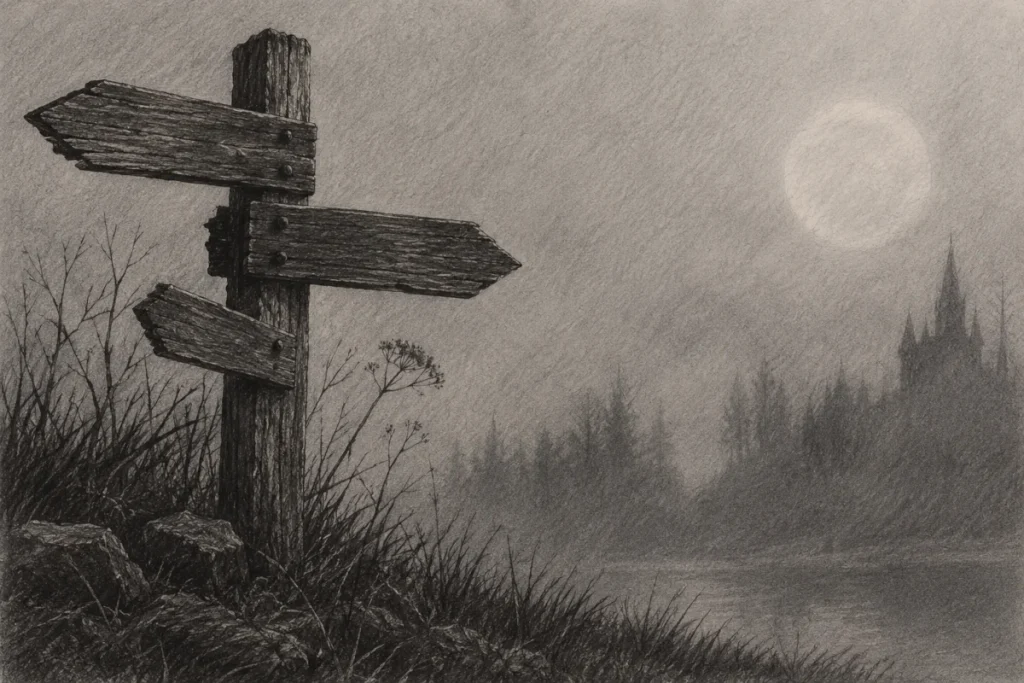
Inspiration doesn’t always arrive as a fully formed idea. Sometimes it starts with a texture, an unusual shape, a scene from a film or game, a piece of folklore, or something unsettling you notice in everyday life.
Horror art is especially good for combining influences. Something ordinary can become much more interesting once you change the context, exaggerate a feature or mix it with another idea entirely.
This section explores:
- Horror films and video games that can spark ideas for atmosphere, creatures, environments and visual storytelling.
- Artists and illustrators whose work can help you study different approaches to horror without copying their ideas.
- Real-world textures, anatomy, decay and natural forms that can be adapted into original horror designs.
The aim isn’t to wait around for the perfect idea. It’s to build a collection of references and influences you can return to whenever you need something to start from.
If you’re looking for fresh ideas, my Finding Inspiration for Horror Art guide explores more places to look and ways to turn those influences into artwork of your own.
Conclusion
Creativity isn’t something that stays perfectly steady. There will be times when ideas come easily and other times when drawing feels much harder than it should. Both are normal parts of being an artist, and neither says anything permanent about your ability.
You don’t need to create every day, constantly improve or feel inspired all the time. Sometimes progress means trying something new; other times it means stepping away for a while and coming back when you’re ready. What matters most is finding an approach that keeps art enjoyable rather than turning it into another source of pressure.
As you keep experimenting, you’ll gradually learn what inspires you, which subjects you enjoy most and how you want your own horror artwork to feel. Your style, confidence and motivation can all develop at their own pace.
Keep following the ideas that interest you, give yourself room to experiment and let your work change as you do.
