
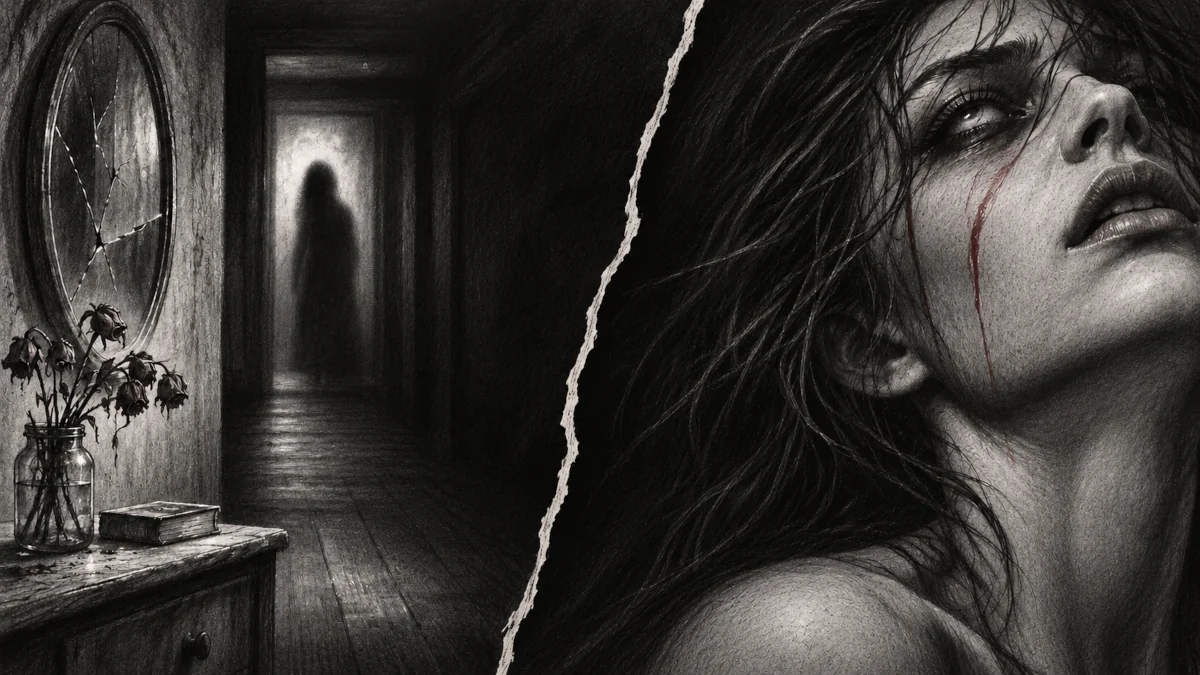
Psychological Horror vs Gore in Art: Understanding Two Types of Fear
Horror art can disturb viewers in very different ways. Some images reveal something horrifying immediately, while others create a lingering sense of unease without showing anything particularly graphic.
Imagine two drawings of an abandoned hospital corridor. One shows a bloodstained stretcher and visible signs of violence. The other shows an empty wheelchair facing a dark doorway, with a shadow that doesn’t seem to belong to anything. Both scenes could be frightening, but the fear comes from different places.
This is one of the main differences between psychological horror and gore in art. Psychological horror often relies on uncertainty, suggestion, and imagination, while gore uses graphic physical imagery to create a more immediate, visceral response.
Understanding how these approaches work can help you make more deliberate artistic choices, whether you’re drawing an unsettling portrait, creating a disturbing environment, or developing an original horror character. Although psychological horror and gore are often discussed separately, they aren’t opposites. Some of the most unsettling artwork combines elements of both.
What You’ll Learn:
- What psychological horror and gore mean in art and how each approach creates fear.
- The main differences between the two, including visual techniques, emotional impact, and the role of imagination.
- Why psychological horror creates unease through uncertainty, anticipation, and unsettling details.
- How gore creates a visceral response through graphic imagery, physical vulnerability, and visual intensity.
- How to use artistic techniques effectively when creating psychological horror or gore-inspired artwork.
- How psychological horror and gore can work together to create more complex and unsettling images.
- How to choose the right approach for your artistic ideas and avoid common mistakes.
- Practical drawing exercises to help you experiment with both types of horror.
What Is Psychological Horror in Art?
Psychological horror focuses on creating fear through the viewer’s thoughts, emotions, and interpretation of an image. Rather than revealing an obvious threat, it often introduces uncertainty. Something about the artwork feels wrong, but the viewer cannot immediately explain why.
An empty room might suggest that someone has just left. A portrait could contain an expression that seems almost human but not quite natural. A familiar environment might feature an unexplained detail that changes how the entire scene feels. These elements encourage viewers to look more closely and question what they’re seeing.
The Power of Suggestion
One of the defining qualities of psychological horror is the relationship between what the artist reveals and what the viewer imagines. When information is missing, viewers may begin creating their own explanations.
For example, imagine a drawing of a bedroom with an open wardrobe. Nothing is visible inside it, but the surrounding shadows are unusually dark. The image doesn’t confirm that anything is hiding there. However, the composition encourages viewers to consider that possibility.
The fear comes from uncertainty rather than a clearly visible threat. This approach can be particularly effective because different viewers may interpret the same artwork in different ways.
Common Characteristics of Psychological Horror
Psychological horror artwork frequently uses:
- Ambiguity: Details that leave viewers uncertain about what they’re seeing.
- Negative space: Empty or concealed areas that suggest something might be missing or hidden.
- Uncanny imagery: Familiar subjects that feel subtly unnatural or out of place.
- Atmosphere: Lighting, environments, and compositions that establish unease.
- Visual clues: Objects, expressions, or unusual details that suggest a disturbing story.
- Distorted perception: Reflections, perspectives, or spatial relationships that seem impossible or unreliable.
These techniques don’t necessarily make an image frightening on their own. Their effectiveness depends on how they’re combined and what the artwork encourages viewers to imagine.
For a more detailed look at developing these effects, see How to Create Psychological Horror in Art, which explores the techniques and practical drawing exercises in greater depth.
What Is Gore in Art?
Gore in art involves graphic depictions of physical injury, blood, wounds, or bodily damage. Unlike psychological horror, which often leaves the frightening element uncertain, gore typically makes the physical consequences of violence or injury visible.
Its impact may come from the detail, intensity, or disturbing nature of what is shown. However, gore isn’t limited to creating shock. It can also communicate suffering, vulnerability, danger, or the consequences of an event.
A bloodstained figure might be frightening because of the visible injuries, but their expression and surroundings could also introduce sadness, sympathy, or questions about what happened. The emotional meaning of gore depends on more than how graphic the artwork is.
What Makes an Image Gory?
Blood alone doesn’t automatically make an image an example of gore. A small bloodstain in an otherwise quiet scene might function primarily as a storytelling clue. Gore becomes more central when the artwork places noticeable emphasis on graphic physical damage or its consequences.
Common visual elements include:
- Visible injuries: Wounds or physical damage that are clearly depicted.
- Blood and bodily detail: Graphic elements used to communicate physical harm.
- Disturbing textures: Surfaces that suggest damaged skin, decay, or other bodily changes.
- Exaggerated physical effects: Stylised or heightened depictions of injury.
- Strong visual contrast: Techniques that draw attention to the graphic elements of a scene.
Gore can be presented realistically or through stylised illustration. It can appear in traditional drawing, painting, comics, digital artwork, and many other visual mediums.
Is Gore the Same as Body Horror?
Gore and body horror are closely related, but they aren’t exactly the same thing.
Gore describes the graphic depiction of blood, injury, or bodily damage. Body horror, meanwhile, focuses on fear surrounding the body itself. This might involve unnatural transformation, mutation, physical deterioration, or losing control over one’s own body.
For example, a character with a visible wound may be an example of gore. A character whose limbs are gradually changing into unfamiliar shapes could represent body horror, even if no blood or graphic injury is shown.
The two approaches frequently overlap, particularly when bodily transformation is depicted in graphic detail. Understanding this distinction is useful when developing horror characters and deciding what you want their appearance to communicate.
Psychological Horror vs Gore: The Main Differences
Although both approaches can create disturbing artwork, they often differ in how they present information and guide the viewer’s reaction.
1. The Source of Fear
Psychological horror: Often creates fear through uncertainty, anticipation, unfamiliarity, or the suggestion of something threatening.
Gore: Often creates fear or disgust through visible physical harm, bodily vulnerability, or graphic imagery.
Both approaches can also communicate emotions beyond fear, including sadness, curiosity, revulsion, and sympathy.
2. What the Viewer Sees
Psychological horror: Frequently conceals information, introduces unexplained details, or leaves the threat open to interpretation.
Gore: Makes physical damage or its consequences more directly visible.
This doesn’t mean psychological horror must always hide everything or that gore must reveal every detail. The distinction concerns where the artwork places its emphasis.
3. The Role of Imagination
Psychological horror: Often encourages viewers to complete an uncertain scene using their own imagination.
Gore: Usually provides more direct visual information about the physical threat or damage.
However, graphic images can still leave important questions unanswered, while psychological horror can include clearly visible frightening subjects.
4. The Emotional Response
Psychological horror: May produce suspense, dread, discomfort, suspicion, or lingering uncertainty.
Gore: May produce shock, disgust, alarm, sympathy, or an immediate awareness of physical vulnerability.
These reactions aren’t universal. Personal experiences, artistic preferences, and individual sensitivities all influence how someone responds.
5. The Importance of Atmosphere
Psychological horror: Often depends heavily on atmosphere, composition, and subtle visual relationships.
Gore: Can create an immediate impact through graphic subject matter, although atmosphere can make the image more emotionally powerful.
A carefully composed gory image can be just as atmospheric as a psychological horror scene. The most important distinction is not simply whether blood appears in the artwork. It’s how the image creates its effect.
Why Psychological Horror Can Feel So Unsettling
Psychological horror often works by disrupting the viewer’s expectations. People naturally look for familiar patterns and meaningful relationships when interpreting images. When a scene contains something that doesn’t fit, it can create uncertainty. Artists can use this uncertainty deliberately.
Anticipation and the Unseen Threat
Imagine a drawing of a staircase disappearing into darkness. If a threatening figure is clearly visible at the top, the viewer knows what to focus on. If the staircase is empty but a distorted shadow stretches down the wall, the viewer may begin searching for an explanation.
The possibility of a threat can become an important part of the fear. Psychological horror frequently uses this anticipation to create tension without confirming what is happening.
Making the Familiar Feel Wrong
Ordinary environments can become particularly unsettling when familiar details are subtly altered.
A family photograph might contain one face that looks in the wrong direction. A reflection could show an object that isn’t present in the room. A doorway might appear too narrow for the proportions of the surrounding walls.
These details create a contrast between what viewers expect and what the artwork presents. The effect is related to the uncanny, where something familiar becomes strangely unfamiliar.
The change doesn’t need to be dramatic. Sometimes, a small inconsistency becomes more disturbing precisely because the rest of the scene appears normal.
Leaving Questions Unanswered
Psychological horror can also create interest through unresolved storytelling. An abandoned chair, an unexplained silhouette, or a series of unusual marks might suggest that something has happened without confirming exactly what.
The viewer becomes involved in interpreting the scene. This is especially useful for standalone illustrations because a single image can imply a much larger story.
Why Gore Creates a Different Kind of Fear
Gore tends to produce a more direct confrontation with physical harm. Rather than relying primarily on uncertainty, it can make the consequences of danger immediately apparent.
However, that doesn’t make it artistically simple. Effective gore depends on presentation, context, and emotional intention, not merely the quantity of graphic detail.
The Fear of Physical Vulnerability
Graphic injury can remind viewers of the body’s vulnerability. Even in fictional or exaggerated artwork, recognisable signs of physical damage may create an instinctive sense of discomfort.
The effect can be particularly strong when the injured subject appears vulnerable, familiar, or emotionally expressive. A character’s posture, expression, and surroundings can influence whether the viewer experiences horror, sympathy, sadness, or a mixture of reactions.
Immediate Visual Impact
Gore often draws attention quickly because graphic physical details can become powerful focal points. Strong contrasts, unusual textures, and disturbing forms may make these elements stand out from the surrounding composition.
However, more graphic detail doesn’t automatically create stronger horror. If everything in an image competes for attention, viewers may struggle to identify its main subject or emotional focus. Careful composition remains important.
The Importance of Context
Consider two drawings featuring a bloodstained hand.
In one, the hand appears against a plain background, with detailed shading emphasising the blood and injury. In another, the same hand rests beside a broken photograph in a deserted room.
The first image places greater emphasis on the physical detail. The second introduces questions about the person, the photograph, and the events that led to the scene.
Neither is inherently better. They simply use different information to influence the viewer’s response.
Visual Techniques Used in Psychological Horror Art
Psychological horror allows artists to build tension without relying on graphic imagery. Several visual techniques are particularly useful when you want uncertainty or atmosphere to become the main source of fear.
Shadows and Negative Space
Shadows can conceal information, while negative space can make an apparently empty area feel significant.
A character positioned at the edge of a dark room might appear vulnerable because the viewer cannot see what surrounds them. Similarly, a large empty space behind a figure could suggest isolation or encourage viewers to search for something hidden.
The important consideration is how the empty or obscured areas interact with the visible subject.
Unusual Composition and Perspective
Composition determines where viewers look and how they experience the scene. An off-centre subject, an unusually low viewpoint, or a corridor with distorted perspective can create discomfort.
For example, placing a small character beneath a doorway that appears impossibly tall may make the environment feel threatening. These effects can work even when nothing overtly frightening is visible.
Subtle Distortion
Small changes to familiar features can make characters and objects feel unnatural. A portrait might contain an expression that doesn’t match the character’s eyes. A shadow might extend in the wrong direction. A reflection could show a slightly different pose.
The contrast between normality and distortion creates much of the effect.
If every feature is exaggerated, the image may become openly monstrous rather than subtly uncanny. That can still be effective, but it creates a different experience.
Visual Clues and Implied Stories
Objects can suggest a disturbing event without showing it directly. An overturned chair, an open door, or a collection of abandoned belongings might provide enough information to encourage viewers to imagine a story.
The strongest clues often feel connected to the environment rather than randomly placed. Ask yourself what happened before the moment you’re drawing and which details would remain visible afterwards.
Visual Techniques Used in Gore Art
Gore places more emphasis on depicting physical damage, but the same artistic principles of form, contrast, composition, and storytelling still apply.
Anatomy and Believable Form
Understanding anatomy helps keep even exaggerated horror imagery visually convincing. Knowledge of skeletal structure, body proportions, and how forms connect can help you depict characters whose injuries or alterations remain understandable.
Not every drawing needs to be anatomically realistic. Stylised horror can deliberately exaggerate proportions and physical effects. However, intentional distortion is usually more effective when the artist understands the underlying forms.
Texture and Shading
Texture can help distinguish different surfaces and establish the visual character of an image. Smooth, rough, torn, or damaged surfaces may require different shading treatments.
In graphite drawings, variations in value, edge softness, and mark-making can create these distinctions without relying on colour. The aim is to make the surfaces readable while keeping the composition focused.
Colour and Contrast
Colour can play a significant role in graphic horror. For instance, red may draw attention when placed against muted surroundings. Pale lighting can emphasise contrast, while darker colours may help create a more oppressive mood.
However, gore doesn’t require red or highly saturated colours to be effective. Black-and-white artwork can also communicate physical damage through strong values, textures, and carefully defined forms.
Focal Points and Visual Hierarchy
Graphic details can easily dominate an illustration. Decide which element viewers should notice first and arrange the remaining details to support it.
If a character’s emotional expression is central to the story, excessive detail elsewhere might distract from that expression. If the artwork is intended to emphasise physical damage, the composition can direct attention towards that area instead.
Every detail should have a purpose within the image.
Psychological Horror vs Gore: Drawing the Same Scene Differently
One of the clearest ways to understand these approaches is to imagine how the same setting could be illustrated in different ways.
Consider a small bathroom containing a sink, a mirror, and a single overhead light.
Version 1: Psychological Horror
The bathroom appears ordinary at first. The light is dim, the surrounding shadows are heavy, and the mirror reflects a figure standing behind the viewer’s position. However, the room itself appears empty.
Nothing graphic is shown. The disturbing element is the unexplained reflection. The fear comes from what the image suggests rather than what it confirms.
Version 2: Gore
The same bathroom now contains a cracked mirror, bloodstained surfaces, and a visibly injured figure. The lighting draws attention to the physical damage, while the character’s posture communicates pain or vulnerability.
The viewer doesn’t need to imagine whether something harmful has happened. The physical consequences are already visible. The horror comes primarily from the graphic imagery and the situation it represents.
Version 3: Combining Both Approaches
Now imagine the injured figure standing in front of the mirror. The physical damage is clearly visible, but the reflection shows the figure completely unharmed.
The image contains both graphic information and an unexplained contradiction. The injury establishes physical horror, while the reflection introduces uncertainty.
Viewers may begin questioning whether the reflection represents the past, something supernatural, or an entirely different reality. This combination creates more than one source of fear within the same scene.
The exercise demonstrates how a setting can remain almost identical while its emotional effect changes through artistic choices.
Can Psychological Horror and Gore Work Together?
Absolutely. Psychological horror and gore aren’t mutually exclusive, and combining them can create artwork with several layers of tension. The important thing is understanding what each element contributes.
Use Gore as a Clue
A small amount of graphic imagery can suggest that something disturbing has happened without revealing the full story.
For example, a bloodstained doorway in an otherwise empty house might encourage viewers to imagine what occurred beyond it. The visible evidence provides a starting point, while the unexplained circumstances create psychological tension.
Create Uncertainty Around a Graphic Subject
A disturbing character can become even more unsettling when something about their appearance or behaviour is difficult to explain.
Perhaps the character appears physically injured but remains strangely calm. Their reflection may show a different expression, or their shadow may suggest an unfamiliar form. These contradictions introduce psychological horror into an otherwise graphic image.
Show the Consequences but Conceal the Cause
An artist can reveal the aftermath of a frightening event while leaving its cause unknown. Broken furniture, abandoned belongings, and visible evidence of injury can establish that something serious occurred.
The absence of an explanation encourages viewers to construct their own interpretation. The graphic elements show the consequences, while the psychological elements preserve the mystery.
Balance the Two Approaches
When combining psychological horror and gore, consider which effect should dominate.
If the central idea is uncertainty, too much graphic information may reveal more than you intend. If the purpose is to confront viewers with physical vulnerability, concealing every important detail might weaken that effect.
The balance depends on the artwork’s intended mood and message.
Which Approach Should You Use in Your Horror Artwork?
There isn’t a single correct choice. Psychological horror and gore offer different creative possibilities, and the most suitable approach depends on what you want viewers to experience.
Before beginning a drawing, consider the following questions.
What Emotion Do You Want to Create?
If your goal is to create suspense, dread, or lingering uncertainty, psychological horror may be particularly suitable.
If you want to emphasise physical vulnerability, shock, or the consequences of violence, gore may communicate those ideas more directly.
If the artwork explores both physical and psychological fear, combining techniques might be appropriate.
How Much Should the Viewer Understand?
Think about which details are essential to the story. Should viewers immediately recognise what happened, or should they be left questioning the scene?
An ambiguous image can invite interpretation, while a more explicit one may communicate an event with greater clarity. Neither approach requires explaining everything.
What Suits Your Drawing Style?
Some artists enjoy detailed anatomical studies and realistic textures. Others prefer atmospheric environments, distorted perspectives, or symbolic compositions.
Your existing skills and interests can help you decide where to begin. However, don’t feel restricted by them. Experimenting with unfamiliar techniques is a useful way to develop your artistic range.
Who Is the Artwork Intended For?
Consider where your artwork will be displayed and who is likely to view it. Some audiences enjoy graphic horror, while others prefer atmospheric or suggestive imagery.
For particularly graphic pieces, clear content warnings can help viewers decide whether they want to engage with the artwork.
This doesn’t mean avoiding difficult subjects. It means presenting them thoughtfully and with an awareness of your audience.
Common Mistakes When Creating Psychological Horror or Gore
Both approaches present challenges, particularly when you’re still experimenting with their visual techniques.
Making Psychological Horror Too Vague
Ambiguity can be effective, but an image still needs enough information to hold the viewer’s attention.
If every detail is hidden and there is no clear focal point, the scene may simply become difficult to understand. Try including one recognisable subject or unsettling clue that gives viewers something to investigate.
Relying Entirely on Darkness
Dark shadows can create atmosphere, but making an entire drawing extremely dark doesn’t automatically produce psychological horror.
Without clear differences in value, important details may disappear. Preserve enough contrast to guide the viewer’s eye and make the scene readable.
Adding Graphic Details Without Purpose
Gore can lose its narrative impact when graphic details are included without considering their role in the artwork.
Before adding them, ask what they communicate. Do they reveal something about the character, establish danger, or support the overall mood?
Graphic detail is most effective when it contributes to the artistic intention.
Ignoring Composition
An interesting subject cannot always compensate for a confusing composition. Whether you’re drawing an uncanny figure or a graphic horror scene, viewers still need a clear visual path through the image.
Use contrast, placement, lighting, and scale to establish focal points.
Confusing Complexity With Effectiveness
A more complicated drawing isn’t necessarily more frightening.
A simple silhouette might create stronger psychological tension than an elaborate environment, while a carefully selected graphic detail may have more impact than an entire image filled with competing effects.
Concentrate on what strengthens the intended emotion rather than how much detail you can include.
Practice Exercises: Experimenting With Psychological Horror and Gore
Understanding the differences is useful, but experimenting with them will help you recognise which techniques work best for your artistic style.
These exercises can be completed with traditional pencils, charcoal, or digital drawing tools.
Exercise 1: Draw One Scene in Two Different Ways
Choose a simple location, such as a bedroom, corridor, or abandoned building.
For the psychological horror version:
1. Keep the setting recognisable and relatively ordinary.
2. Introduce one unexplained detail, such as an unnatural shadow or strange reflection.
3. Use lighting and composition to emphasise uncertainty.
4. Avoid revealing an obvious explanation.
For the gore version:
1. Use the same basic composition.
2. Introduce visible evidence of physical injury or damage.
3. Adjust the lighting and focal point to emphasise the graphic elements.
4. Consider what the scene communicates about the event or character.
Compare the finished drawings and identify how the emotional focus changes.
Exercise 2: Experiment With What You Reveal
Create three small thumbnail sketches of a scene involving a frightening subject.
- First thumbnail: Conceal the subject almost completely.
- Second thumbnail: Reveal part of the subject while leaving important details unclear.
- Third thumbnail: Show the subject clearly, including any disturbing physical details you want to communicate.
Keep the environment similar in all three sketches. Compare how the level of visual information changes the sense of fear, curiosity, or tension.
Exercise 3: Turn a Graphic Scene Into Psychological Horror
Begin with a simple concept involving visible evidence of violence or injury.
Rather than drawing the event or its graphic consequences directly, consider how you could suggest the same story through the environment.
You might use damaged furniture, abandoned belongings, an unusual reflection, or another carefully chosen clue.
The challenge is to preserve the disturbing story while reducing how much you reveal. This exercise is particularly useful for learning how suggestion can replace explicit imagery.
Exercise 4: Combine Both Approaches
Create a horror illustration containing one clearly visible disturbing element and one unexplained detail.
For example, you could draw an injured character whose shadow appears to belong to someone else.
Use the composition to establish a relationship between the physical horror and the psychological mystery.
When finished, ask yourself:
- Which element attracts attention first?
- Does the unexplained detail create additional tension?
- Do the graphic details strengthen the story or distract from it?
- Would removing either element change the emotional impact?
The goal isn’t necessarily to make the drawing more frightening. It’s to understand how different sources of fear can influence the same composition.
Is Psychological Horror Scarier Than Gore?
Neither approach is universally scarier.
Some viewers find psychological horror more unsettling because uncertainty allows them to imagine their own explanations. Others are more strongly affected by explicit depictions of physical harm.
Personal experiences, sensitivities, and artistic preferences all influence these reactions. An atmospheric drawing might linger in one person’s thoughts, while another person may find a graphic illustration more emotionally intense.
The effectiveness of horror depends on the individual viewer and how successfully the artwork communicates its intended feeling.
Does Psychological Horror Need to Be Supernatural?
No. Psychological horror can emerge from entirely ordinary situations.
Isolation, distorted perception, unsettling body language, unfamiliar behaviour, or an environment that feels subtly wrong can all create discomfort without involving anything supernatural.
Sometimes, an everyday scene becomes frightening simply because one detail doesn’t belong.
Can Gore Be Meaningful Rather Than Just Shocking?
Yes. Gore can contribute to a wider story or explore themes such as mortality, vulnerability, suffering, transformation, and the consequences of violence.
It can also be exaggerated, symbolic, or deliberately stylised.
The distinction lies in whether the graphic elements support the artwork’s intended meaning, rather than existing solely for visual intensity.
Conclusion
Psychological horror and gore use different visual approaches to explore fear, but neither is inherently more effective or artistically valuable.
Psychological horror often creates tension through uncertainty, atmosphere, and suggestion. Gore relies more directly on graphic depictions of physical harm, making the consequences of danger visible.
Both approaches offer opportunities for storytelling, emotional expression, and artistic experimentation. By understanding what each technique communicates, you can make more deliberate choices about what to reveal, what to conceal, and how to guide the viewer’s experience.
Sometimes the most unsettling part of an image is the detail you can clearly see. Other times, it’s the question the artwork refuses to answer.
What You’ve Learned:
- Psychological horror creates fear through suggestion, uncertainty, atmosphere, and the viewer’s interpretation of unsettling imagery.
- Gore in art uses graphic depictions of blood, injury, and bodily damage to communicate physical horror and its consequences.
- Body horror and gore are related but different, with body horror focusing on disturbing bodily changes, transformations, and loss of physical control.
- Psychological horror and gore affect viewers differently, often emphasising anticipation and dread or more immediate reactions to physical harm.
- Shadows, negative space, unusual composition, and subtle distortion can create psychological tension without revealing an obvious threat.
- Anatomy, texture, contrast, and visual hierarchy help artists present graphic horror imagery with greater clarity and purpose.
- Psychological horror and gore can work together by combining visible disturbing details with mystery, ambiguity, and implied storytelling.
- The right approach depends on artistic intention, including the emotions, information, and visual experience you want to communicate.
Explore More Horror Art Techniques
If you’d like to develop these ideas further, these related guides explore techniques that can help bring unsettling artwork to life.
- How to Create Psychological Horror in Art
Explore shadows, ambiguity, the uncanny valley, and visual storytelling through practical psychological horror drawing techniques. - Introduction to Light and Shadow Effects
Discover how light and shadow influence the appearance of objects, create depth, and establish atmosphere in your artwork.
