Introduction to Light and Shadow Effects in Horror Art
In the eerie world of horror art, nothing wields more power than lighting and shadows. They create suspense, shape your scenes, and make your monsters truly come to life – because what’s scarier than something lurking just out of sight? (Spoiler: Nothing. That’s why horror movies love the dark.)
Why are lighting and shadows important?
Lighting and shadows are the unsung heroes of any artwork; however, in horror, they become the main villains. These sneaky little elements don’t just make your drawings look realistic – they set the tone and dictate the entire mood. Soft, dreamy lighting? That’s a fairytale. Deep, dramatic shadows? That’s “something’s watching you from the closet” territory.
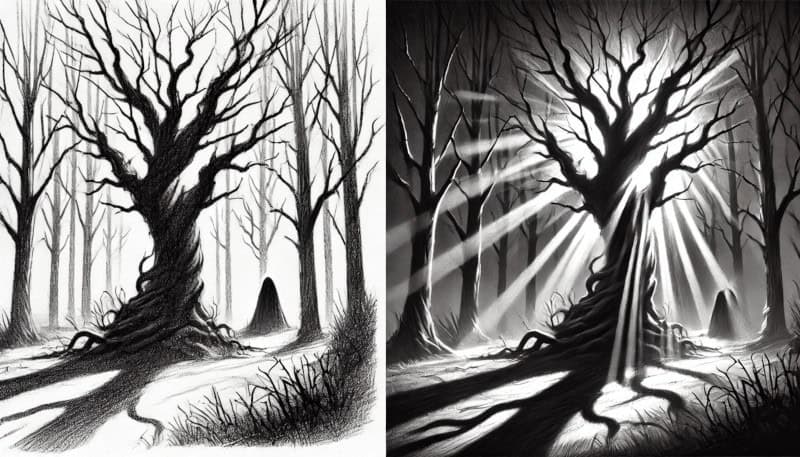
Reasons why mastering lighting and shadows is essential:
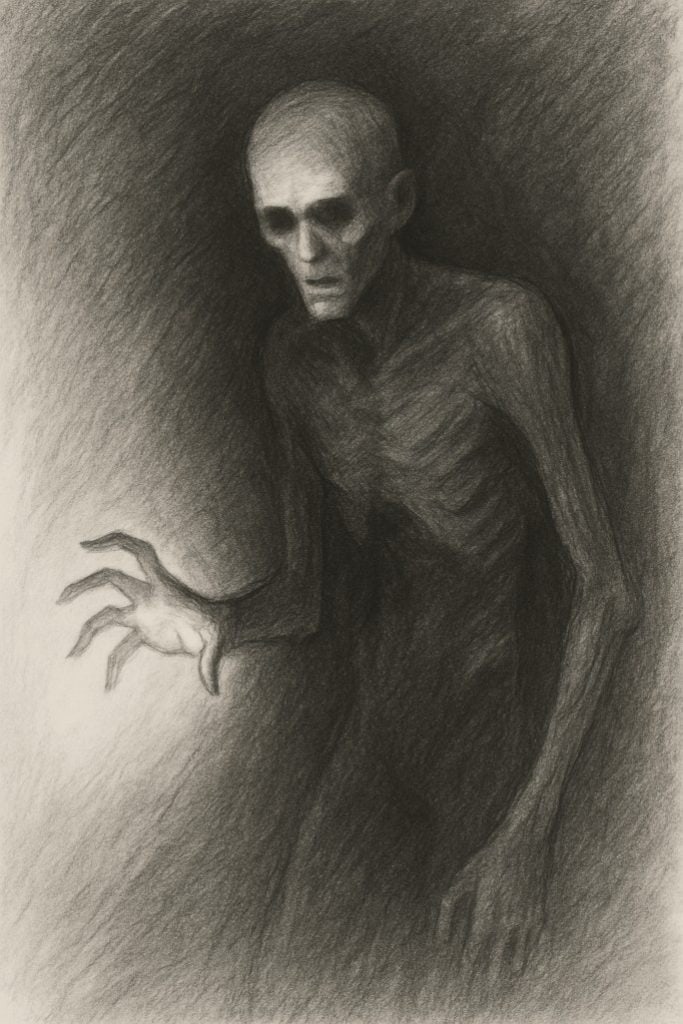
Add Depth and Dimension:
Without light and shadow, your drawings can look flat and lifeless. Shadows define the shapes of objects, making them appear three-dimensional. For example, the curve of a ghostly face can be made more realistic by applying soft shading to rounded areas and darker shadows in recessed features like eye sockets or cheekbones.
Creating Mood and Atmosphere:
Lighting is one of the most effective ways to set the mood in a piece. Bright, even lighting can feel neutral or safe, while dim, dramatic lighting can create a sense of unease. In horror art, playing with light and shadow lets you craft eerie, suspenseful scenes – think of how a single flickering candle in a dark room immediately feels ominous.
Focusing Attention:
The strategic use of light draws the viewer’s eye to specific parts of your artwork. For instance, highlighting a character’s face while leaving their surroundings in darkness not only makes them stand out but also adds mystery. In horror, this is perfect for emphasising details, like a sinister grin or glowing, otherworldly eyes.
Enhancing Realism in Horror Art:
Even in stylised art, realistic lighting and shadows make a piece more immersive. For horror, this is critical – realism helps the viewer feel the tension. A well-lit, eerie forest with shadows falling across twisted trees can evoke far more dread than a flat, shadowless scene. Even if your art leans cartoonish, throwing in believable shadows can make it feel like Scooby-Doo wandered into Silent Hill.
Telling a Story:
Light and shadow can suggest action, tension, or mystery without needing extra detail.
For example:
- A long, distorted shadow creeping along the floor can imply something terrifying approaching off-screen.
- A faint, ghostly light in the distance creates curiosity about what lies ahead. Using shadows effectively can make your art feel like it’s part of a larger, untold story.
Tips for visualising the impact of light and shadow
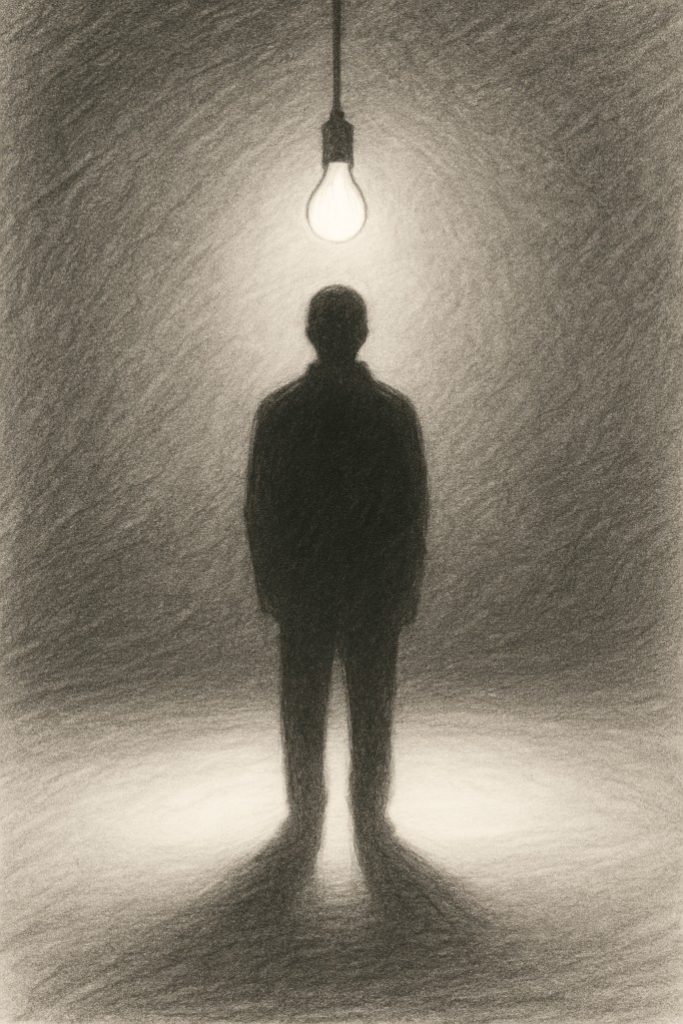
- Observe Real Life:
Grab a flashlight, turn off the lights, and shine it on an object in a dark room. Watch how the shadows morph and stretch as you move the light source around – instant DIY horror scene! - Study Horror Films:
Notice how directors use lighting to make scenes more terrifying. Think overhead lights that cast creepy shadows over faces or that classic under-lighting that makes characters look like they’ve crawled out of the uncanny valley. - Play with Contrast:
Don’t be shy – push those darks and lights! The high contrast between bright highlights and deep shadows is horror gold. It’s how you make your artwork scream (quietly and artistically, of course).
By understanding the role of lighting and shadows in your artwork, you’re not just drawing shapes – you’re conjuring a vivid, emotional experience for your audience. In the sections ahead, we’ll break down the techniques you can use to master this powerful tool and unleash some serious artistic creepiness.
What’s your biggest challenge with lighting in your horror art? Share in the comments below – let’s haunt these struggles together!
Next up: How different light sources affect horror art
Now that you’ve unlocked the secret powers of lighting and shadows, let’s talk about how different light sources shape the atmosphere of horror art. Whether it’s the eerie flicker of candlelight, the cold glow of the moon, or the harsh beam of a flashlight, every source of light tells its own terrifying tale.
Continue to How Different Light Sources Affect Horror Art