Basic Shading Techniques
Shading is essential for making your drawings appear three-dimensional, adding depth, shape, and a sense of realism. Whether you’re just starting out or refining your skills, these fundamental techniques will help you establish a strong shading foundation.
This beginner’s guide introduces the core shading techniques every artist should understand. Each section links to a deeper tutorial if you want to explore the technique in more detail.
1. Understanding light and shadow
Before diving straight into shading, it’s important to understand how light interacts with objects. Discover light sources, shadow types, and techniques for creating realistic depth in your drawings in this extensive guide, Lighting and Shadows in Horror Art: A Complete Guide, for a detailed breakdown.
2. Common shading techniques
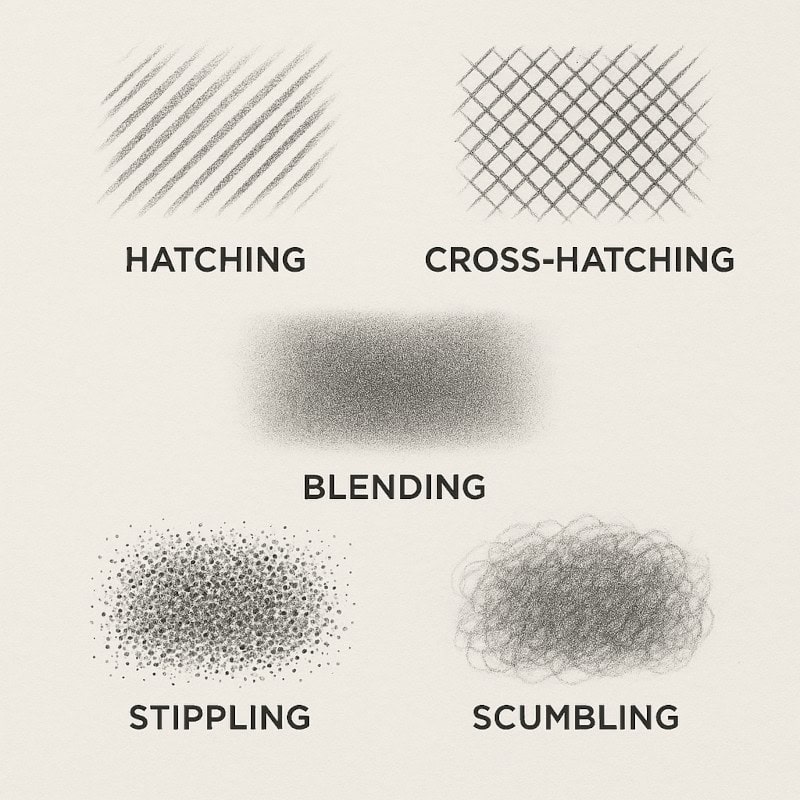
Shading isn’t just about making things darker – it’s about how you apply the darkness. These fundamental techniques each offer different textures, moods, and levels of control. Whether you’re aiming for gritty horror or smooth realism, master these and you’ll be well on your way to summoning some seriously creepy, three-dimensional nightmares.
- Hatching – Parallel lines are used to create tone and texture.
- Cross-Hatching – Overlapping lines that add depth and darker values.
- Blending – Using tools like tissue, blending stumps, or even fingers to create smooth transitions.
- Stippling – Tiny dots placed closely together for gradual shading.
- Scumbling – Circular, scribbled strokes for a soft, textured effect.
Want to dig a little deeper into the dark art of shading? Step into the Common Shading Techniques post for detailed breakdowns and examples.
3. Controlling pressure and pencil grades
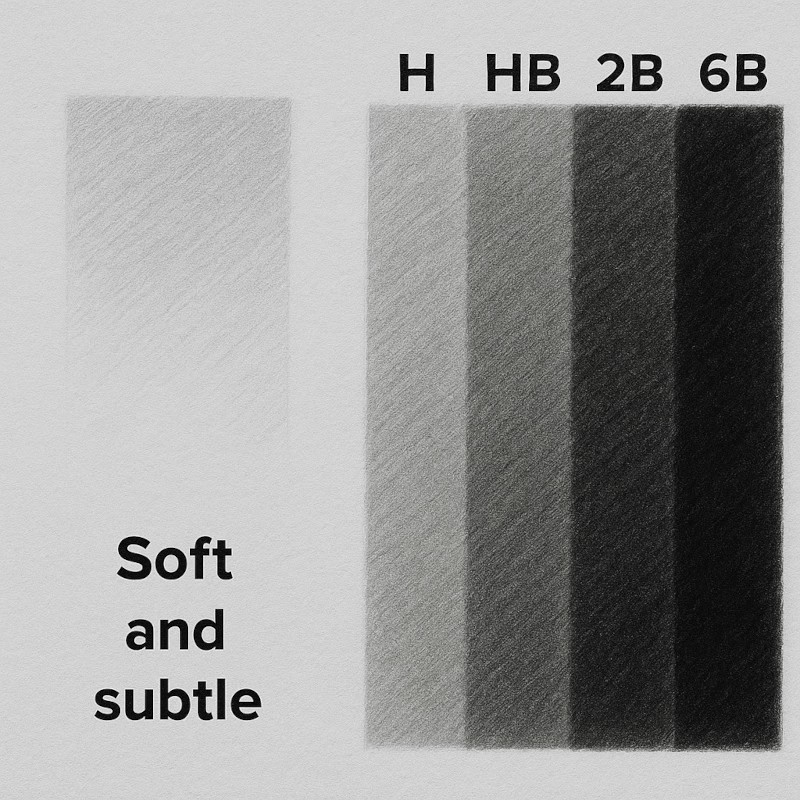
Lighter pressure and harder pencils (H grades) create softer, subtle shading, while softer pencils (B grades) allow for rich, dark shadows. Experiment with different pencil grades to find the right balance for your piece.
Understanding how pressure and pencil grades affect value is key to controlling mood and contrast in your drawings. Light pressure with an H pencil can give your work a ghostly softness, while firm pressure with a B pencil adds bold shadows that scream for attention. Try swatching each grade from light to heavy pressure and note the tonal shifts – it’s a quick way to get familiar with your tools before diving into detailed work.
Think of H pencils as the introverts of the pencil world – quiet, reserved, elegant. B pencils are the extroverts who walk in wearing leather and demanding attention.
Explore the Controlling Pressure and Pencil Grades post to learn how pressure transforms shading – from eerie whispers of graphite to bold, dramatic shadows.
4. Layering for smooth gradients
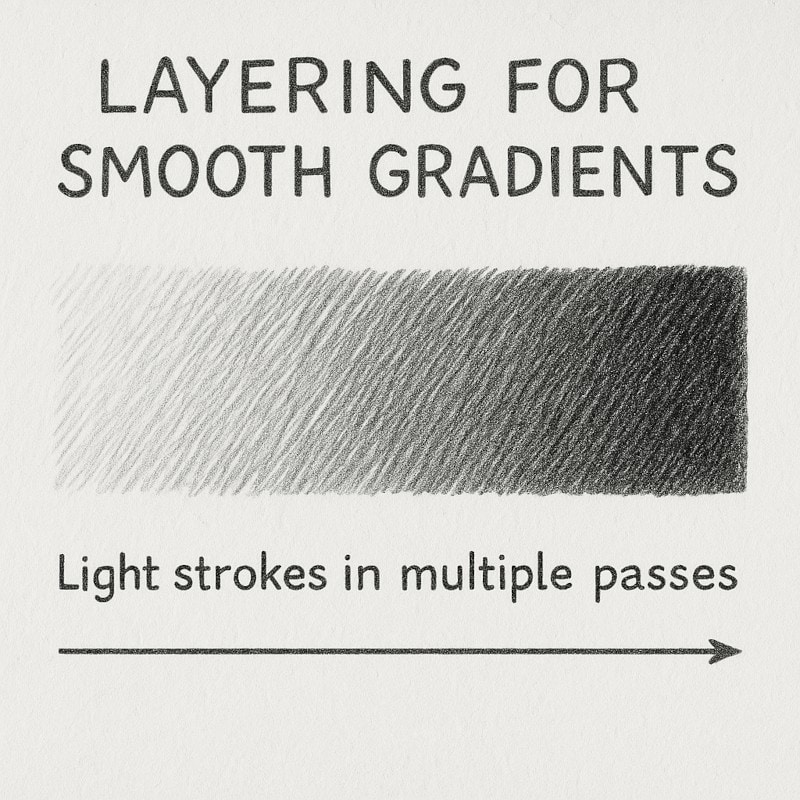
Instead of pressing hard, build up layers gradually. Light strokes in multiple passes will result in smoother shading and a more natural transition between values. Think of it like building fog in a horror scene – start light and let the darkness creep in layer by layer. This method provides more control, prevents unintentional dark spots, and makes blending much easier in the long run.
Want to see how layering transforms into ghostly-smooth gradients? Drift into the Layering for Smooth Gradients post for step-by-step guidance and examples that’ll make your shades melt together like midnight fog.
5. Avoiding smudging and keeping it clean
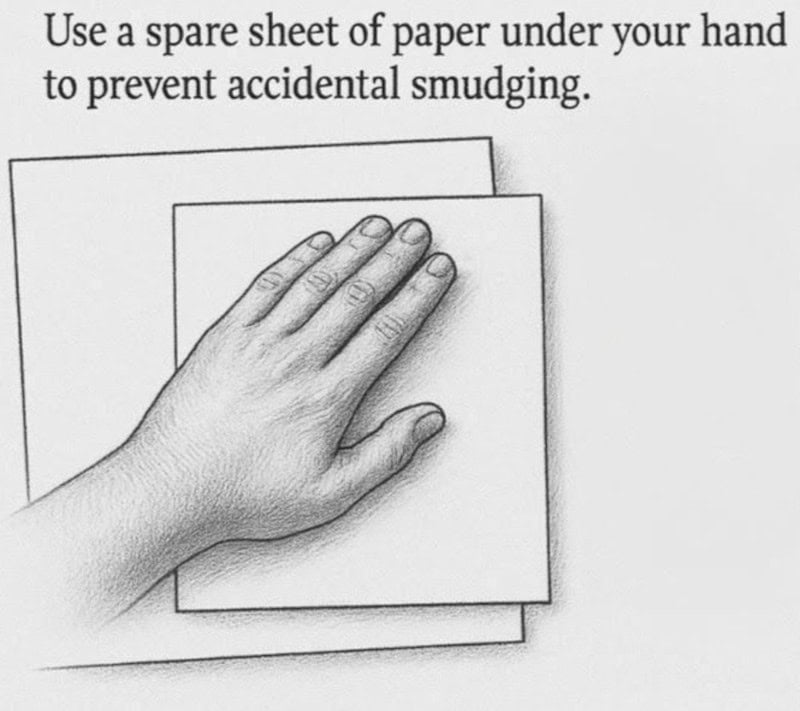
Smudging might work for ghosts, but in pencil shading, it can leave your work looking messy and unfocused. Use a spare sheet of paper under your drawing hand to prevent accidental smudging.
For blending, tools like blending stumps, tissues, or cotton swabs are far better than fingers, which add natural oils that can stain the paper and make blending unpredictable. Keep your workspace clean and your shadows crisp (and spooky).
6. Quick shading exercises
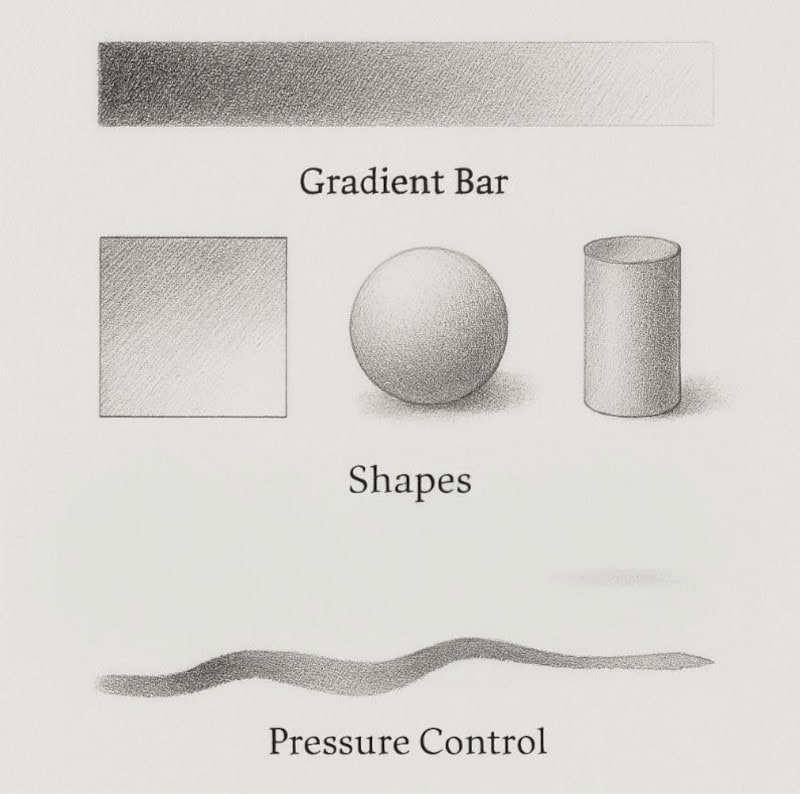
Practice makes perfect! These simple exercises will help you build control, confidence, and consistency in your shading skills:
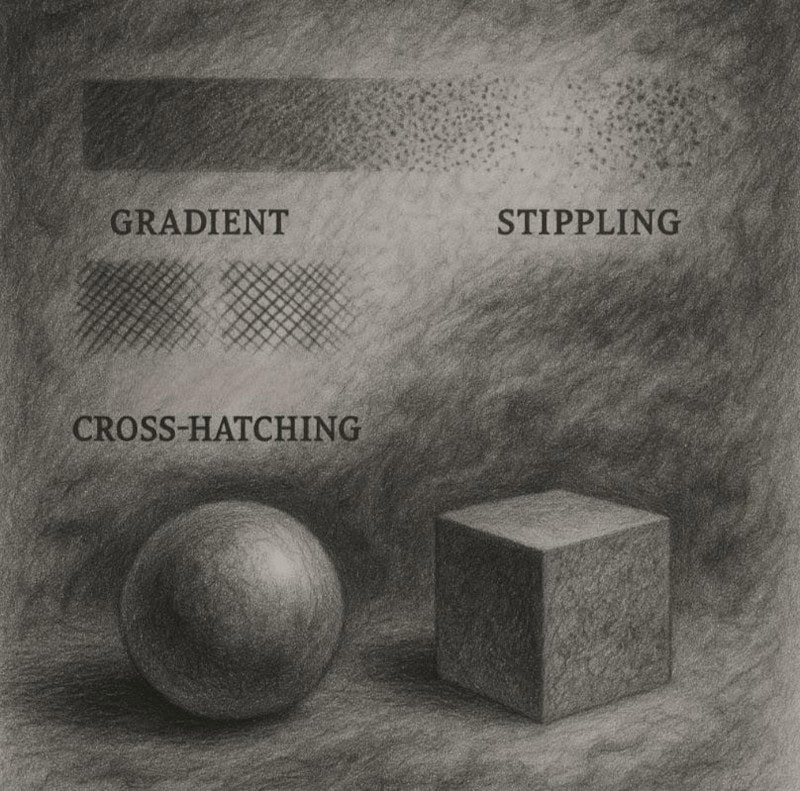
- Gradient Bar – Draw a rectangle and shade it from light to dark using smooth transitions. Try different techniques (such as blending, hatching, and stippling) to compare their effects.
- Shading Shapes – Practice shading a sphere, cube, and cylinder to understand how light affects different forms. Focus on highlights, mid-tones, and shadows.
- Pressure Control – To improve stroke control, use a single pencil and shade a small area with varying pressure, from the lightest touch to the darkest mark.
7. Best tools for shading
Using the right tools can make shading easier, smoother, and more effective.
Here are some essentials to keep in your toolkit:
- Pencils
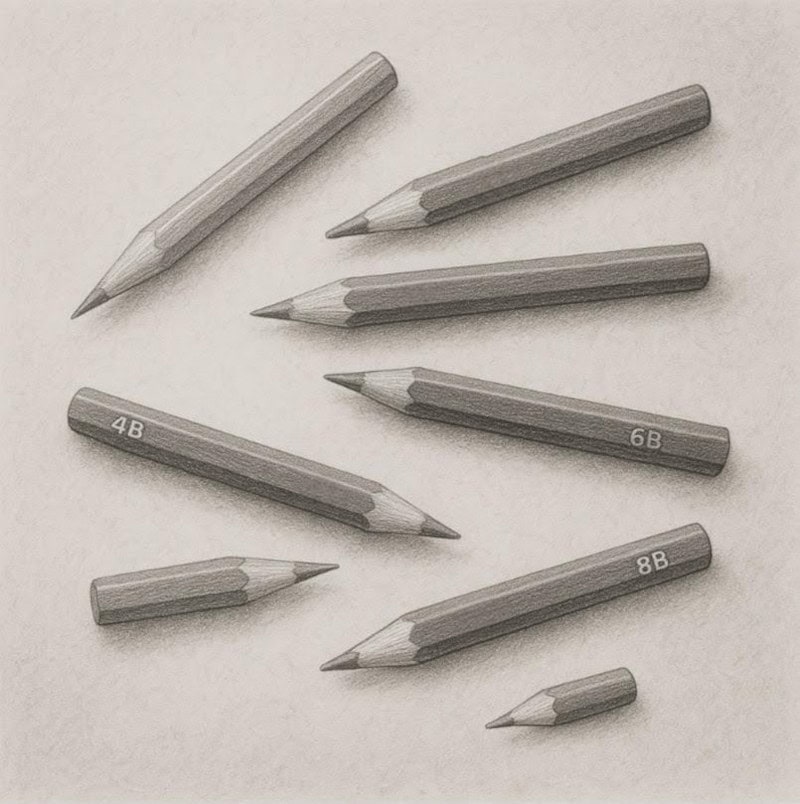
Graphite pencils come in various hardness levels (e.g., 2H to 9B), and each serves a purpose. Harder pencils (H grades) create light, fine lines, perfect for subtle shading and sketching. Softer pencils (B grades) lay down darker, richer tones, ideal for bold shadows and dramatic contrast.
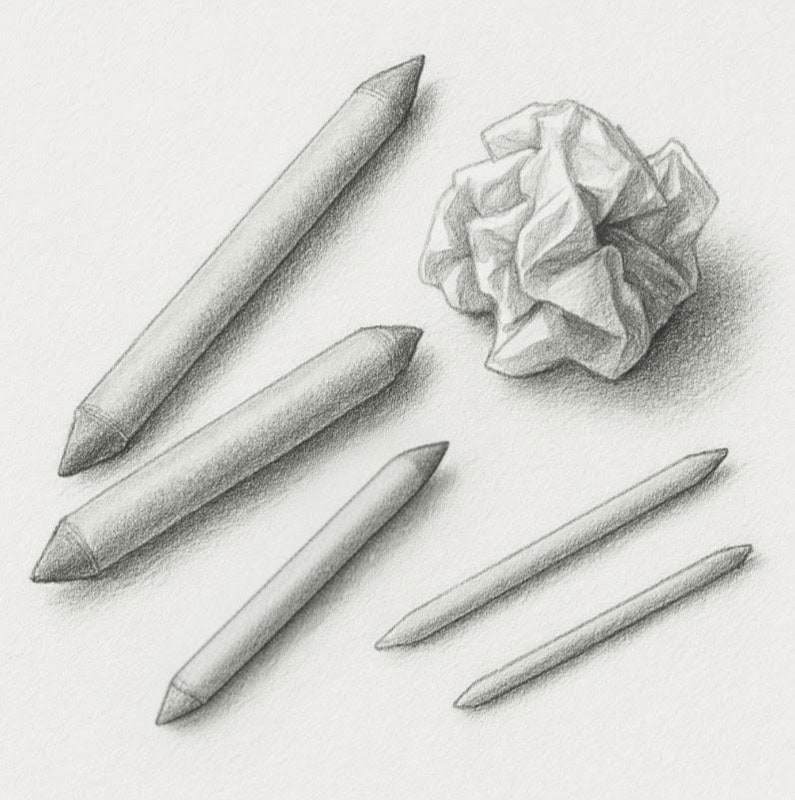
- Blending Stumps & Tissues
These are ideal for softening shading and creating smooth transitions. Blending stumps offer precision and control, making them perfect for detailed areas, while tissues are great for covering larger sections with soft, gentle gradients.
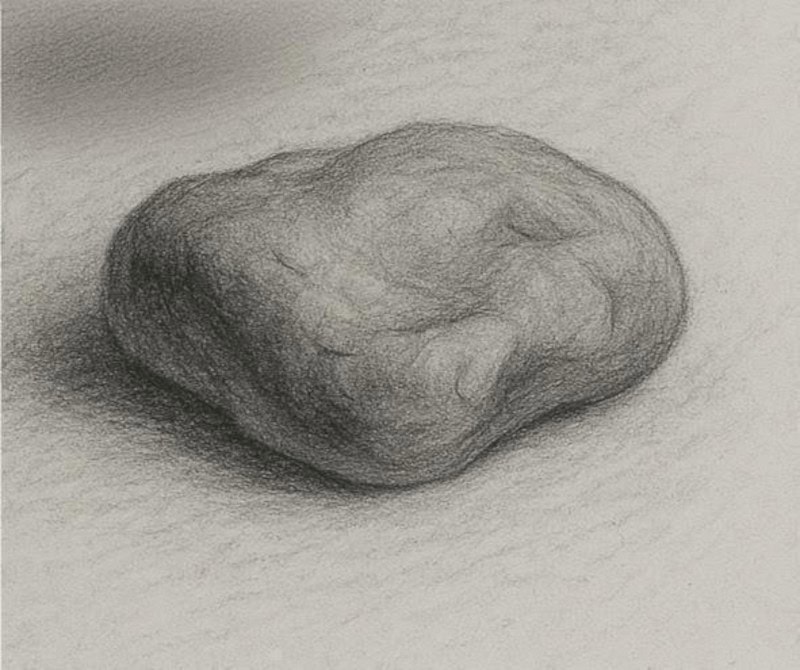
- Kneaded Eraser
Excellent for lifting highlights and softening edges without damaging the paper. You can shape it into fine points for precision or stretch it to blot larger areas. It’s especially handy for subtle corrections and adding light back into shaded regions.
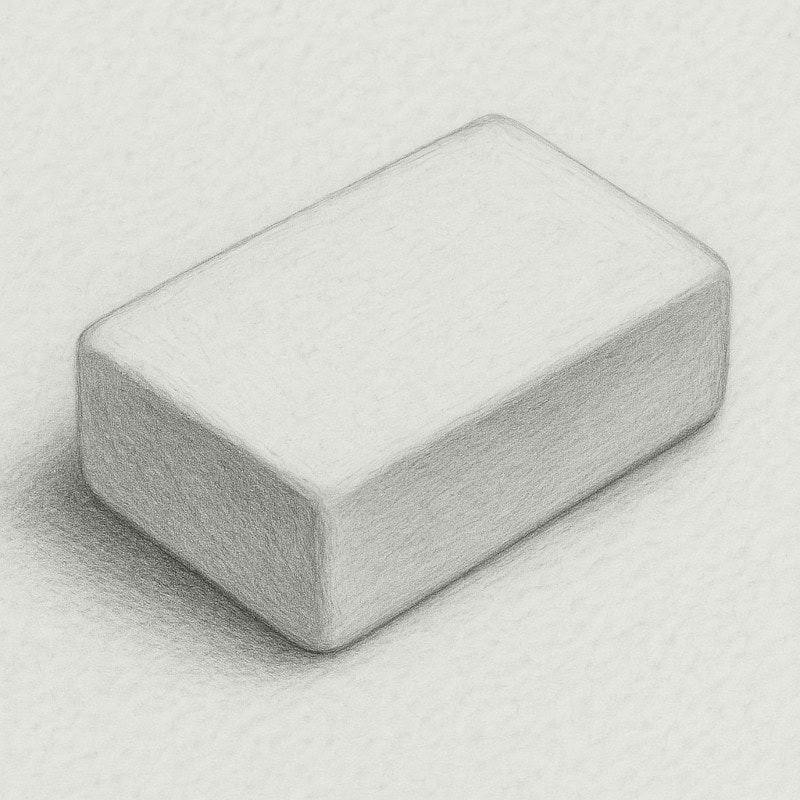
- Regular Eraser
Great for cleaning up edges and fixing mistakes, especially when you need sharp, clean highlights. Vinyl or plastic erasers are best for shading because they lift graphite without damaging the paper. They’re ideal for erasing large areas or adding crisp contrast in detailed work. Avoid rubber erasers – they tend to smear graphite instead of removing it cleanly.
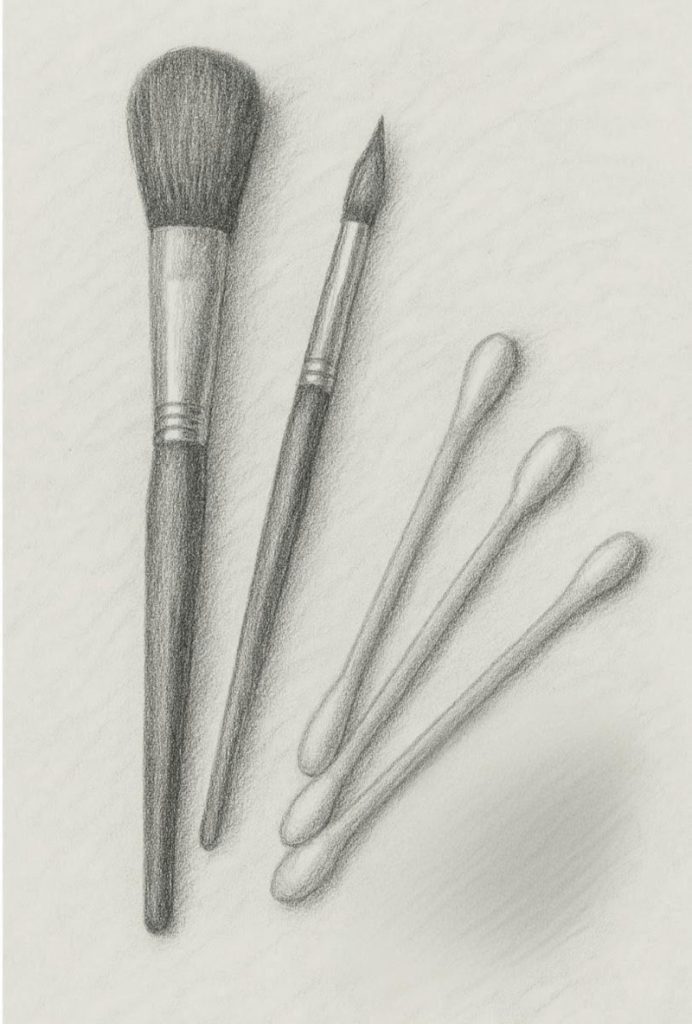
- Cotton Swabs & Brushes
Great for creating soft, subtle shading effects. Cotton swabs are perfect for blending small areas with precision, while brushes are ideal for smoothing larger sections and achieving a gentle, airy finish without disrupting the graphite.
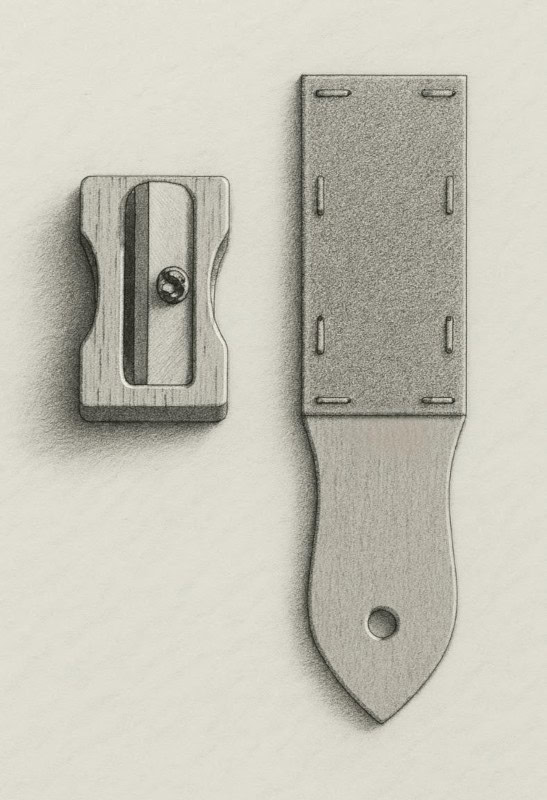
- Pencil Sharpener or Sandpaper Block
A sharp pencil gives you better control and cleaner lines. Use a regular sharpener for convenience, or a sandpaper block for more precision, especially when refining the tip for detailed shading or fine textures.
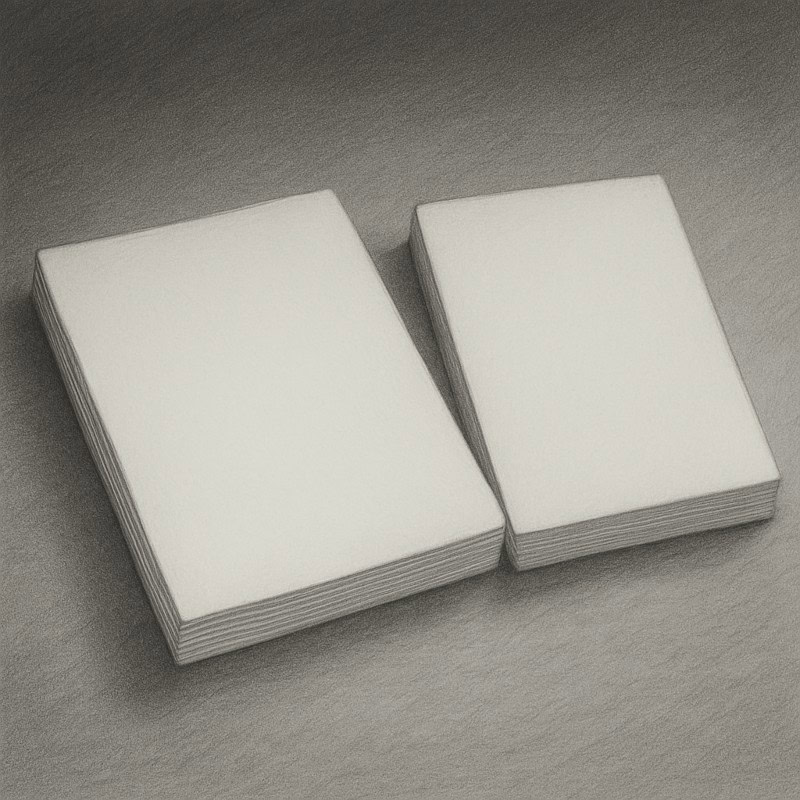
- Paper
The texture of your paper can make a huge difference in how your shading turns out. Smooth paper is ideal for blending and clean gradients, while toothy or textured paper grips the graphite more, creating gritty effects that are perfect for dramatic or eerie textures.
Experiment with these tools to see what works best for your style – whether you’re going for silky shadows or haunted grit.
8. Common beginner mistakes (and how to fix them)
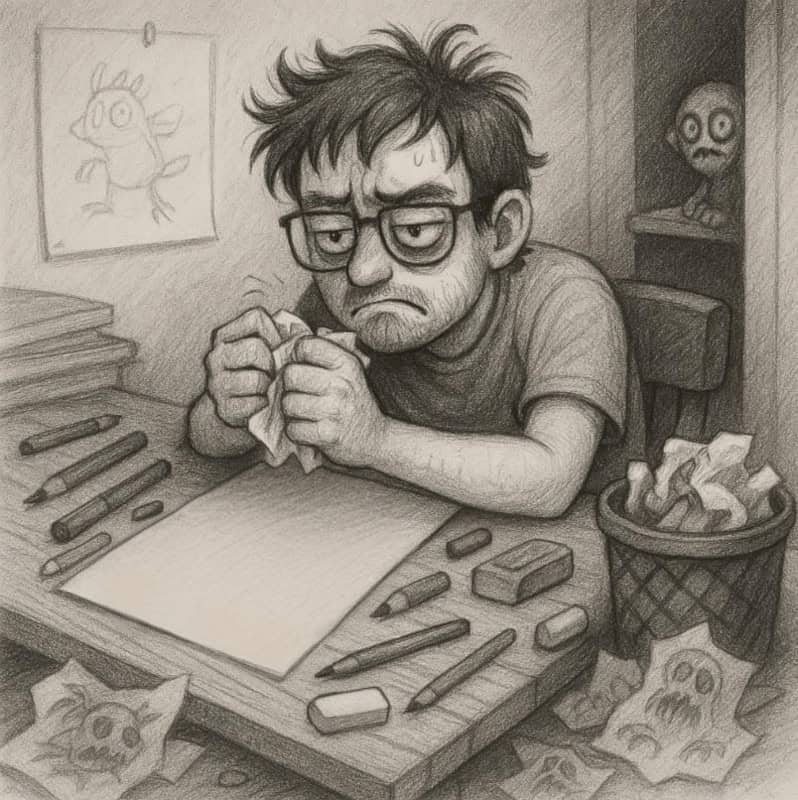
Even the best monsters-in-the-making can trip over the basics. Whether it’s pressing too hard or smudging with your fingers, these common slip-ups can flatten your shading faster than a vampire at sunrise.
Sink your fangs into the full guide:
Common Shading Mistakes and How to Fix Them – it’s filled with helpful fixes and practical tips.
Next up: Texture and depth with shading
Now that you’ve conquered the basics of shading, it’s time to go deeper – literally. In the next post, we’ll explore how to add texture and depth to your drawings, making them feel more realistic and fully alive (or delightfully undead). Learn how different shading techniques can bring life (or death) to your artwork.
Continue to Texture and Depth with Shading